Icon Diploma Student

Learning to see with the eye of the heart

Posts from the ‘egg tempera painting’ category

Face up to the detail

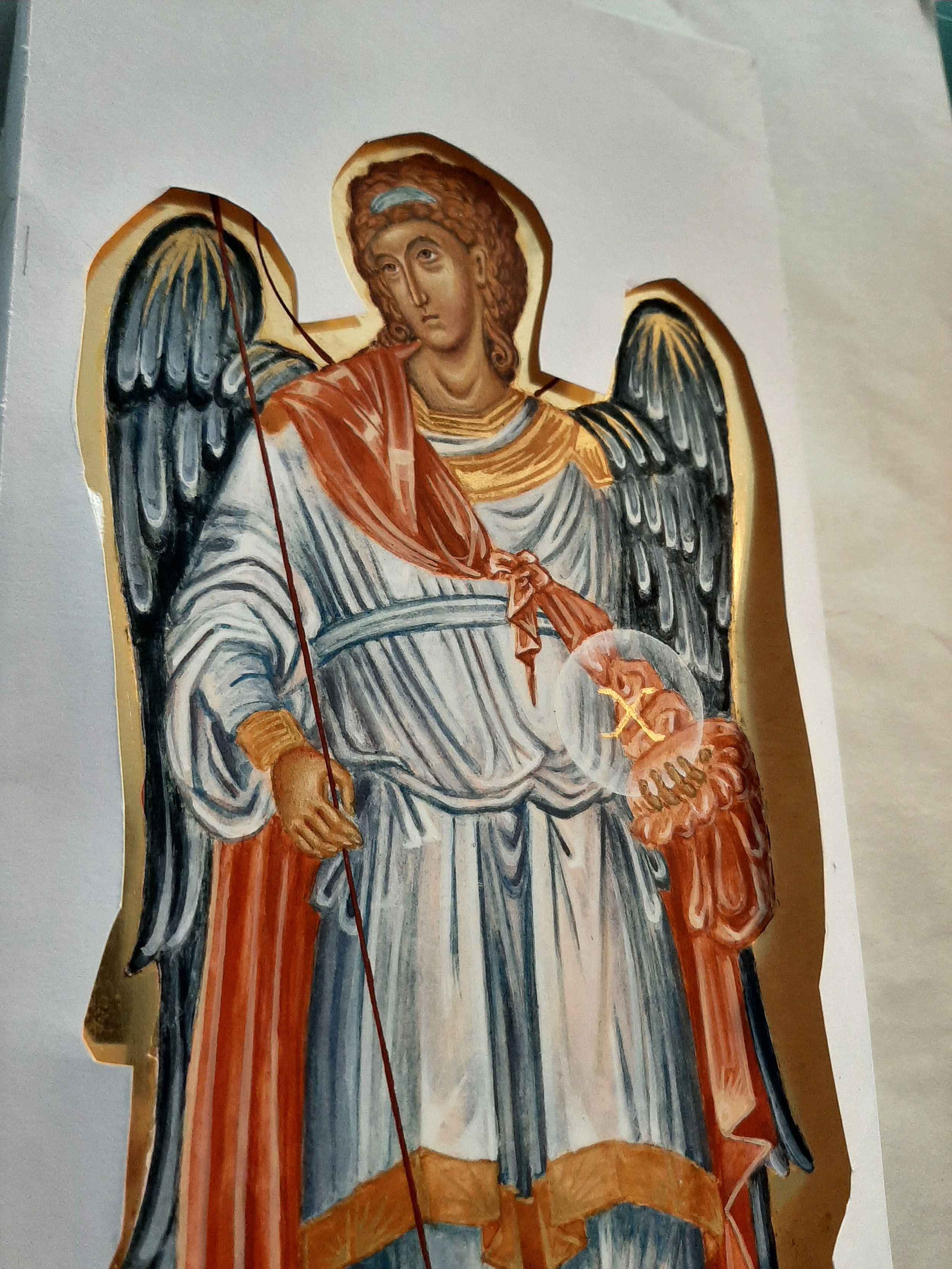
This icon is of Archangel Raphael, one of a pair of standing angels which are based on the frescos of Chora in Istanbul, painted high up in the dome. As I mentioned in my last post, I was not too pleased with the expression.
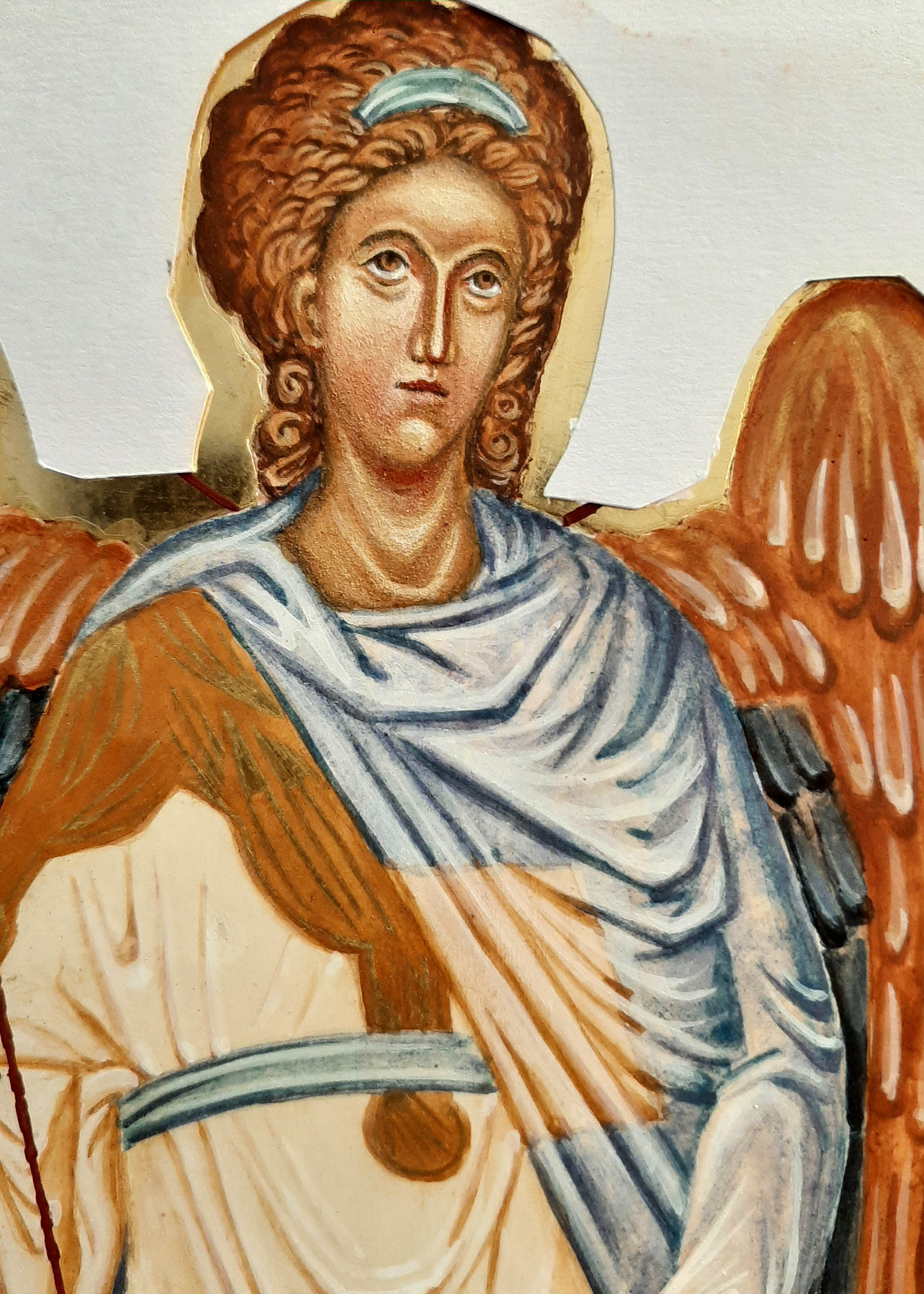
To make a start adjusting the features, I covered the face with four or five glazes of French Ochre Havanna. This helps to return to the point where you make the first glazes over the underpainting.
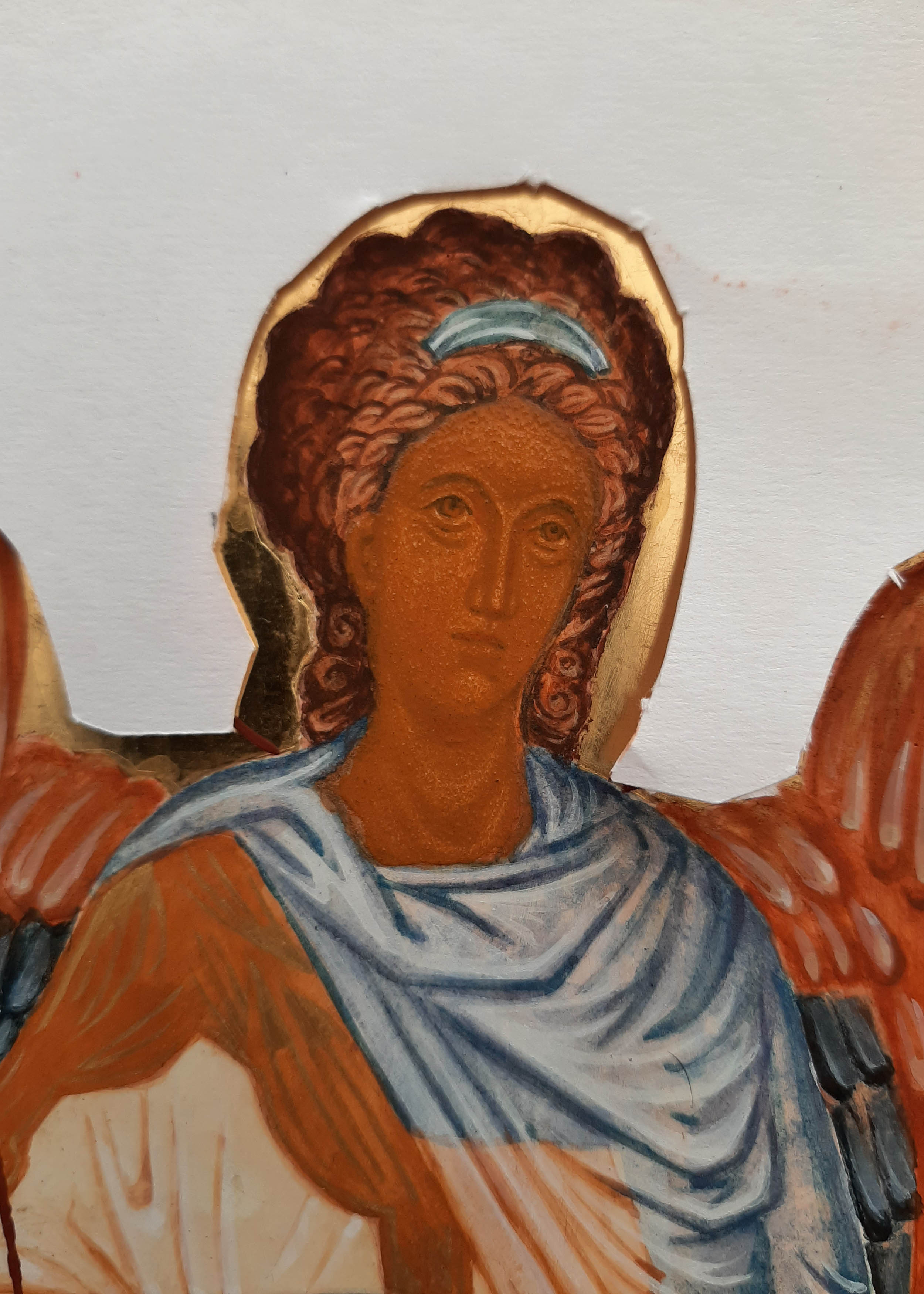
Then, taking Ochre Avana and a very small amount of raw umber, deepen the hair, brow and jaw line.
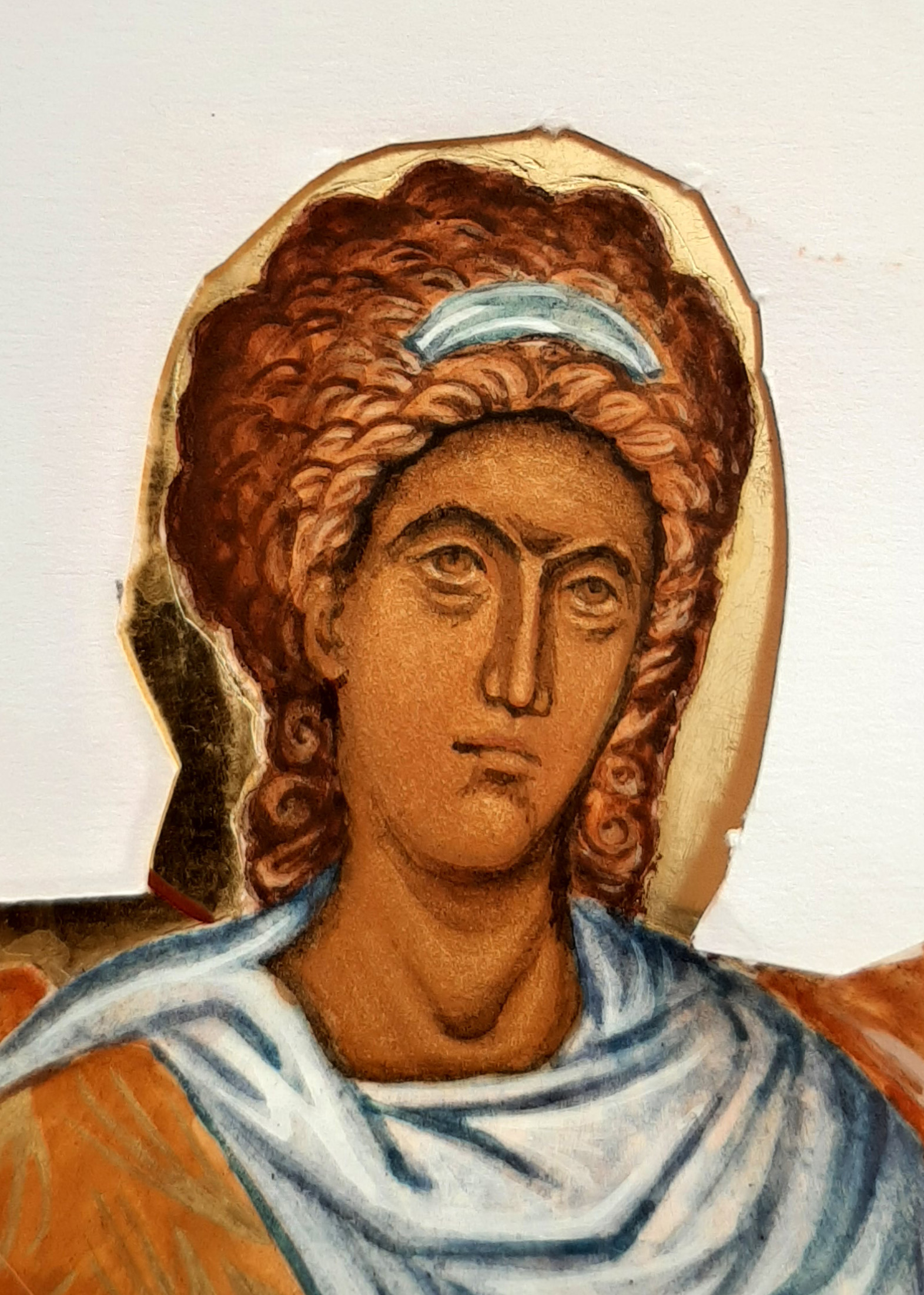
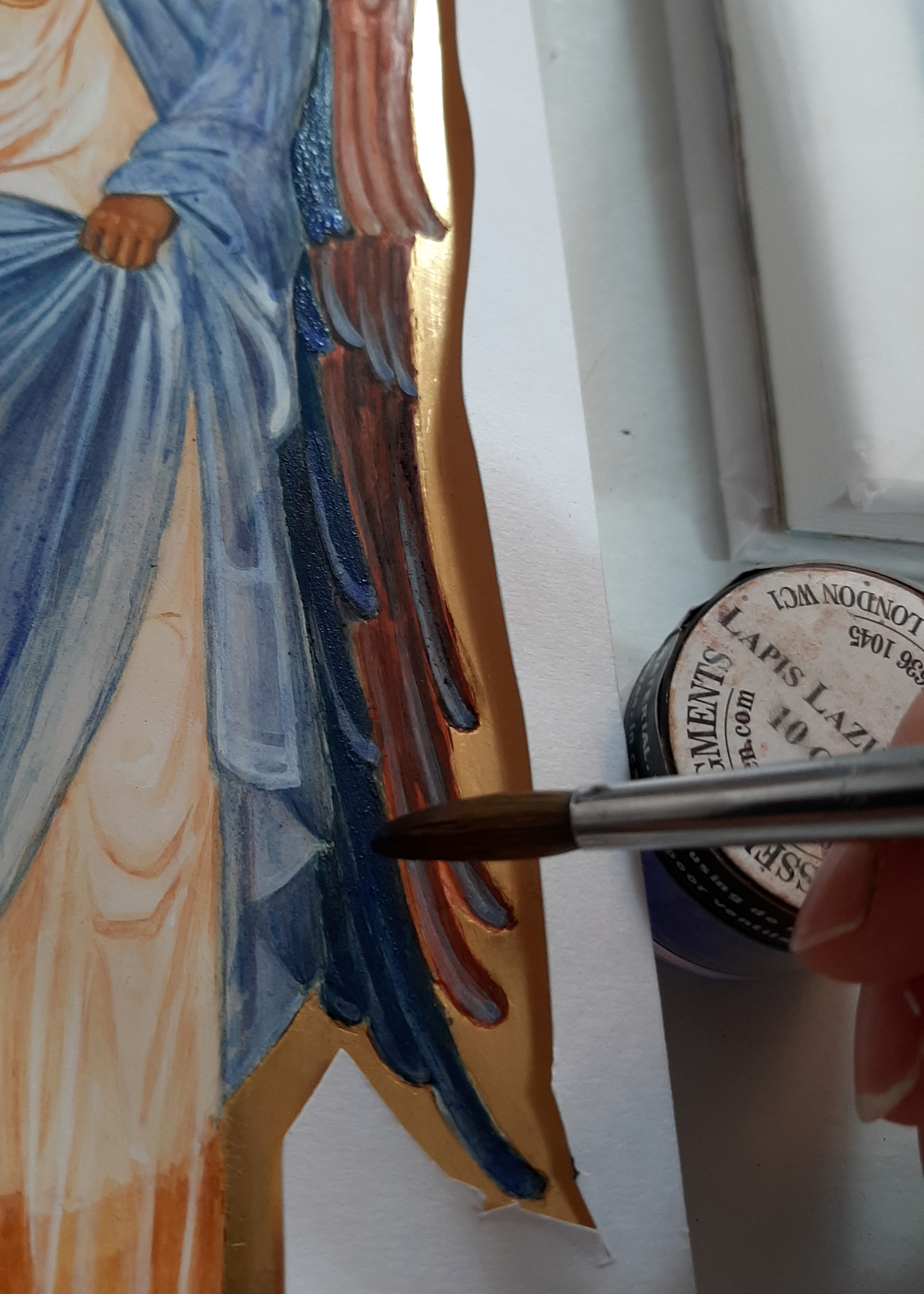
I also decided to deepen the colour of the wings with a few more glazes of lapis lazuli to send them back so to speak.

In the photos below, I have added more layers of light glazes for the facial highlights. Somewhere along the line, the gaze of the angel moved to a different direction. The tiniest detail makes all the difference.
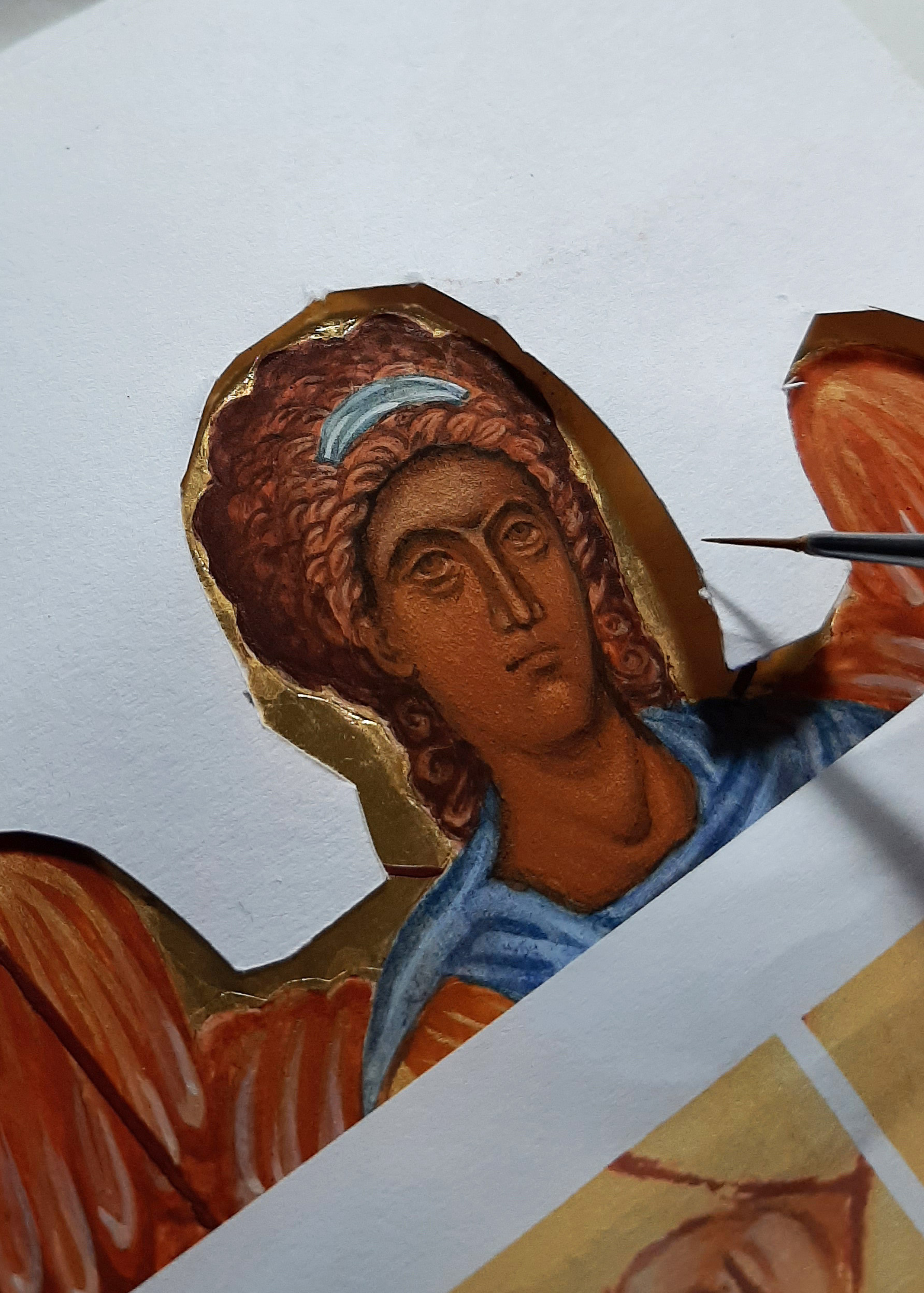
To summarise – the hair is deepened with red ochre and a touch of black. The right eye brow has been lowered and softened. The brow has been adjusted to remove the central highlight and instead bring the highlight towards the viewer. The highlights below the eyes adjusted. The nose is still a work in progress but the shape fits better with the face. The mouth has a warmth and the chin is less pointed.
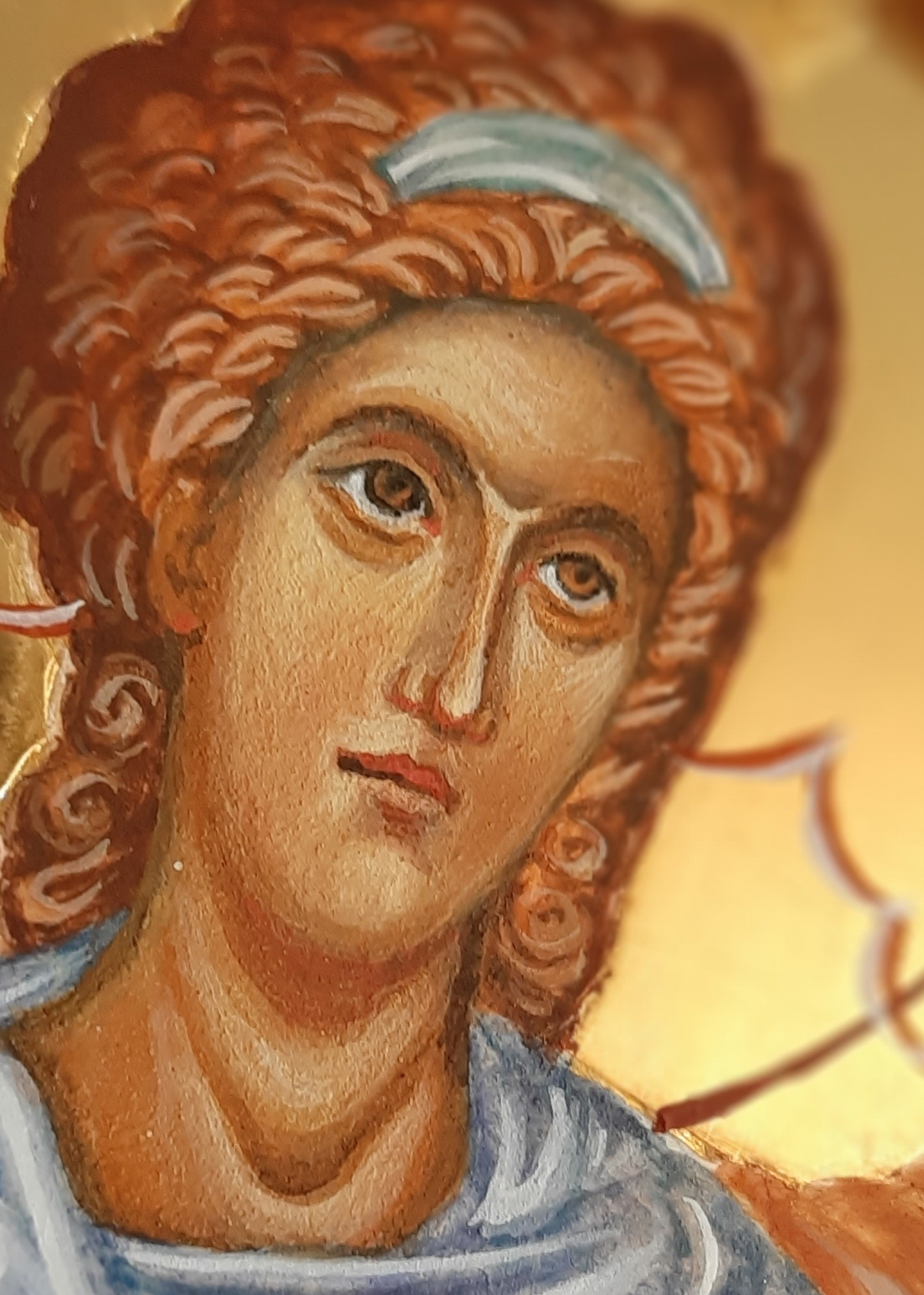
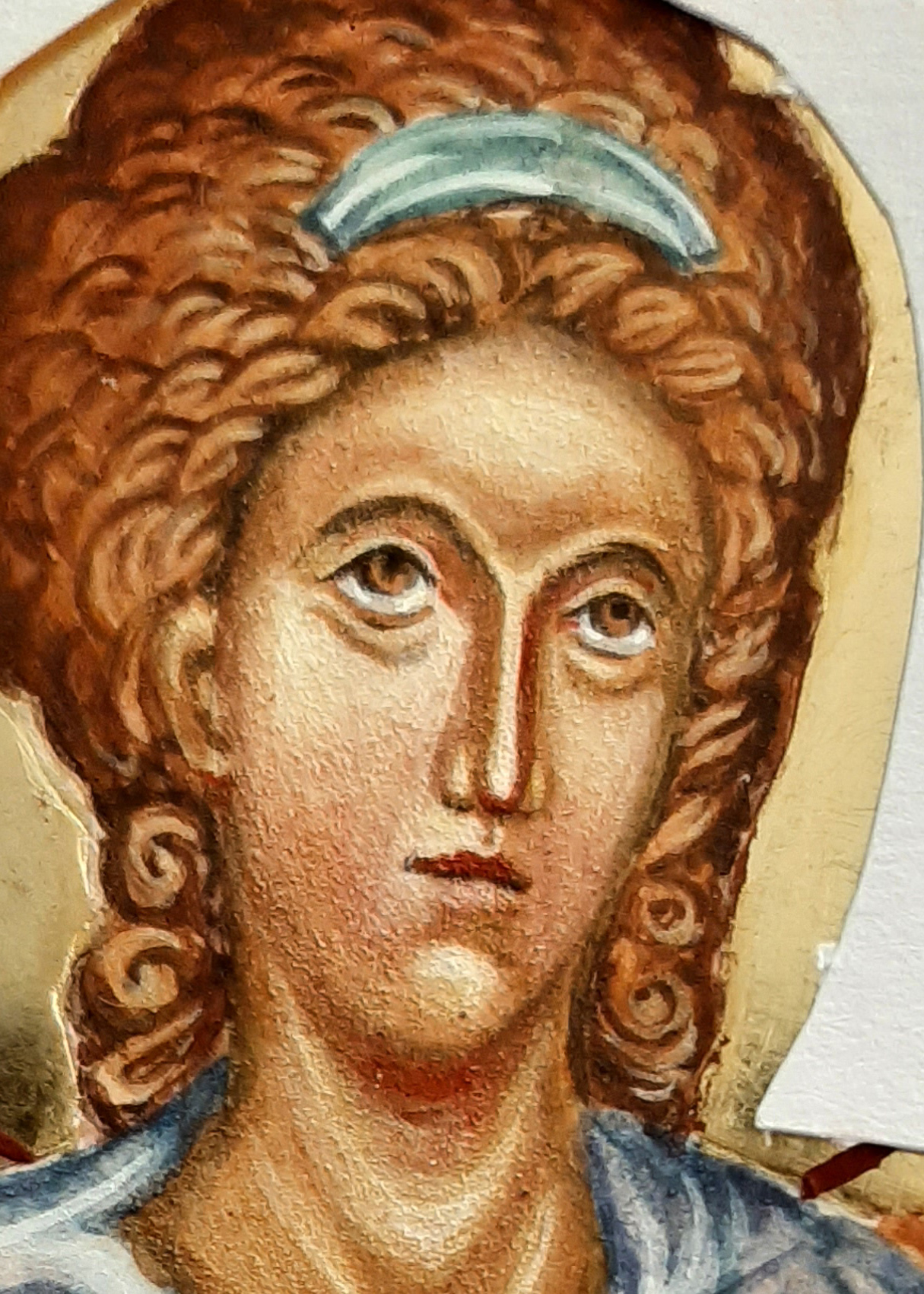
I’m so glad I worked on these faces! It’s easy to leave things as they are when you have already put so much time into the icon but egg tempera is a wonderfully versatile medium and revives easily. Painting over faces with glazes is a straightforward way to make the adjustments that you know are needed. Another thing that helps is to take a photo of the face, turn it to black and white and print it off. That way, you can see clearly what isn’t working and what needs to be done.

Here’s the finished icon complete with the ribbons which symbolise Divine Listening.
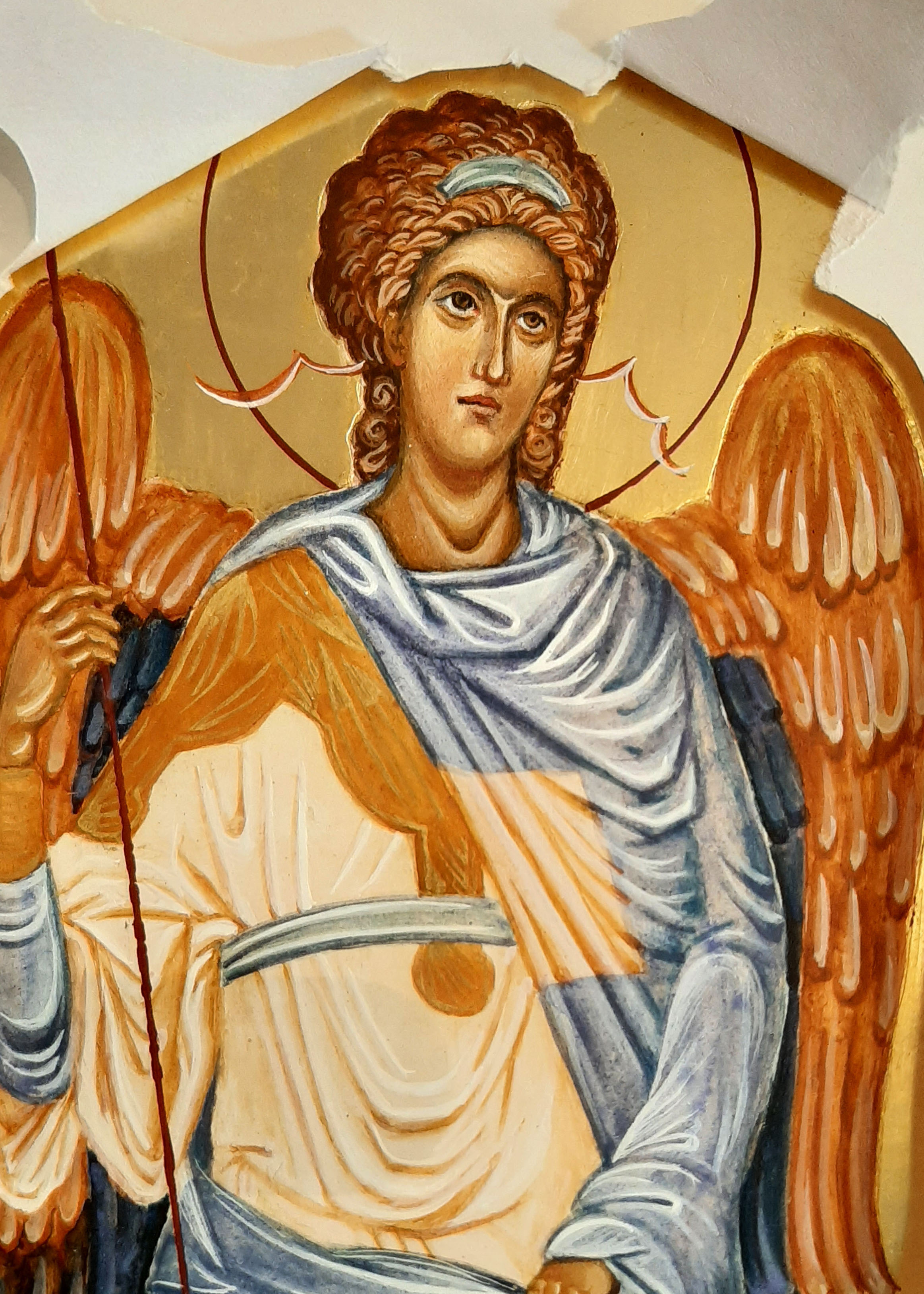
The finished icon can be seen here .

As ever, thanks for reading!

Ronnie 🙂

Always we begin again

I recently unwrapped a pair of standing angel icons which I painted three years ago for the exhibition ‘A Street of Angels’ in York at Blossom Street Gallery. I remember thinking that the faces weren’t quite right but time had run out as we were relocating up to Scotland and so they went on display, got packed away afterwards and that was that.

Life has taken quite a turn since and I don’t get much time to paint icons however I have committed to revisiting and finishing off all the icons that had things that I considered weren’t quite right. I thought that it would be worth sharing how I get along with this exercise as it is a bit of an adventure!

Here are the two icons before I started work on them. It was Archangel Raphael’s expression that I thought needed most work. It’s hard to tell from these photos but the blending was a bit heavy handed and if I was to refresh one, then I should work on them both for consistency.

First thing was to ‘wake up’ the surface with several coats of an egg glaze. Using the tempera mix, I made a glaze with about 1 drop of egg to 10 drops of water. I also made a protective paper cover for the gilding and taped it down. Looking at these photos, the faces don’t seem so bad, but they were just not properly finished.

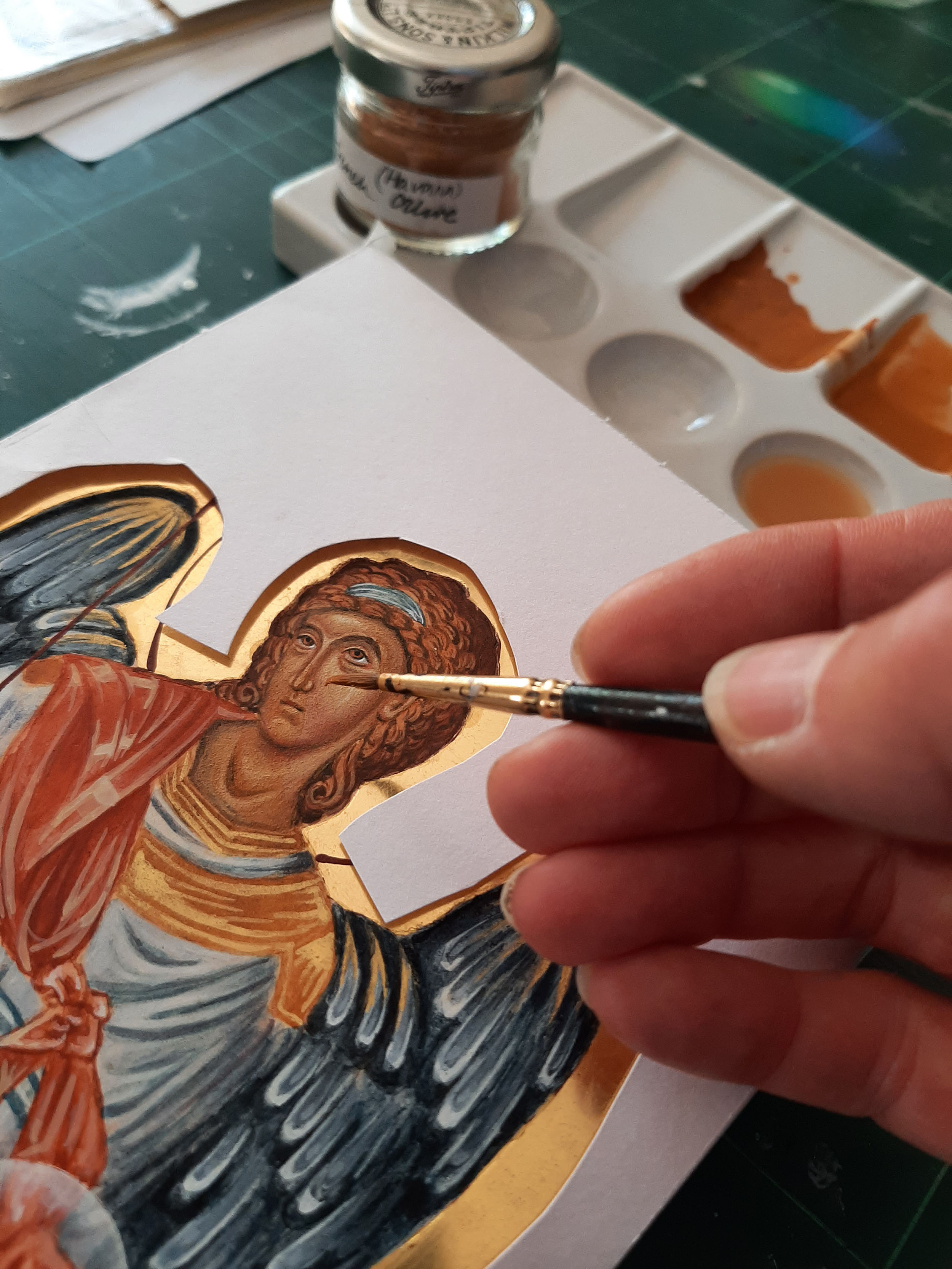
I let the glazes settle for a few days, then using the wonderful pigment French Ochre Havanna, I applied three or four glazes over the face. This pigment is warm and a great one to calm down clumsy highlights. These faces are fairly small, about 2cm from hairline to chin, so I used fine brushes for the details.

Applying glazes over the entire face.

Glazes of French Ochre Havanna even out the skin tones and deepen the gold mid tones. I also applied a few washes of English Red Ochre Light over the hair to deepen the mid-tones so I could tidy up the modelling. I’ve found that leaving the glazes to dry overnight means less likelihood of making holes in it when applying the next layers.

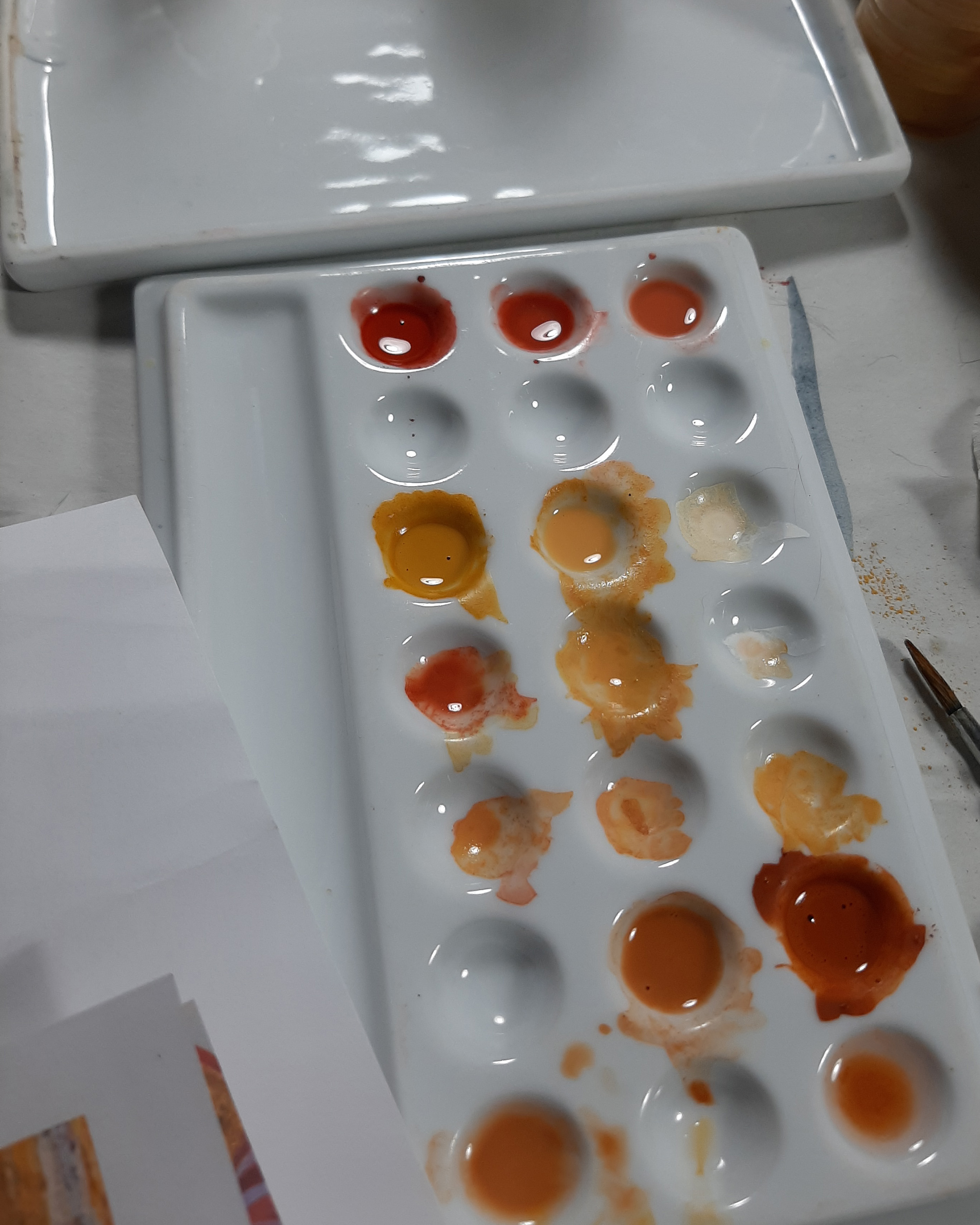
I’m putting on the darker tones here, with a 1010 kolinsky sable brush. I’ve mixed some English yellow ochre, raw umber and ivory black. I also used Ochre Avana which is another really versatile pigment. I have deepened the hair line and then used a thin egg glaze to feather and blend away the hard lines next to the brow. To get the highlights, I used Yellow Maimeri and titanium white, but I also added a small amount of French Havanna to keep the highlights a warm gold. I mix small quantities in this ceramic palette which comes with a lid – perfect to stop them drying out and keep the cats off!

Painting on the first layer of face highlights

I find that taking photos of my work as I go along helps as I can zoom in and see exactly where I need to tidy up. The other thing I do now is to add very thin glazes of ochre havanna as it helps with blending especially after I have been remodelling.

I added highlights in thin, thin layers, softened and shaped the eyebrows, moved the brow highlights to the right, eased back the highlights on the right of the neck, added vermillion to the nose tip, upper lip, under the chin and inner eye. Added white highlights to the eyes, with the sides of the eyes a grey mixed with black and white. Added a very thin glaze of vermillion to warm the cheeks. Then added the hair highlights back and added the ribbons which I had missed altogether. The finished face is on the left. I’m happy with this as the expression is much kinder! You can see the finished icon in my Etsy shop.

I hope that this is helpful in some way with your own icon painting. Thank you to everyone who has followed this blog during the quiet years, but I will go through the same process with Archangel Raphael in my next post.

Thanks as ever for reading and your patience!

Ronnie

Oil Gilding the Council of Archangel Michael (pt2)

Summer is the best time for gessoing icon boards. It’s a messy job and I like to make the most of working outside especially sanding the boards. I wrote about the method of gessoing on an earlier post here.

3 sanding the large icon board.jpg

Making the most of a dry sunny day to sand the gesso smooth

I felt that the icon of the Council of the Archangel Michael should be painted on a large board as there are a lot of figures. I don’t know the size of the original icon, but small faces can be tricky so the size I went for was the optimum I can work with at home: 40 x 42cm. With it being cut from 24mm birch ply it’s quite heavy.

I placed the board on a towel to prevent it from sliding around the table whilst I sand. Red ochre rubbed over the surface helps to show up any scratches I had missed.

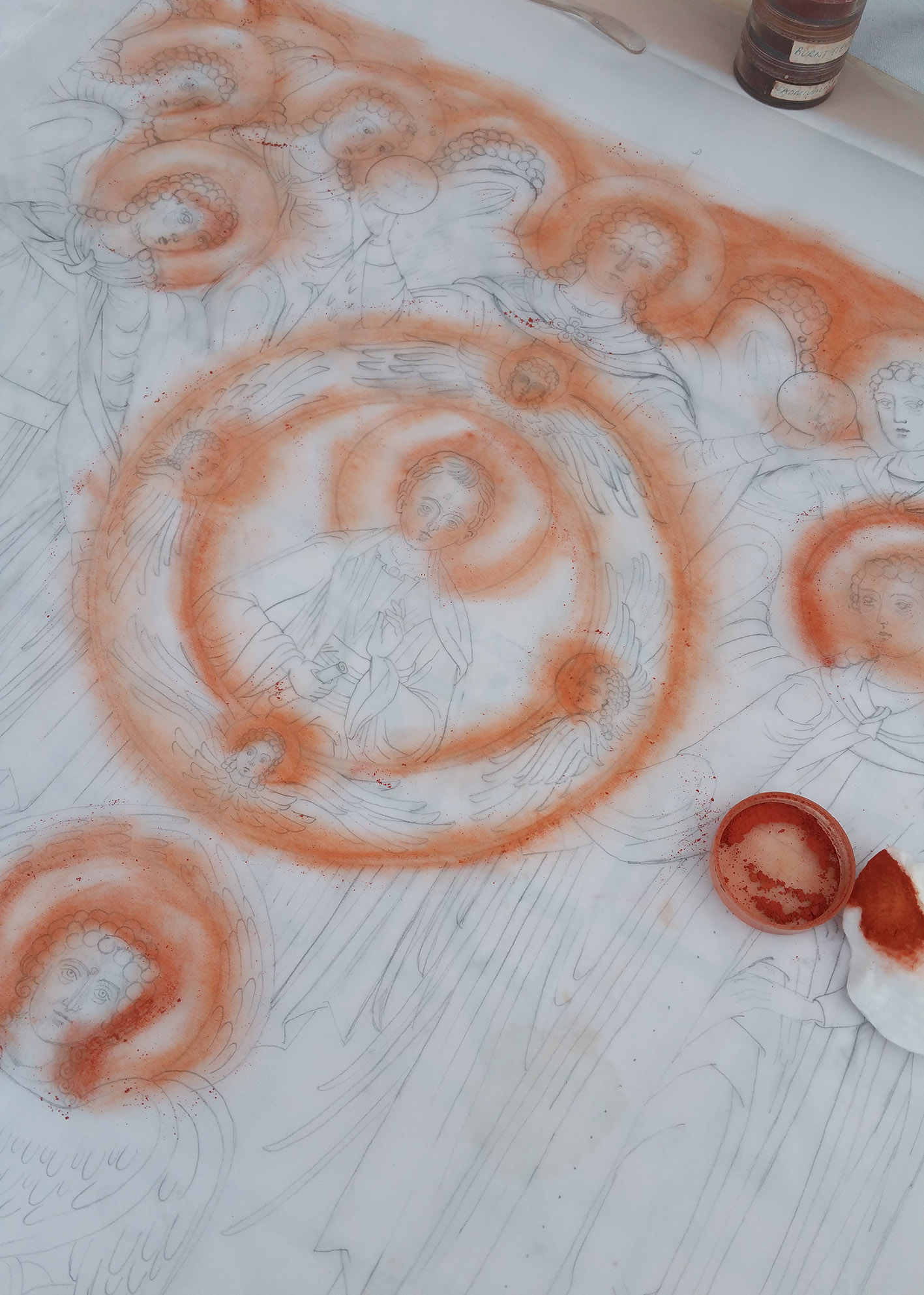
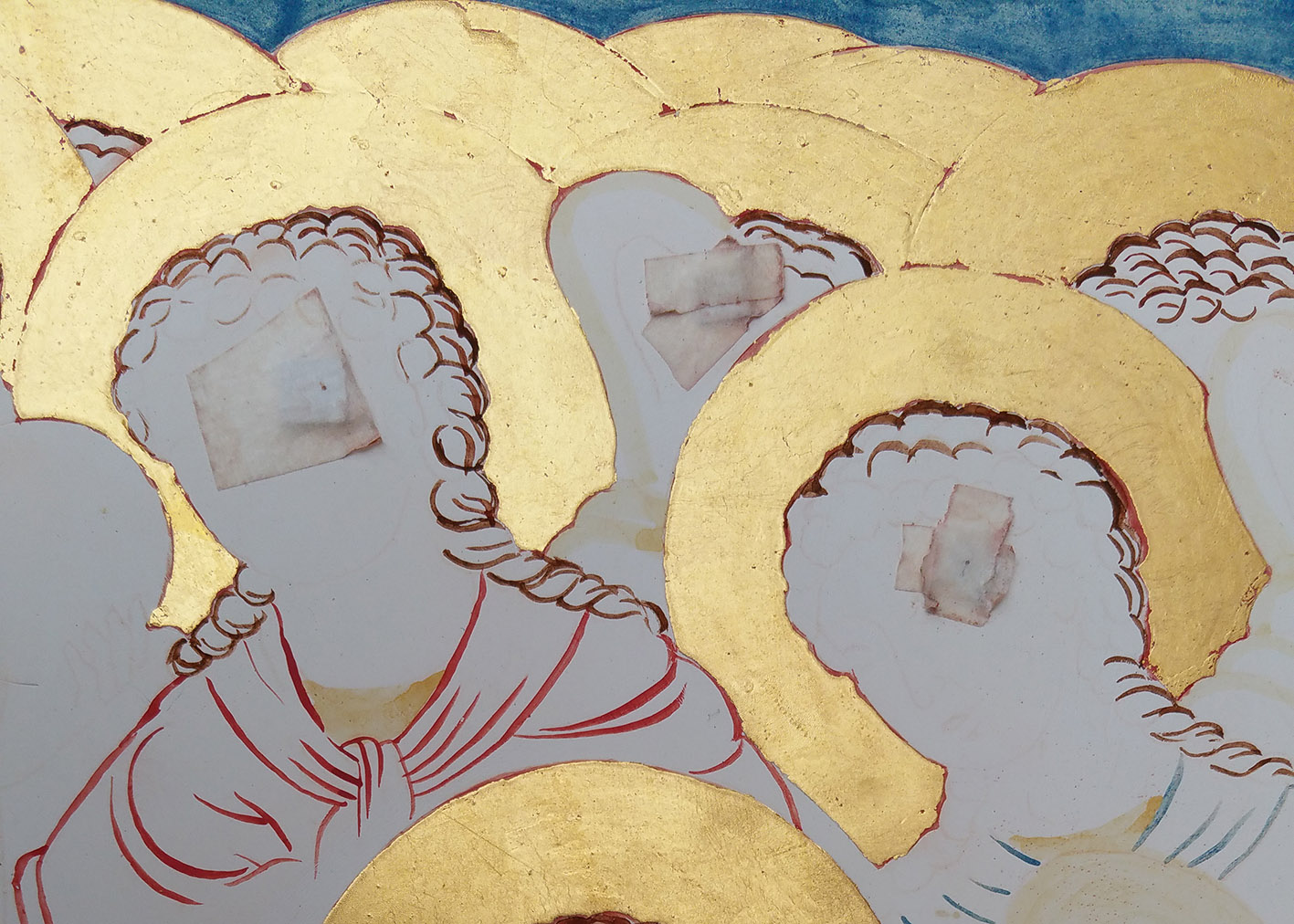
Once it had been sanded down with 1200 grade sandpaper, it was ready to oil gild. I chose the oil gilding method (matt finish gold) because it’s more robust than water gilding.  Having so many figures and faces it will be handled quite a bit during painting.

finding scratches

Red ochre shows up scratches which still need to be sanded

I moved my drawings on to tracing paper so it was ready to transcribe on to the gesso. Although it is possible to oil gild after painting, I prefer to gild before painting the faces. I find both methods of gilding challenging so I will keep practising!

It isn’t necessary to scribe the areas to be gilded with the oil gilding method but I find it helps contain the shellac. Aidan Hart protects the gesso from the compass points with a wooden ruler which works very well but if you don’t have a ruler to hand, several layers of masking tape over some card helps (see photos below).

transcribing halo on icon

compass points on gesso

Protecting the gesso from compass puncture marks

Anyone of a ‘certain age’ will understand when I say that some red ochre rubbed over the scribed areas helps me to see where I’m going!

transcribing drawing

Aidan taught us the following method of oil gilding which I will summarise below. You can also see some amatuer video clips from our class demonstration on You Tube here.

Gold transfer leaf is applied on to several layers of shellac but first the gesso is sealed by painting on a thin layer of tinted shellac. Tinting is done with a pinch of red ochre or vermillion. Leave it to dry for a day then lightly sand working your way through the sandpaper grades from 600-1200. The following day, repeat the process but using untinted shellac. Leave it for a day and then sand as before.

shellac on halos for icon gilding

Shellac ready to sand

It is then ready to gild. Aidan suggested using Le Franc’s 3 hour gold size. Shake well then apply one very thin layer and place it in a dust free place, like a plastic box.

Wait for an hour at least (1-3 hours) then test whether it is ready to gild by touching the surface with your knuckle. If it squeaks, it is ready to apply gold transfer leaf. If not, wait a little longer and re-test. Drying time depends on the thickness of the layer and the drying conditions.

Small areas of shellac are fiddly to sand smooth and as you can see under the scrutiny of the camera, there are a few missing dots. However, I’ve since touched these up with some shell gold.

oil gilding on icon

Oil gilded halos

Wait two or three hours and then it should be ready to polish the gold using a gilder’s mop, working from light to medium pressure.

After waiting a few days to let the gilding harden, I could carry on with transferring the rest of my drawing.

transfer of whole drawing

Gilding complete, time to transcribe the rest of the drawing

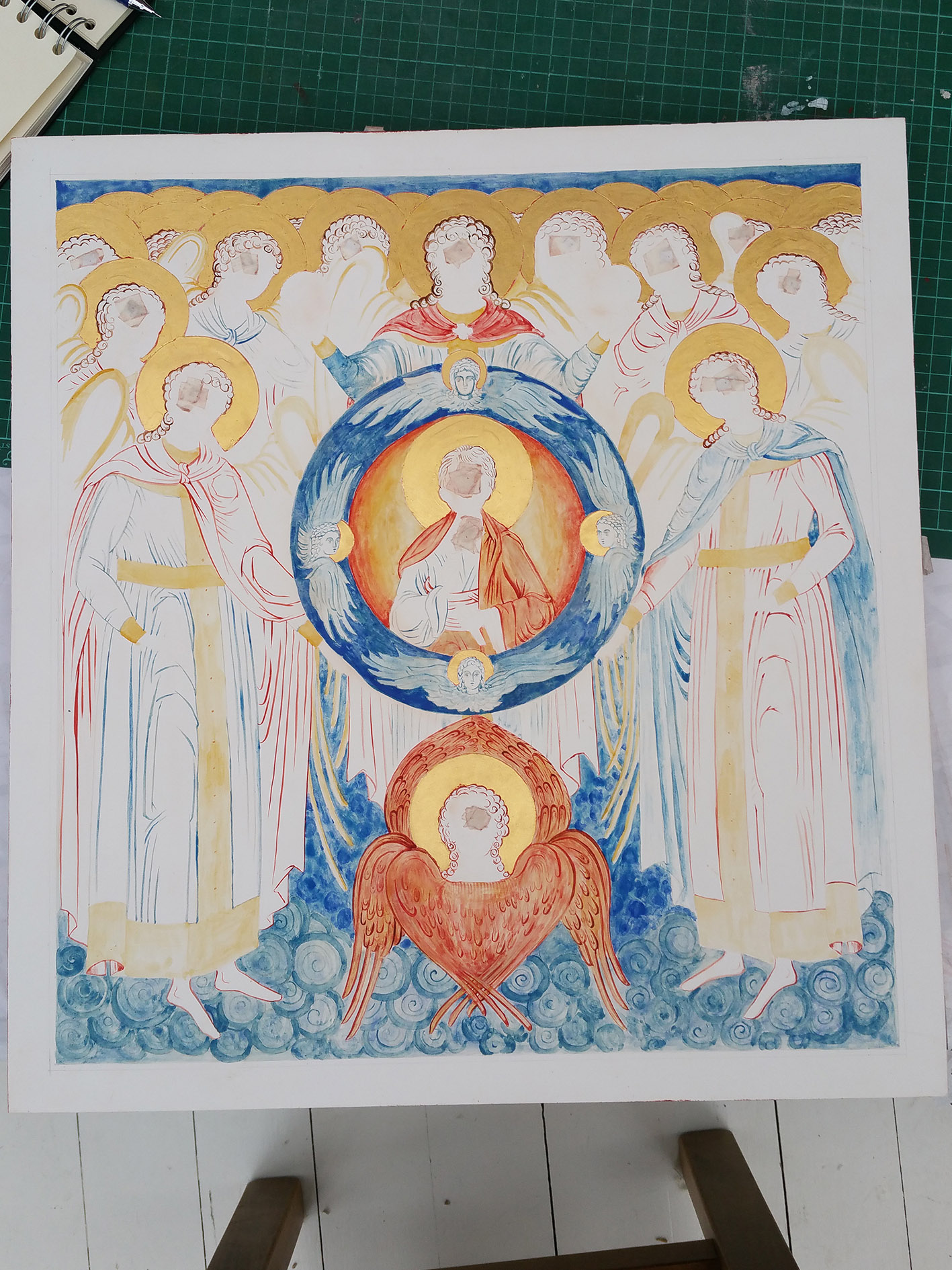
I kept the compass protection pads on so I could add the halo outlines as soon as the sky had been painted. That’s all for this post but I will sign off with a photo of the icon a bit further along.

underpainting icon of Council of Archangel Michael

Outlines of figures applied and underpainting begins

Once again, thanks for reading!

Ronnie

Archangels in Blossom Street (Pt1)

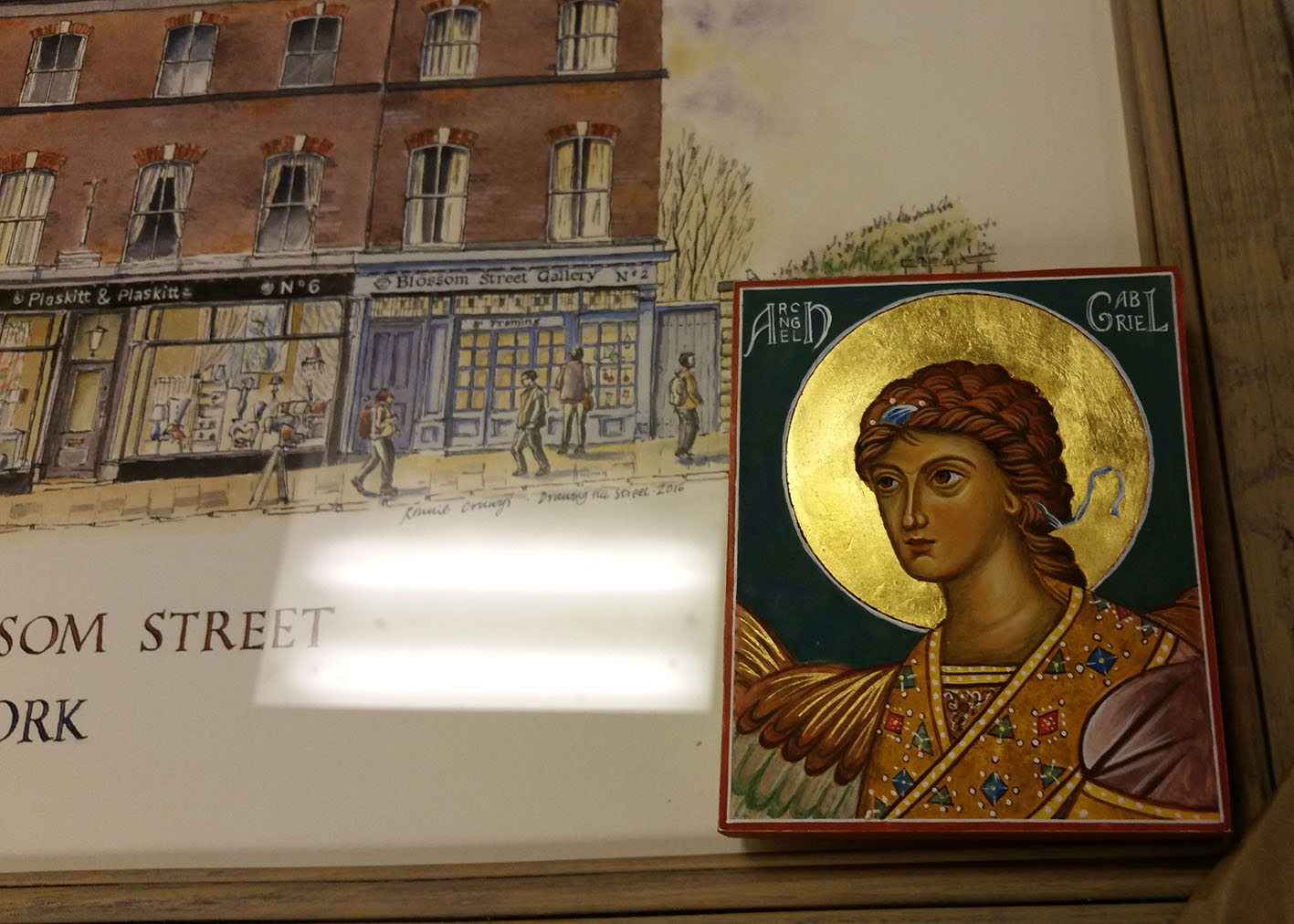
Icon of Archangel gabriel resting on pic of Blossom Street

Archangel Gabriel in Blossom Street York

Kim and Jules run the Blossom Street Gallery, just outside Micklegate Bar in York. They stock my Drawing the Street limited edition prints and in February this year, I called in to catch up with them having finished the icon diploma.

I had a tiny icon of Archangel Gabriel with me which I brought out to show them as I was telling them about the course. One thing led to another and I am now booked in for a joint exhibition of icons and streets next Spring!

I had a few ideas for themes for the icon exhibition, but none were really firing me up, so I sent a request up to the heavens and within the day I had my theme and central icon. I subscribe to a blog by ‘Hokku’ and this timely post landed in my inbox:https://russianicons.wordpress.com/2017/03/20/the-council-of-the-archangel-michael/

Blossom Street Gallery is almost opposite my former school, All Saints, previously called The Bar Convent when I attended. There was a school legend that the Archangel Michael had once appeared there to protect the convent from imminent danger. So, when I saw this icon called ‘the Council of the Archangel Michael, I knew I had found my centre piece icon and my theme ‘A Gathering of Angels’.

A year isn’t long to prepare for an icon exhibition so I got started with the drawings.  It was a wonderful way to focus during what turned out to be a bumpy few months.


I made an unplanned visit to my sister in Perth WA who was unwell but I find sketching and drawing icon figures very calming.  I wrote a little about the visit over here.

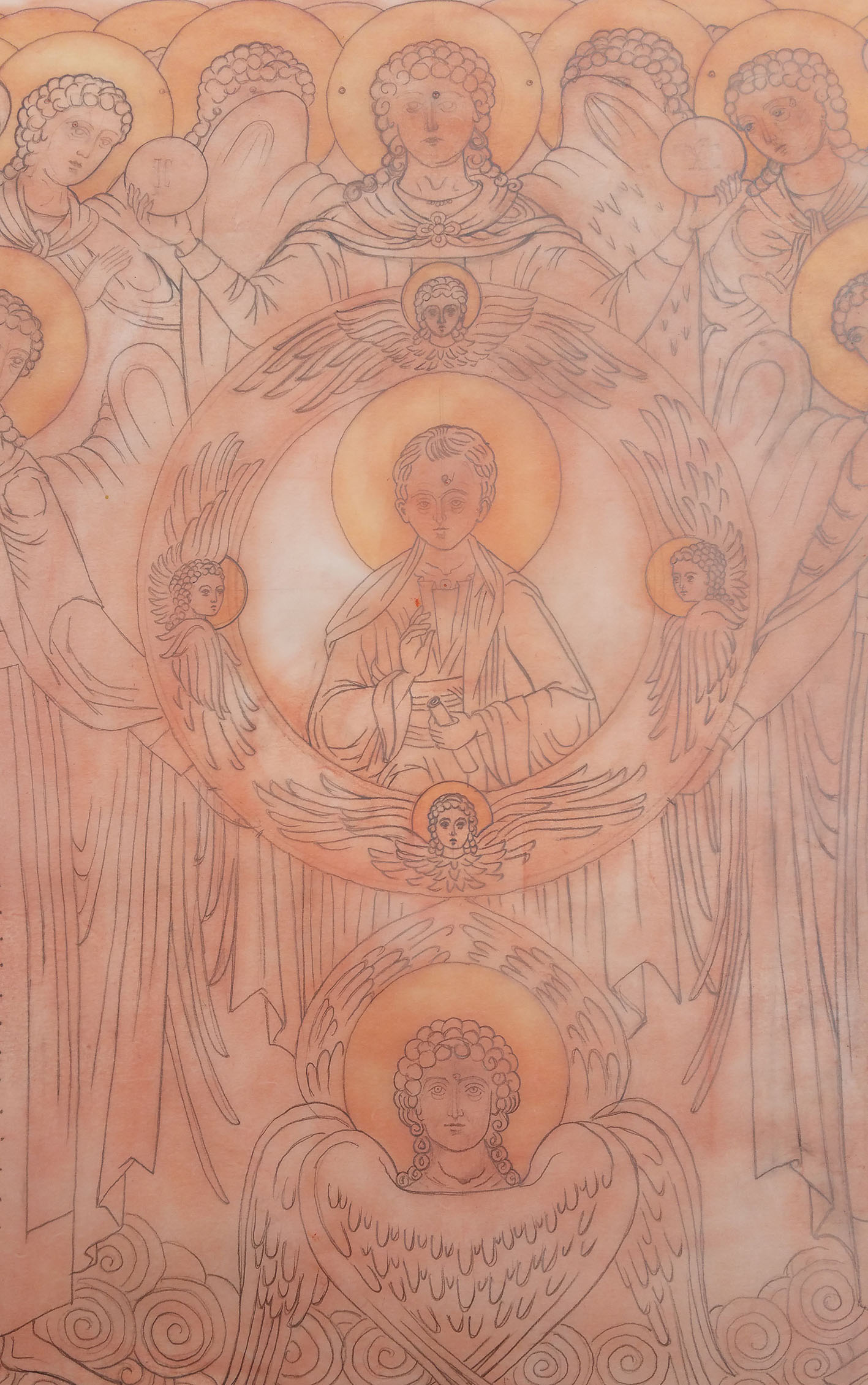
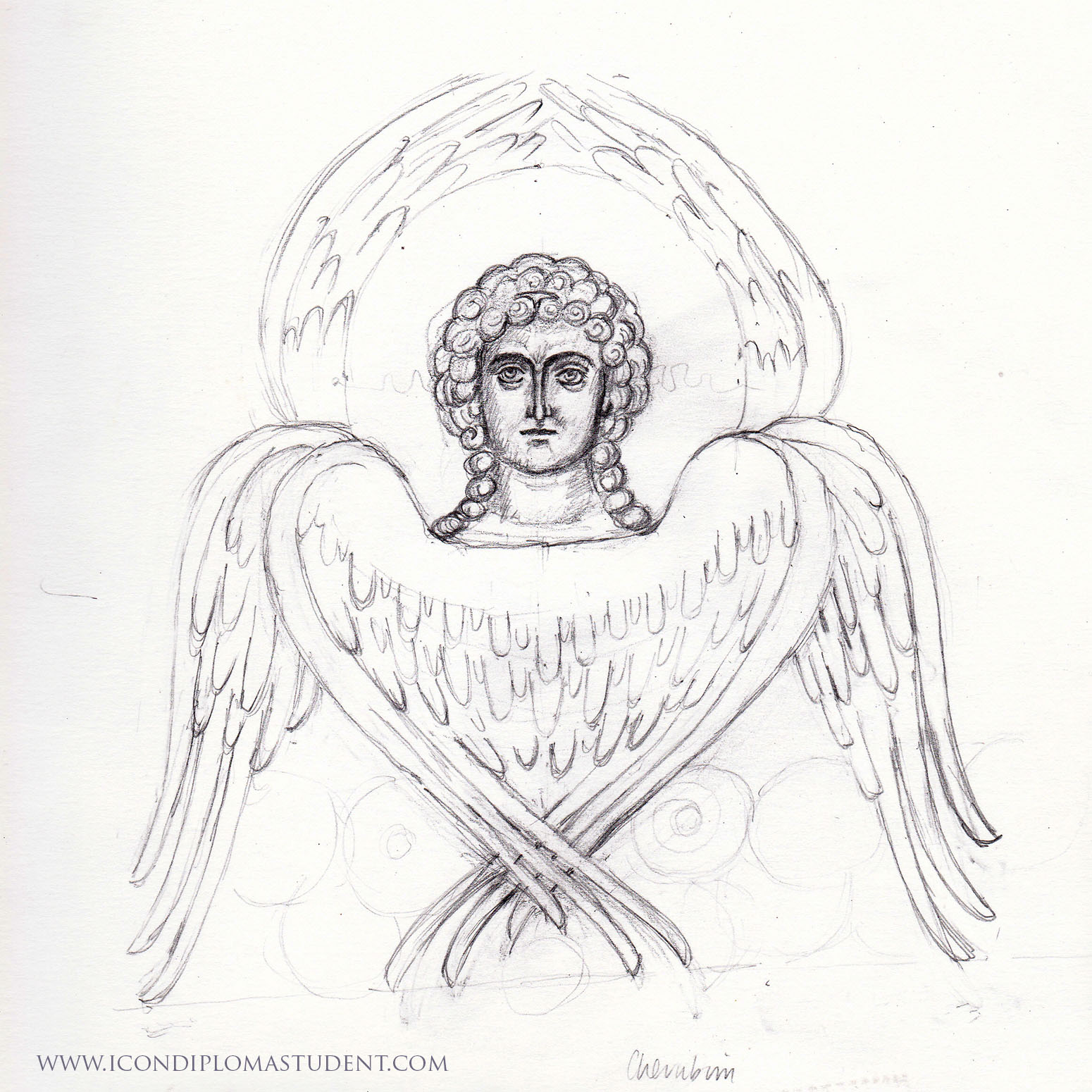
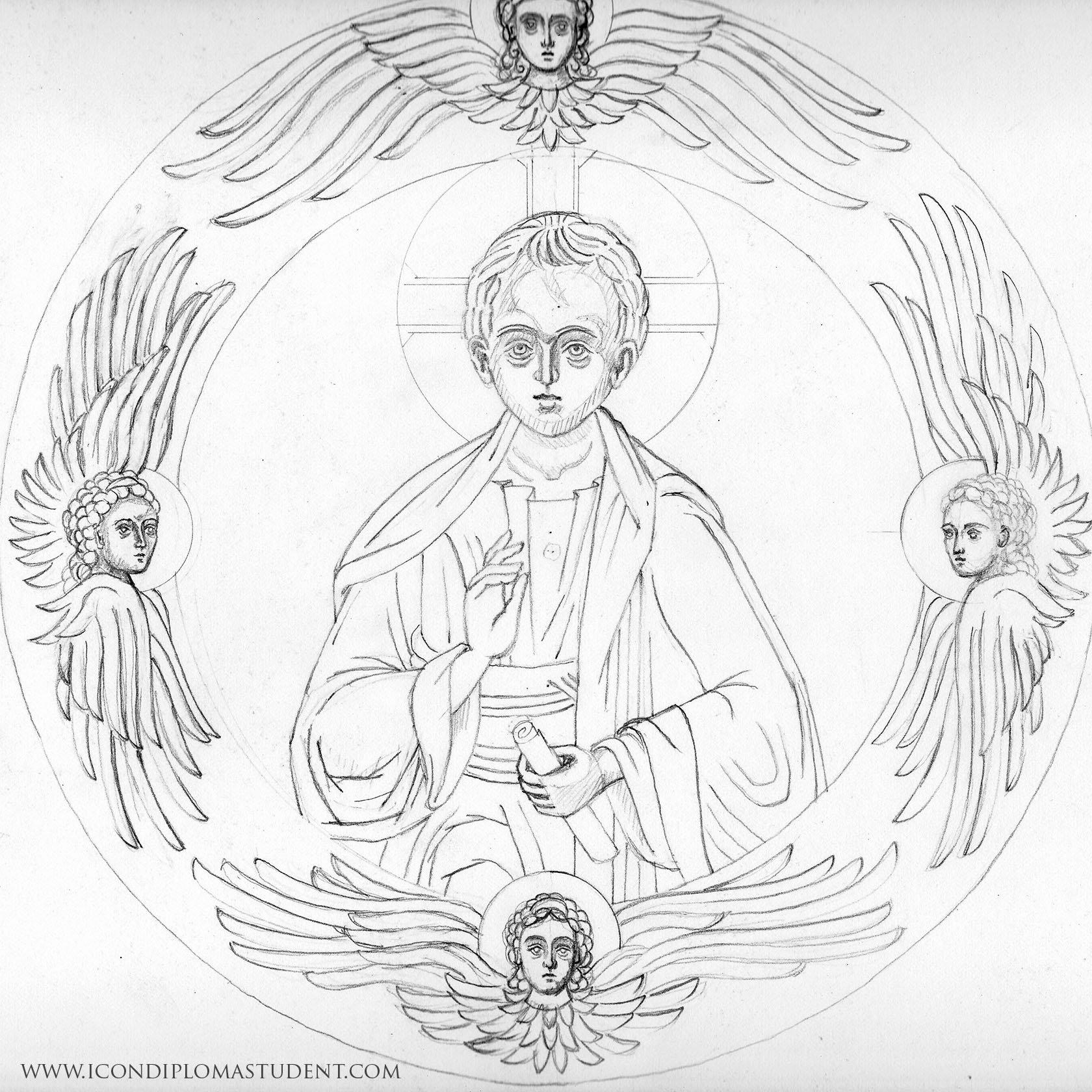
The Council of Archangel Michael is a rich icon and full of life so I drew the main figures separately in turn. I drew the cherubim below late into the evening while my sister rested. I smile and am so grateful for all the help we are still recieving from these celestial helpers.

pencil drawing of cherubim

Cherubim from the Council of Archangel Michael icon

pencil drawing of young christ and seraphim

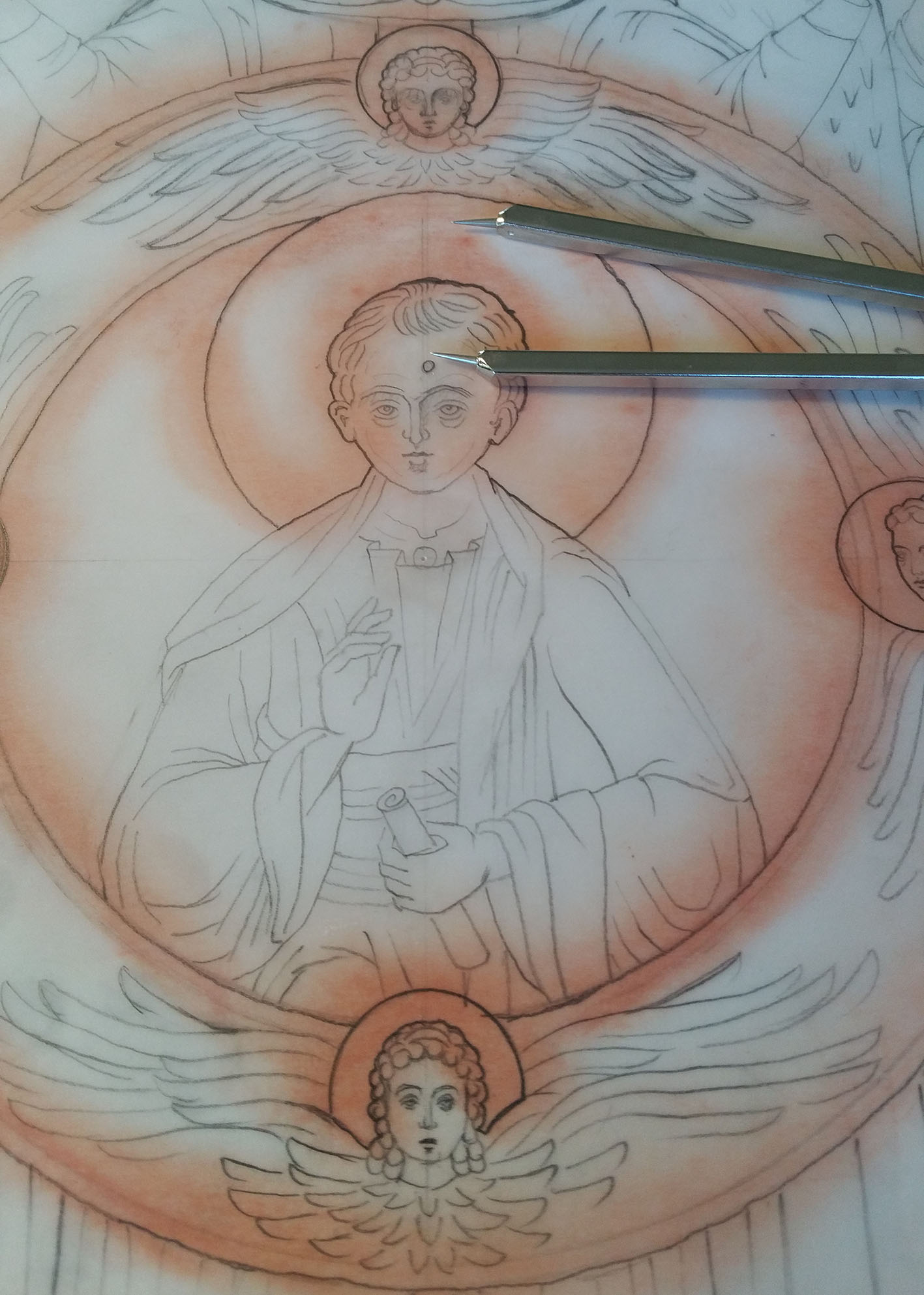
Drawing of the young Christ within a circle of seraphim

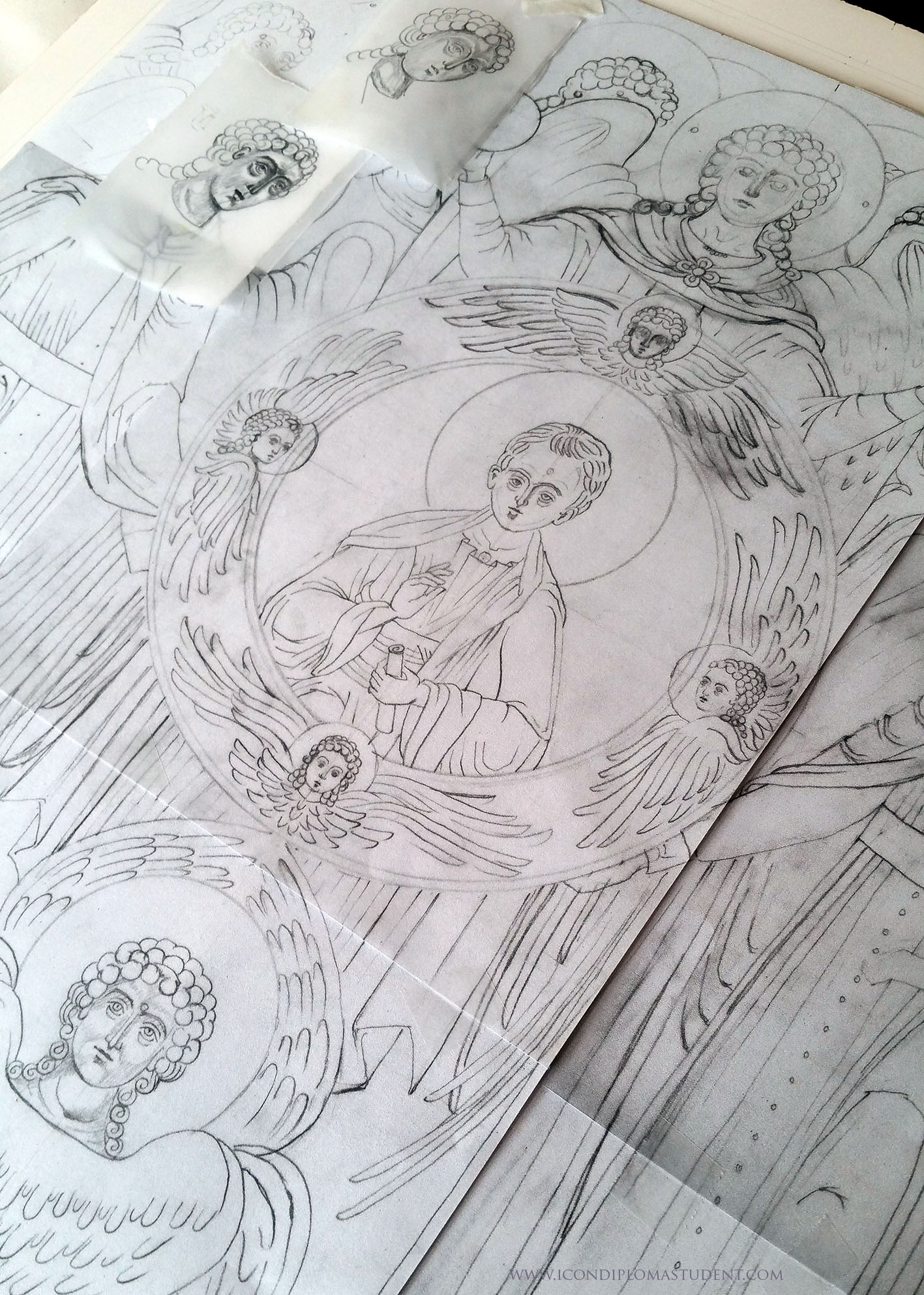
pencil drawing of Council of Angels

Full drawing ready to transcribe

The overall drawing is too big for me to scan at home but the photo gives you an idea of the overall composition. The finished icon will be just over 40cm square.

Hope you will join me as the rest of this icon unfolds!

Thanks for reading – more to follow soon.

Ronnie

St David the Dendrite (part 3 of 3)

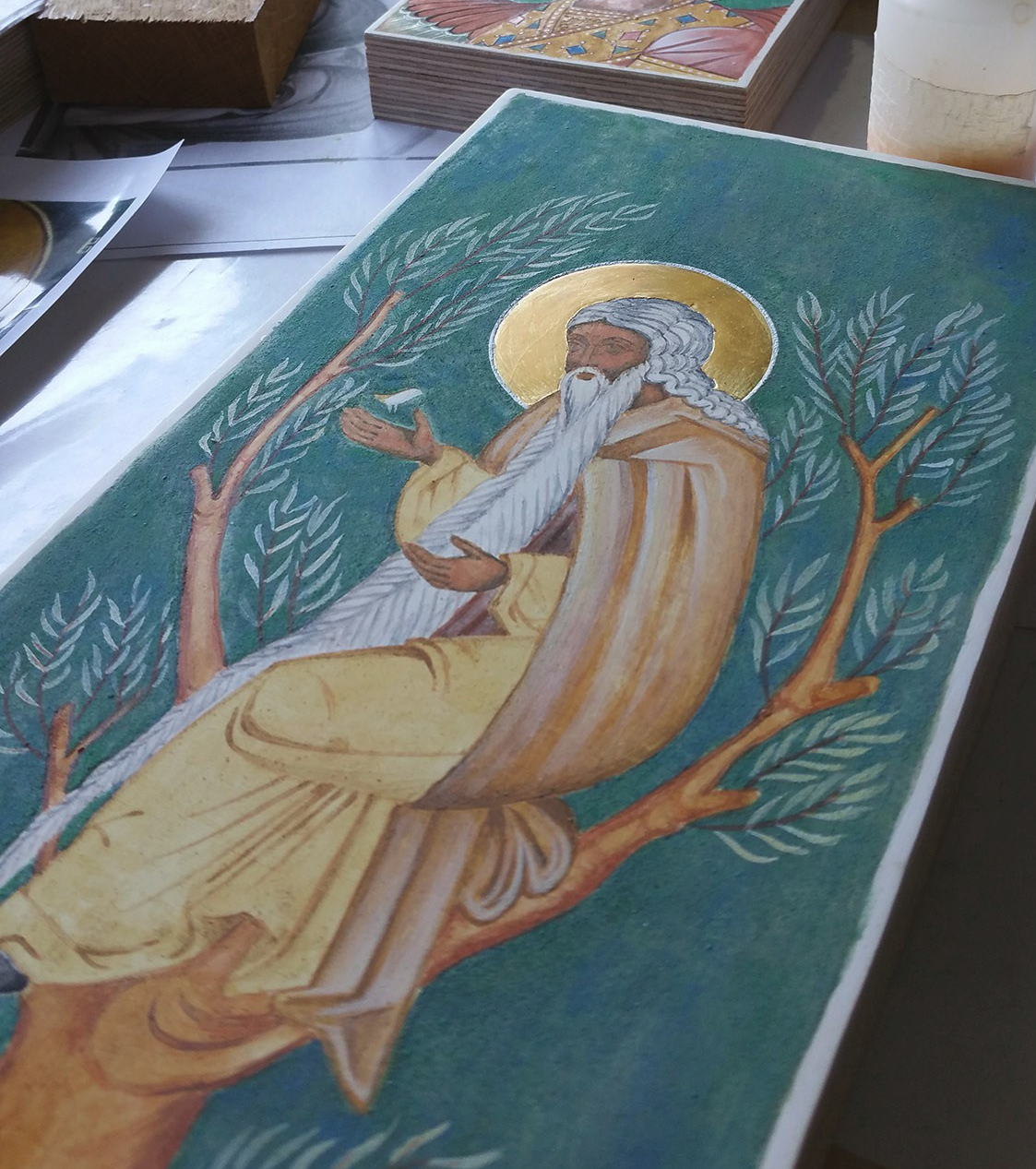
Here’s the icon of St David taking shape. It is painted on a long thin board, 25mm birch ply. This post is mostly photos but always happy to hear from you if you have any questions.

icon painting studio

St David the Dendrite (tree dweller) of Thessaloniki

St David the dendrite of thessaloniki icon

Lines transcribed in red ochre on to gessoed board (photo enhanced for clarity)

The masking tape is to protect the gesso from the compass point.

terre verte pigment on icon

First washes of terre verte over background

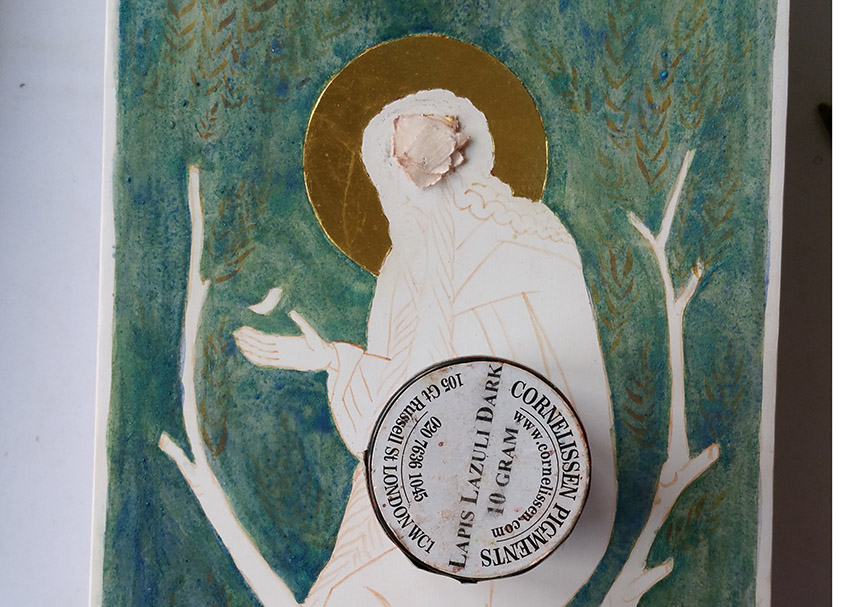
adding a wash of lapis lazuli over the terre verte

Adding a wash of lapis lazuli over the terre verte

green background on icon of st david

Finishing background so I can add outline to halo

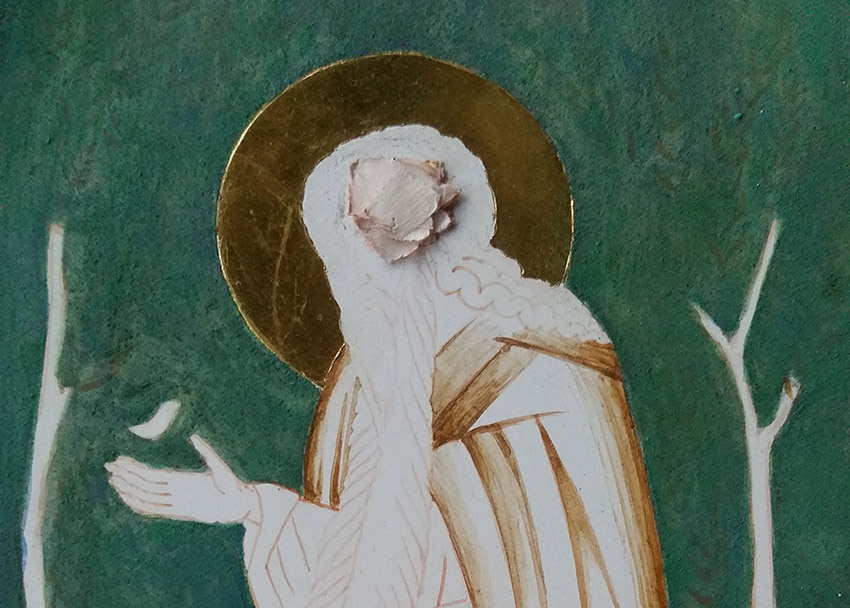
underpainting the face

underpainting the face

jaipur paint brush in use

David and Crystal visited India and brought me back a brush from Jaipur

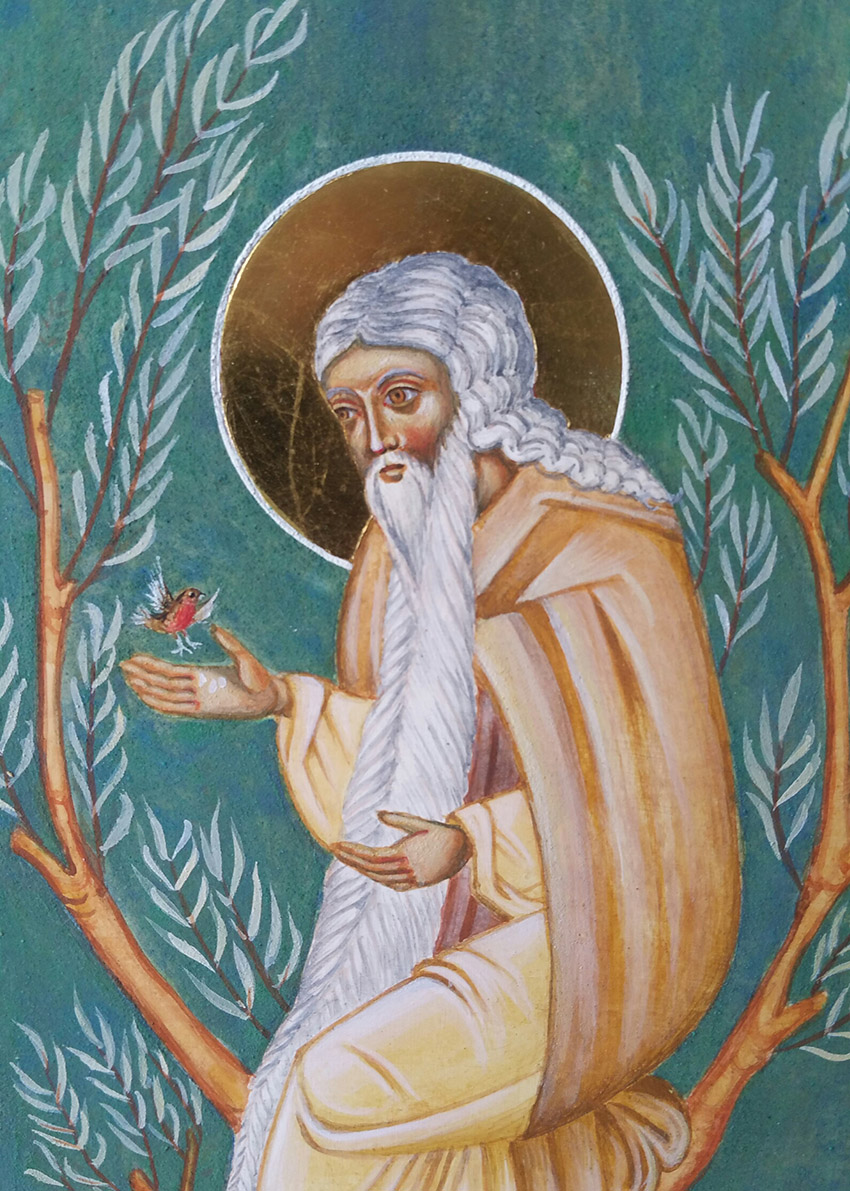
completed icon (in part) of St David with his open hand feeding a robin

completed icon (in part) of St David with his open hand feeding a robin

7 membrane over face

Membrane applied in thin layers to face using yellow maimeri and a dash of english red ochre light.

Thanks for reading!

Ronnie

Cornelia and Hironmoy remembered

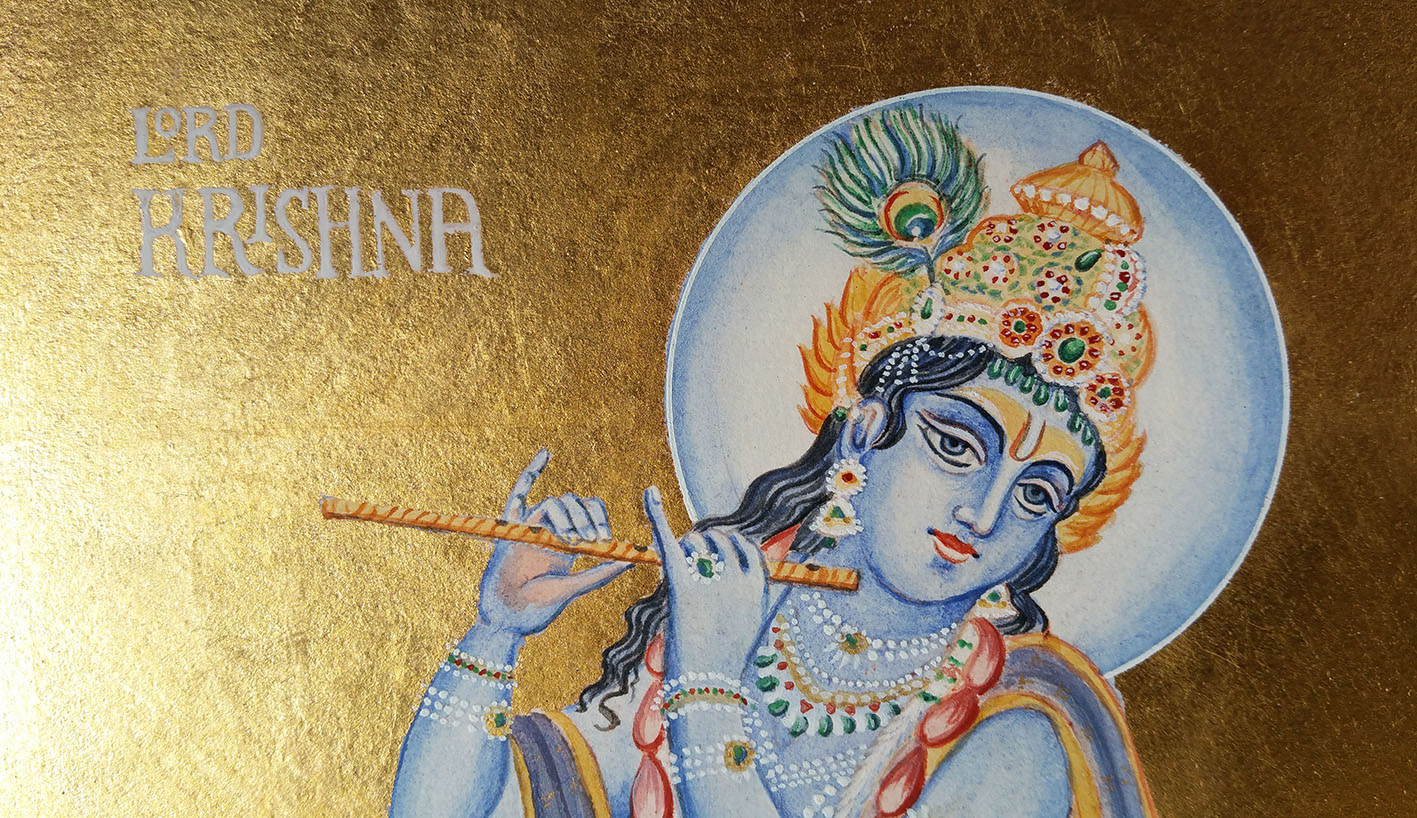
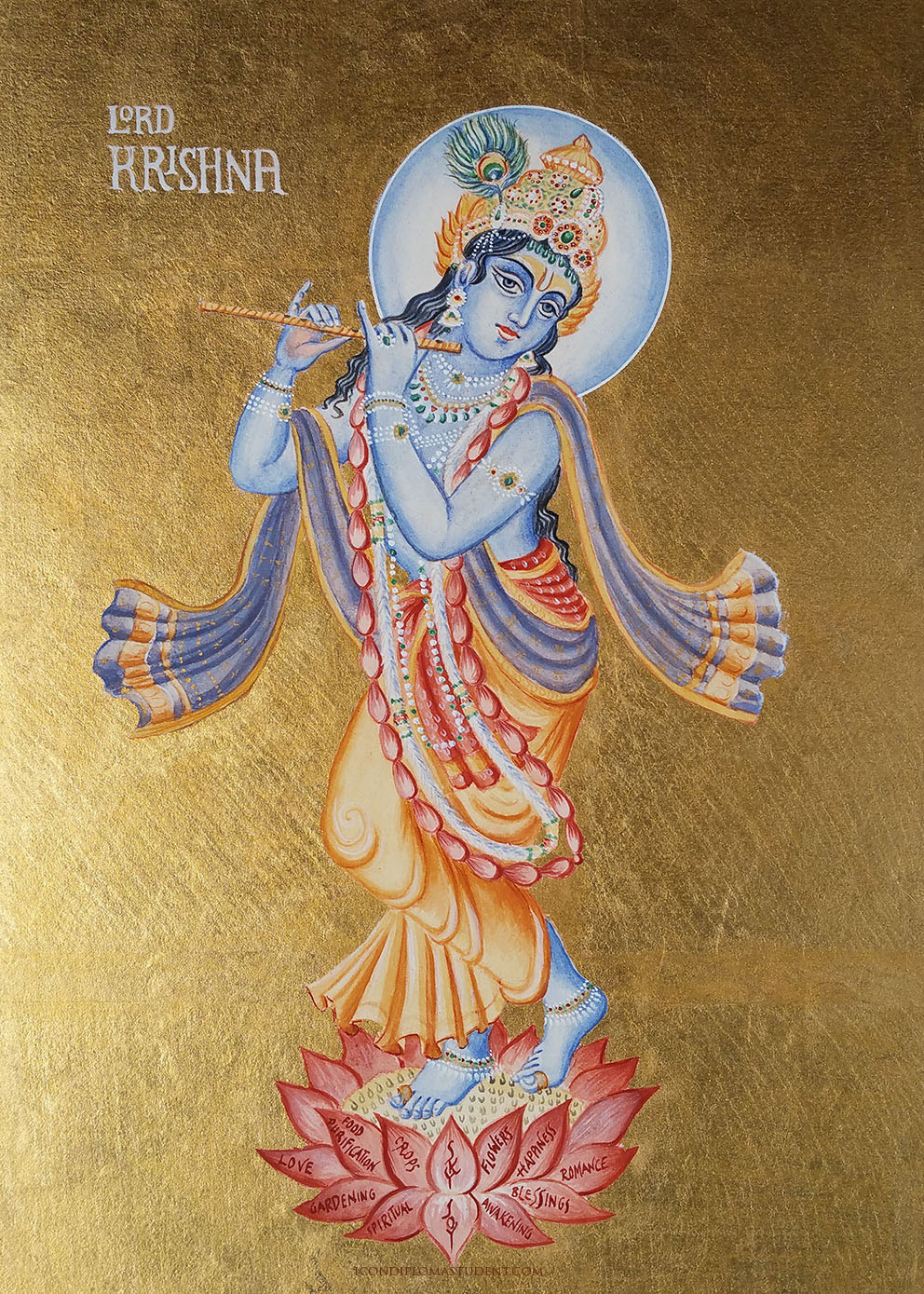
paionting of lord krishna on watercolour paper

Lord Krishna

My great aunt, Cornelia Maria Georgina Sharp, was born on 8th December 1891, the second child in a family of six. It was years later that we discovered a little more of this courageous woman’s life when Dad’s cousin researched into what had happened to his absent father.

I am touching on her story here as I was delighted to be commissioned to paint an icon of Lord Krishna, the god of compassion, tenderness and love in Hinduism and happy that we have a family connection to this rich faith.

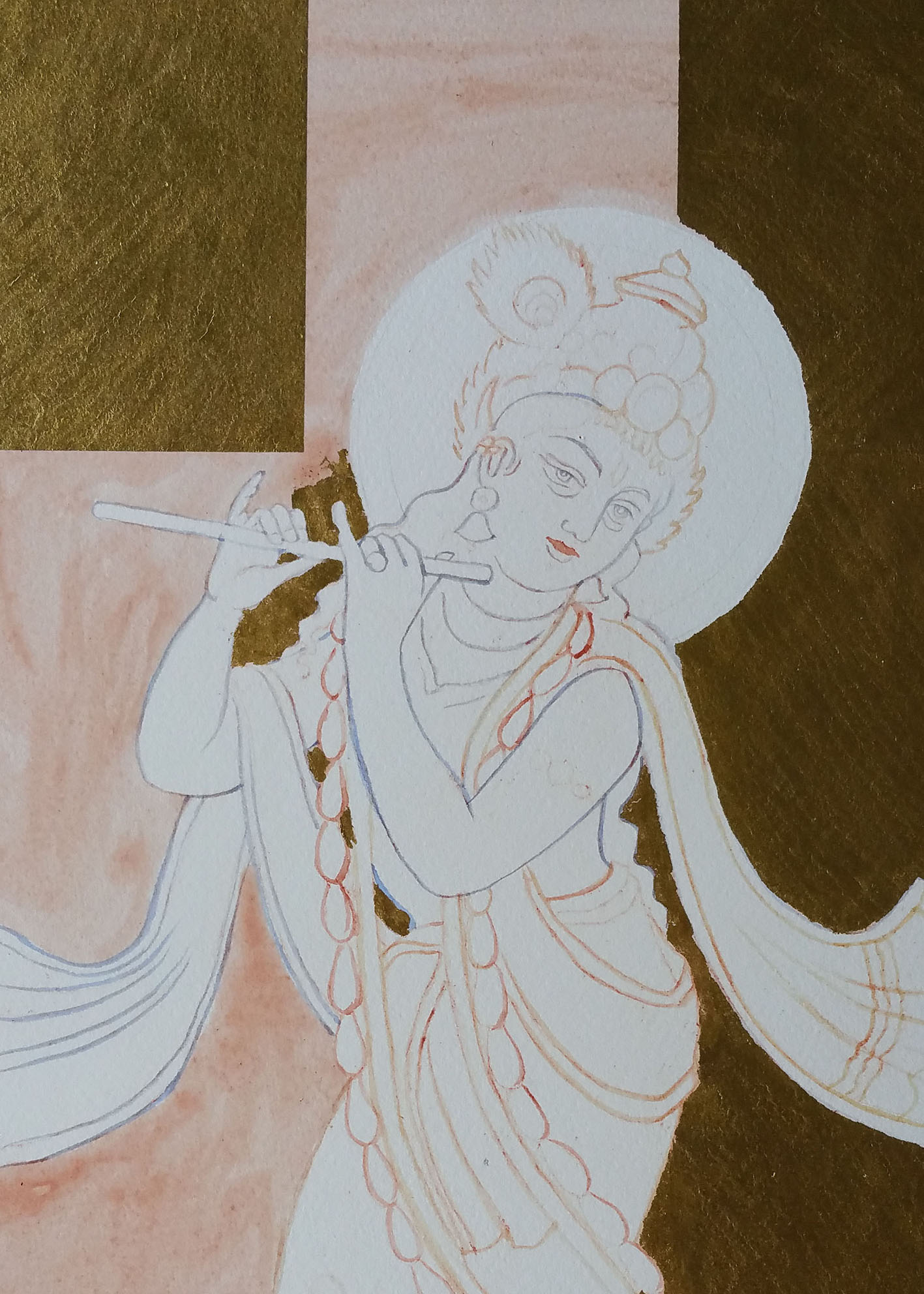
lord krishna outline drawing

Transcribing the lines of outline drawing onto paper

In brief, Cornelia, a young English Catholic woman working in service, married a young Indian Hindu man named Hironmoy Roy-Chowdury in the Church of the Holy Rood, Watford. All the more extraordinary was that her new husband was the nephew of poet and winner of the Nobel Prize for literature  Rabindranath Tagore 

Hironmoy was a sculptor studying at the Royal College of Art. Their only child, Francis Roy Chowdury (Dad’s cousin), was born in October 1914 two months after the outbreak of the first world war. The marriage wasn’t to last long as Hironmoy went to France to volunteer in an abulance unit and then his family heard of the marriage and insisted he return to India.

2 line on paper

First lines on paper

Back to the icon of Lord Krishna where I’ve depicted him as a young man playing the flute, standing on a lotus flower. He is painted on 600gsm hot pressed paper mounted on a 25mm ply board rather than on gesso thereby avoiding the use of rabbit skin size.

gold leaf on lord krishna drawing

Applying 24 carat transfer gold leaf over acrylic size coloured with a little red ochre

lord krishna on heavenly gold background

Lord Krishna standing against the gold of heaven

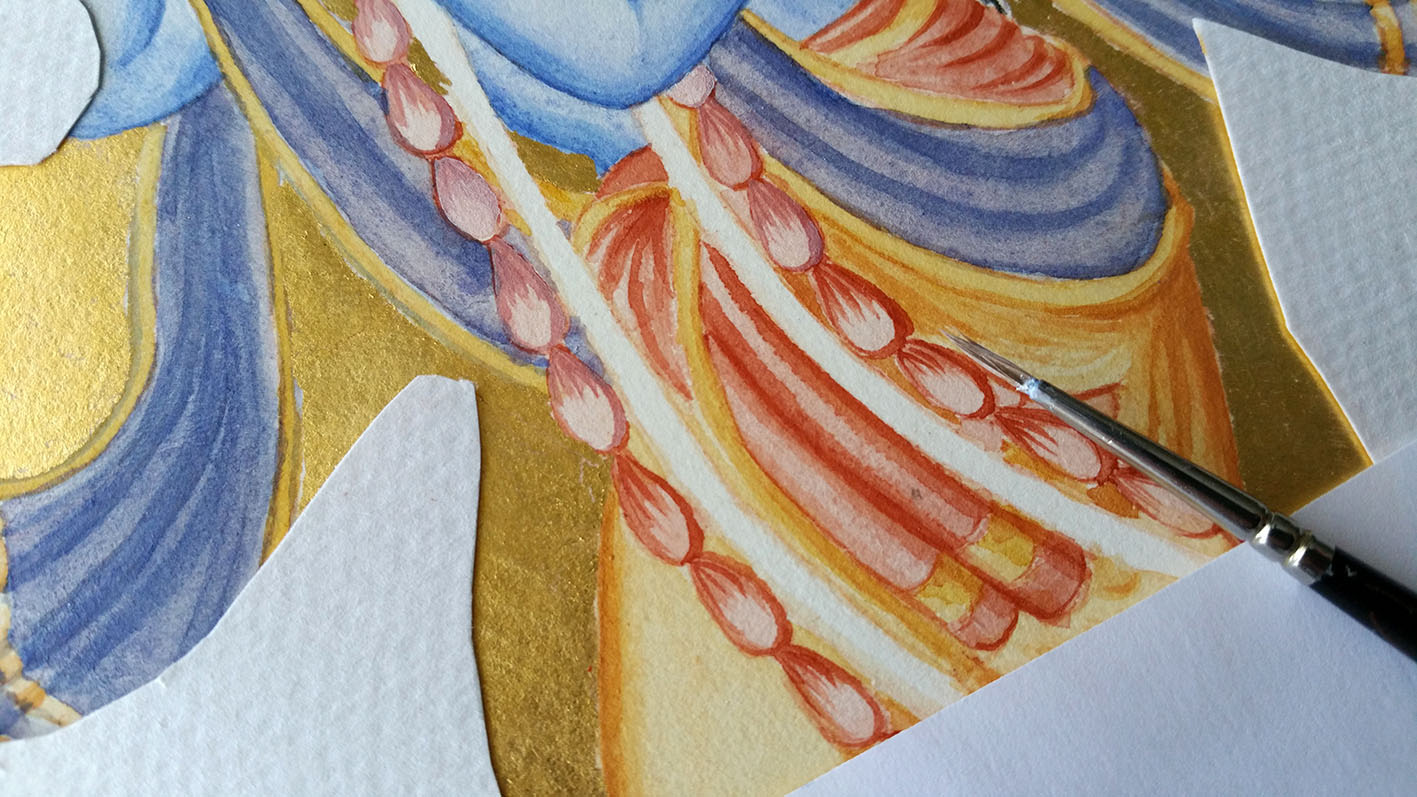
5 underpainting

Underpainting the figure and garments

egg tempera

Applying the paint in thin layers

lapis lazuli

Flesh tones painted in Lapis Lazuli

The colours on images of Lord Krishna are vibrant but to avoid them clashing, I limited the palette to English red ochre, yellow ochre maimeri, lapis lazuli, black and white. The greens were mixed from malachite.

I chose to use Lapis Lazuli as its deep, celestial blue remains the symbol of royalty and honor, gods and power, spirit and vision, wisdom and truth. Its name comes from the Latin lapis, “stone,” and the Persian lazhuward, “blue.”

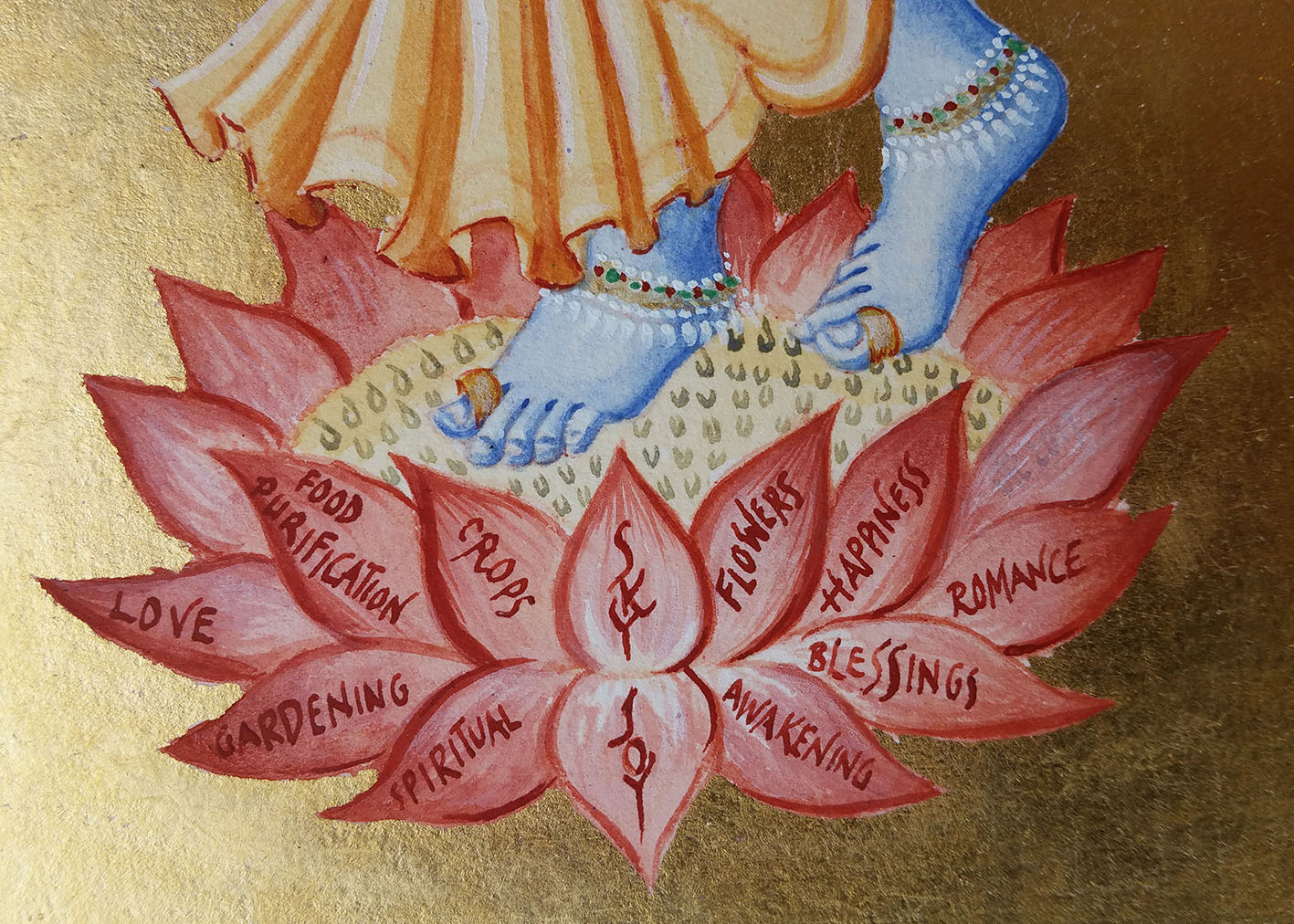
qualities of Lord krishna

Some of the many qualities with which Lord Krishna is associated

Lord Krishna painted using the icon method

Lord Krishna ready for his new home

There must be enough for a book on the subject of Cornelia and Hironmoy’s brief lives together and it is a treasure that we know of this through their son’s research.

I will close with a quote from ‘Fruit Gathering’ by Rabindranath Tagore;

        ‘Send me the love which is cool and pure like your rain that blesses the thirsty earth       and fills the homely earthen jars.

         Send me the love that would soak down into the centre of being, and from there would spread like the unseen sap through the branching tree of life, giving birth to fruits and flowers.’

Thanks for reading,

Ronnie

Membrane Technique for icon faces

icon painter's work space

Spring cleaned workspace

I’ve had a few requests for a glimpse at my notes from the icon diploma course taught by Aidan Hart at the PSTA. There are a lot to sift through and they’re a bit illegible, even to me. However, I plan to revisit and re-write them at each stage of painting an icon but bear with me as this may take a while!

painting with italian Gold Ochre pigment and Ivory black

Underpainting the faces

I’ve already made a start with the pigment grinding crib sheet and now that I’m currently underpainting an icon, I’ve written up my notes for this stage. They are on my website on the Crib Sheet page and I will share a link at the end of this post.

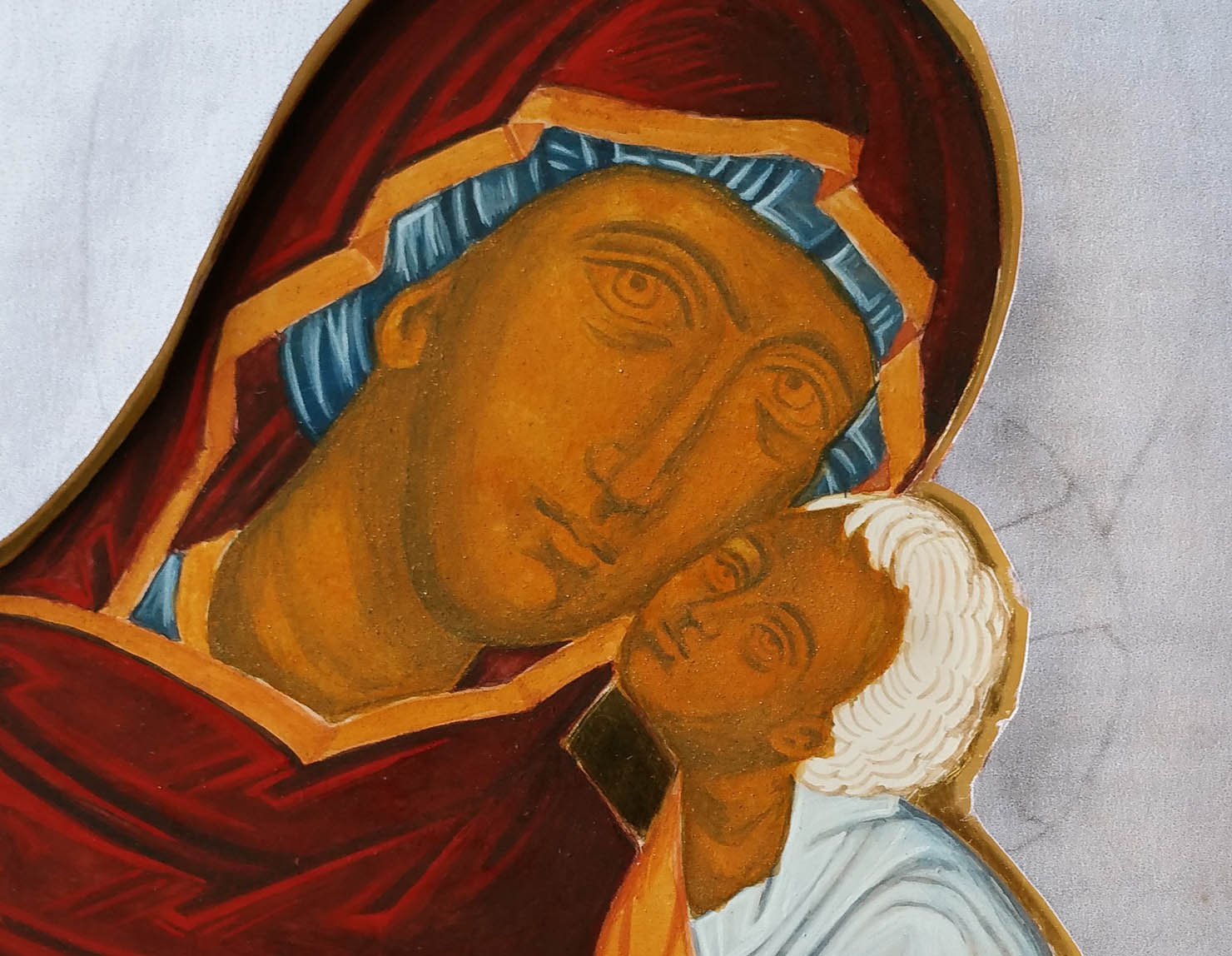
underpainting face of Blessed Virgin and Christ Child

Underpainting complete

For the underpainting, I’ve found that mixing an earth green from Italian yellow ochre and ivory black has been a little less sticky than using terre verte.

Don’t forget to apply a dilute wash over all the unpainted areas before applying the membrane or it won’t cover evenly.

I still find it tricky to apply the membrane layers evenly but at least I know better not to fiddle with uneven areas. Just go and do something else for a few hours to let it properly dry then apply another couple of thin layers.

icon painting with membrane technique

Three layers of thinly painted membrane applied

Next stage is applying the shading and highlights, but for now here are my notes: Membrane technique part one underpainting and membrane

By the way, the pigment grinding demonstration went well. More on the results of that when I use the pigment to paint!

finished mid tones on an icon face

Five layers of the membrane applied

Thanks for reading,

Ronnie

Crib Sheet No 1: Grinding Azurite to make Pigment for Paint

azurite-from-burslem-lapidary

Azurite in its mineral form

I recently volunteered to give a demonstration of grinding minerals to make pigment for painting to a local networking group – W.I.R.E. (Women in Rural Enterprises). I haven’t given a demonstration before but since it will be a small friendly audience, it’s a good place for me to make a start.

slab and muller with azurite

Slab and muller to grind up the pigment

I’ve written several times already about grinding pigments but this time I’ve gathered my notes together as a crib sheet which you can downdoad grinding-azurite-for-painting-by-ronnie-cruwysas a four page pdf.

I’ve also just set up a fixed page on this website, called ‘Crib Sheets’, which I hope to add to in future. This first set of notes has been saved to the new page and I hope to add many more…well, that’s the plan!

Thanks for reading.

Ronnie

Herald of Spring

Greetings icon friends!

Warmest wishes for Candlemas on Thursday!  Here’s Archangel Gabriel, first icon of 2017.

icon by Cruwys

Archangel Gabriel

This post is short and sweet while I’m gathering my thoughts on varnishing icons…or rather questions. I’d love to hear of people’s preferences – there seem to be so many options yet each with drawbacks.

Bye for now

Ronnie

PS Prints and cards of this icon are now available from Smith York Printers.

All gone quiet

It’s all hands on deck at home as finishing off seems to take almost as long as actually painting an icon. Our last icon session is only days away and details of the graduation show next month are now up on the PSTA website. I would be delighted if you could come along though I know many of you are miles away. It promises to be a great show as my fellow students have produced some breath-taking work.

I plan to continue with the blog after the course has finished as I haven’t posted any where near as much as I had intended.

I will be back in touch when I get a moment and will leave you with these two icons which are almost complete…varnishing, picture hooks and cord still to add.

iconpainting of St Hilda of Whitby by Ronnie Cruwys

St Hilda of Whitby

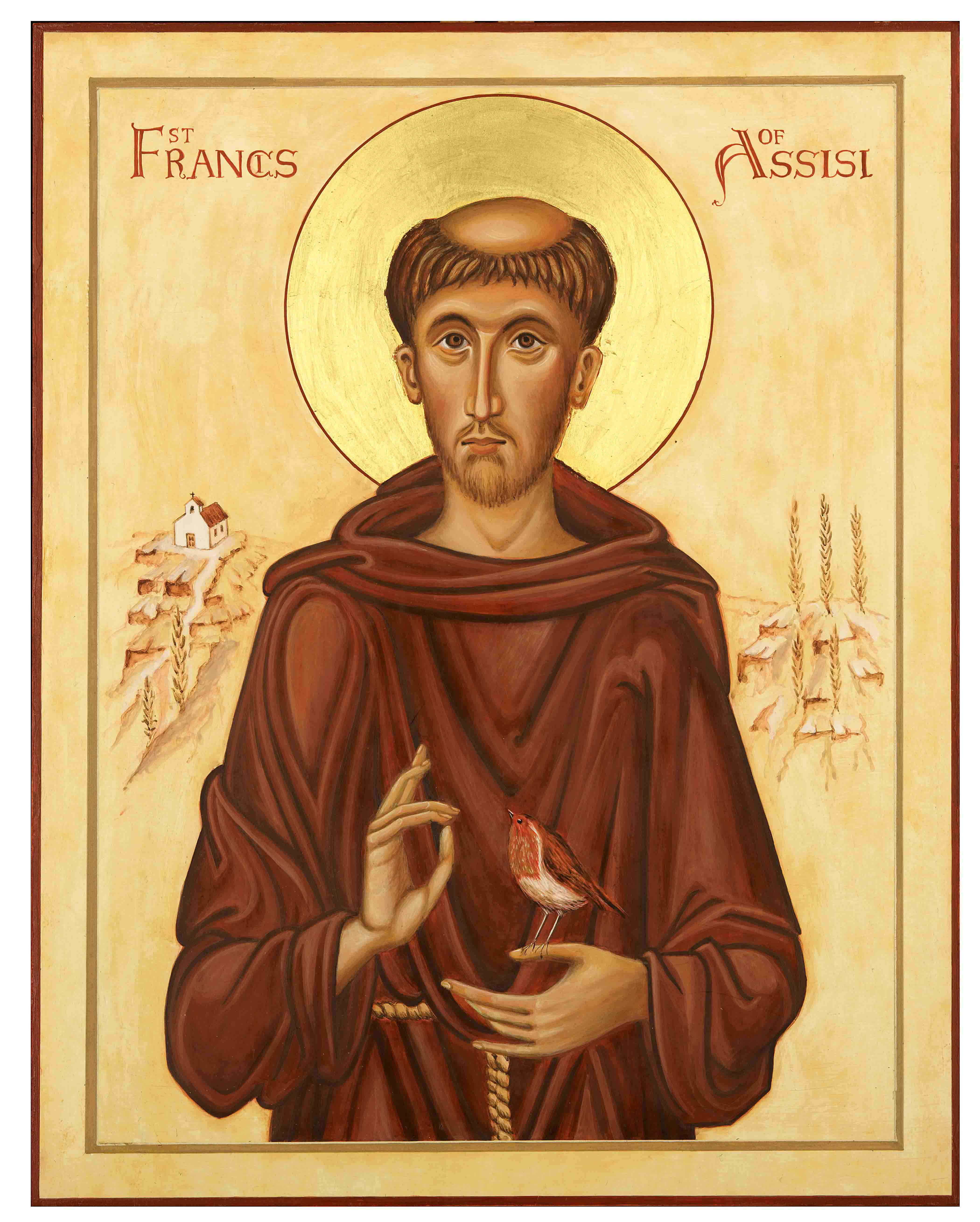
Icon painting in egg tempera of St Francis of Assisi

St Francis of Assis

Thanks for reading!

Ronnie