Icon Diploma Student

Learning to see with the eye of the heart

Posts tagged ‘Icon Diploma course’

Archangel Michael part 3

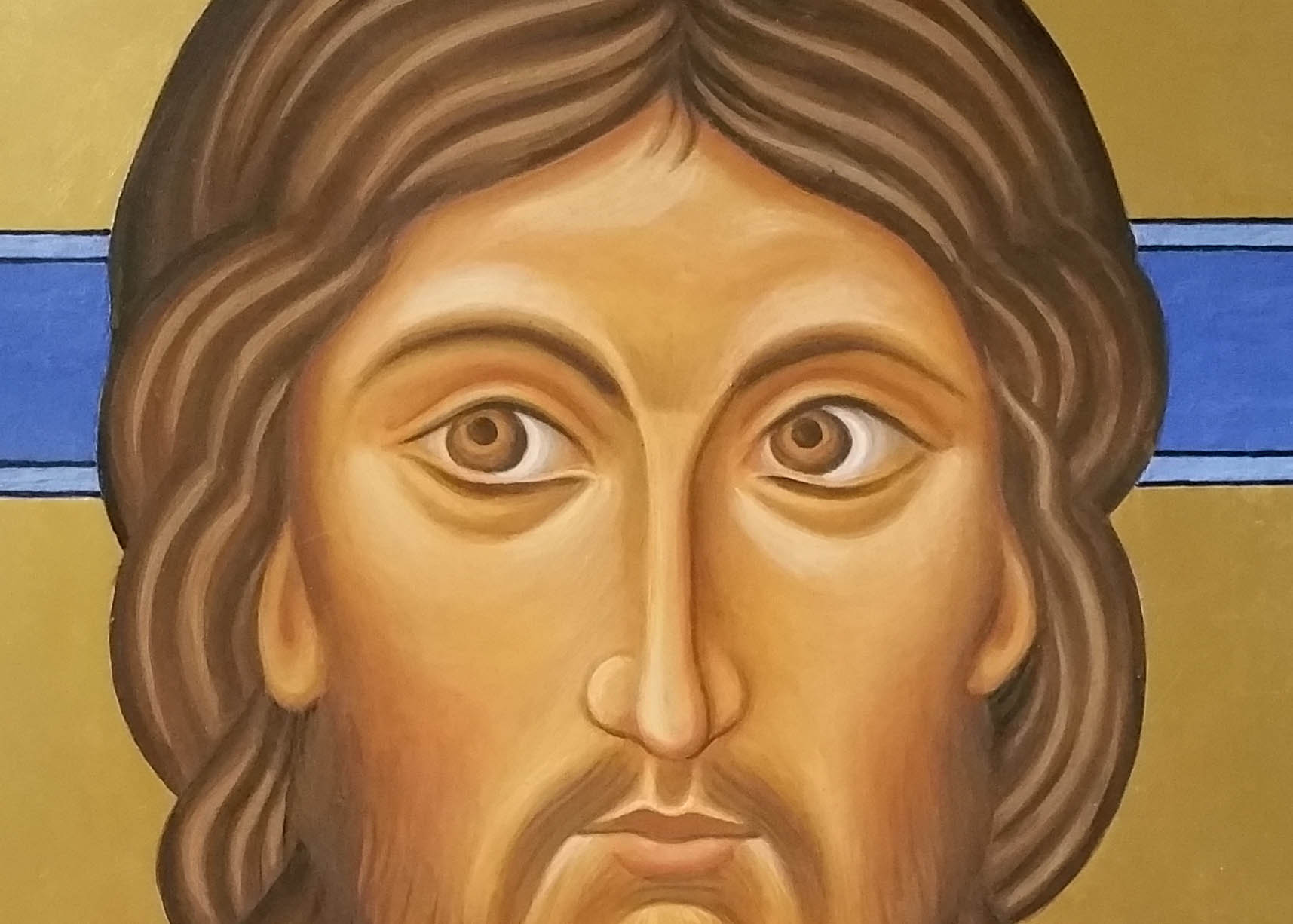
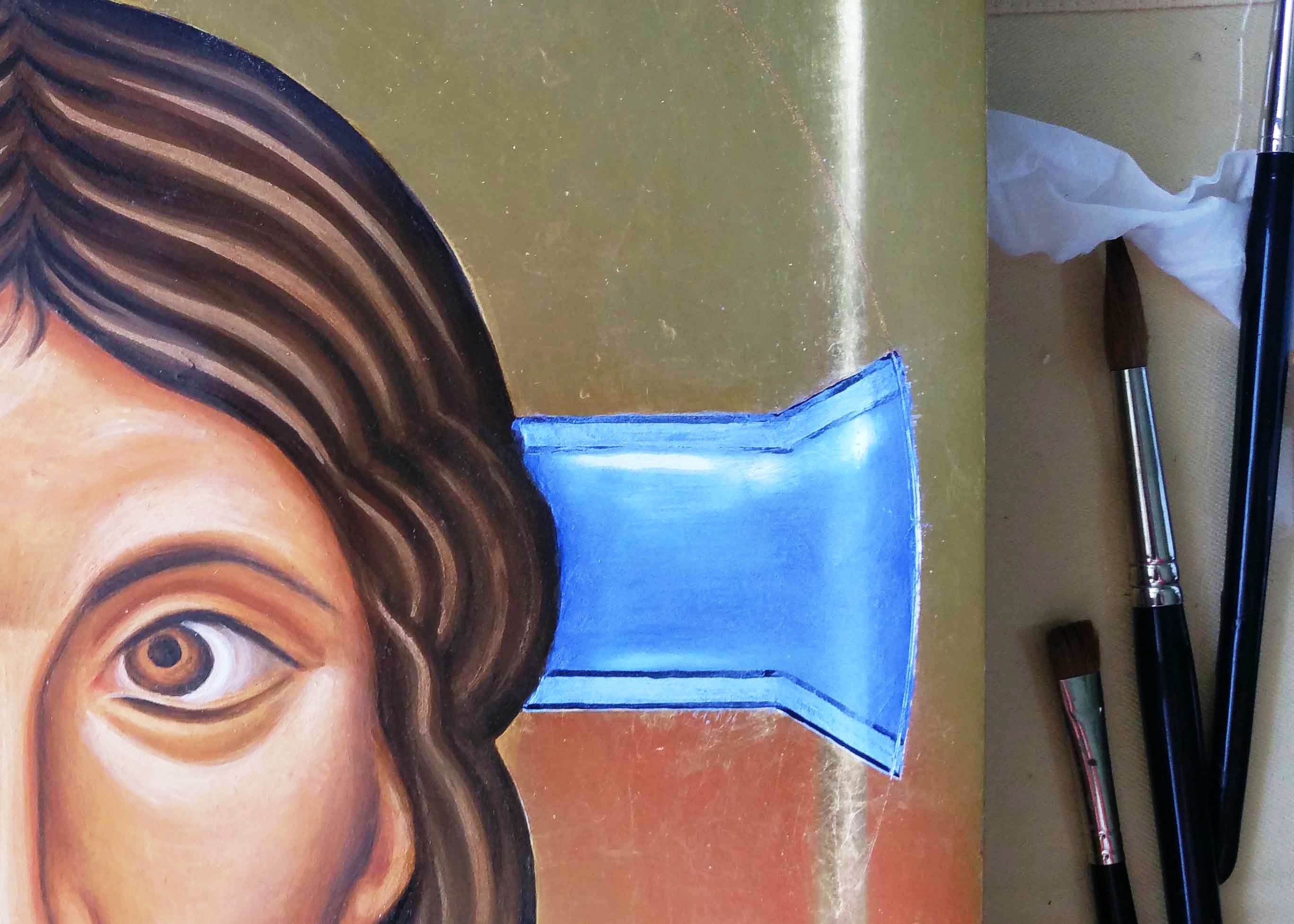
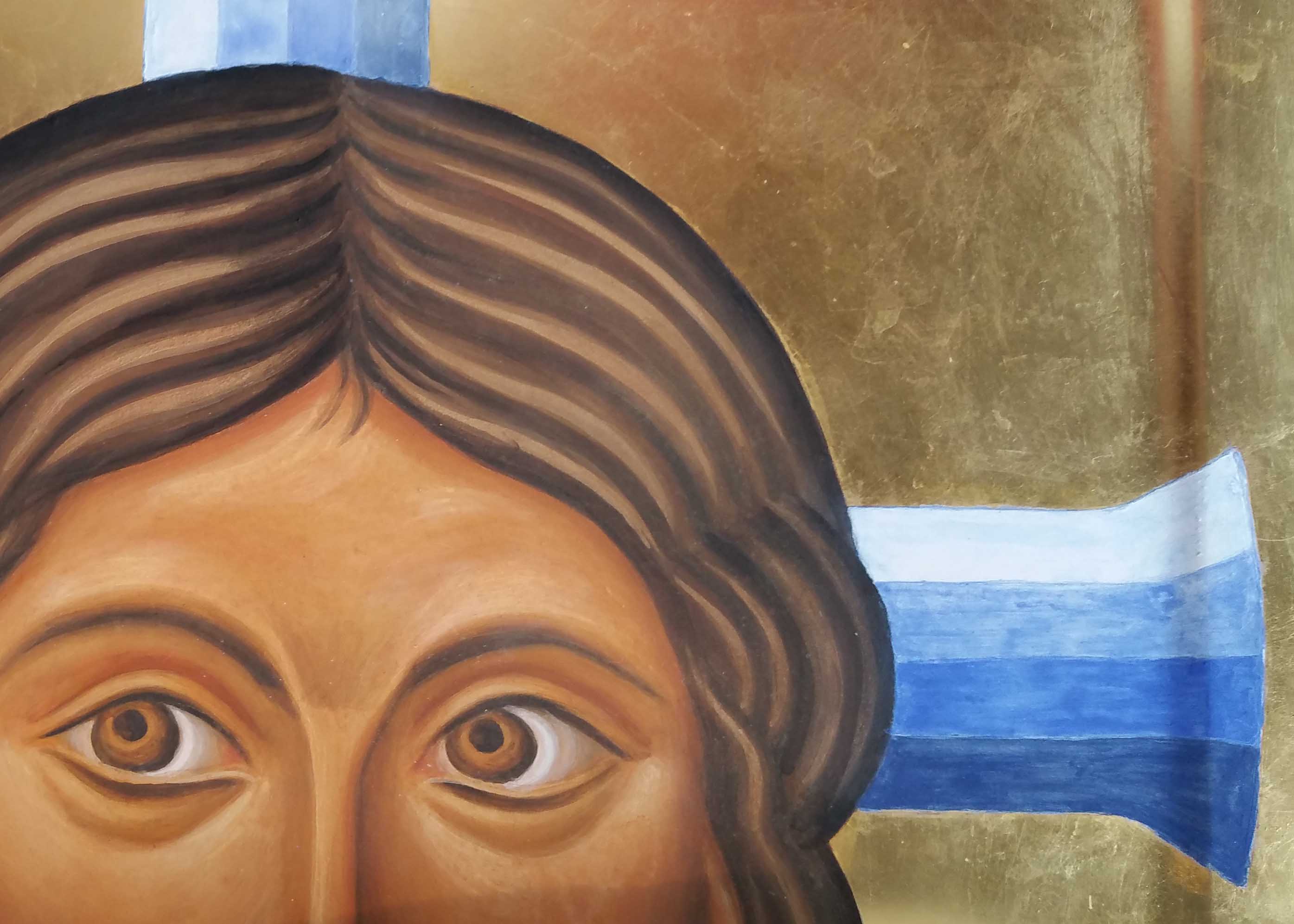
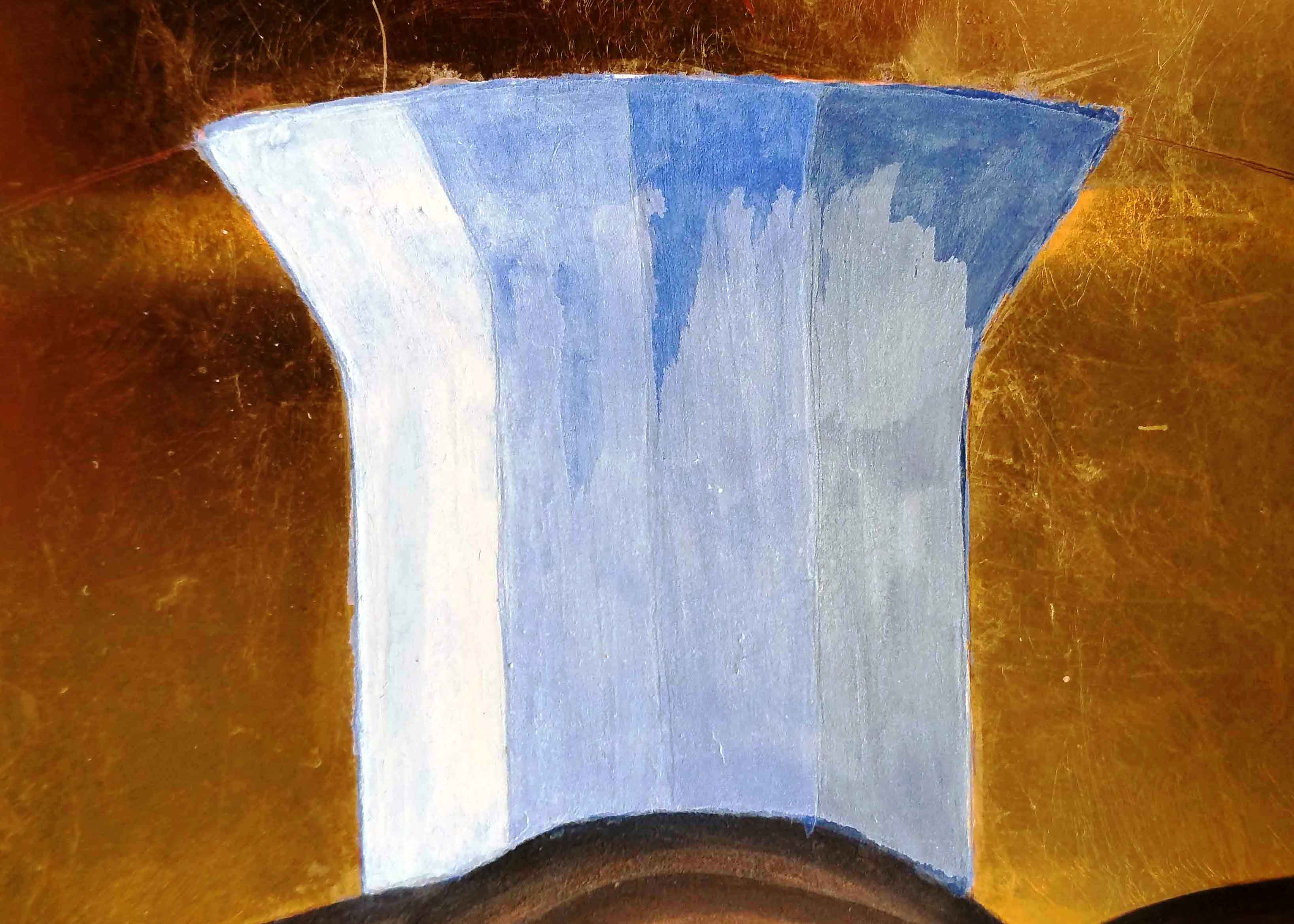
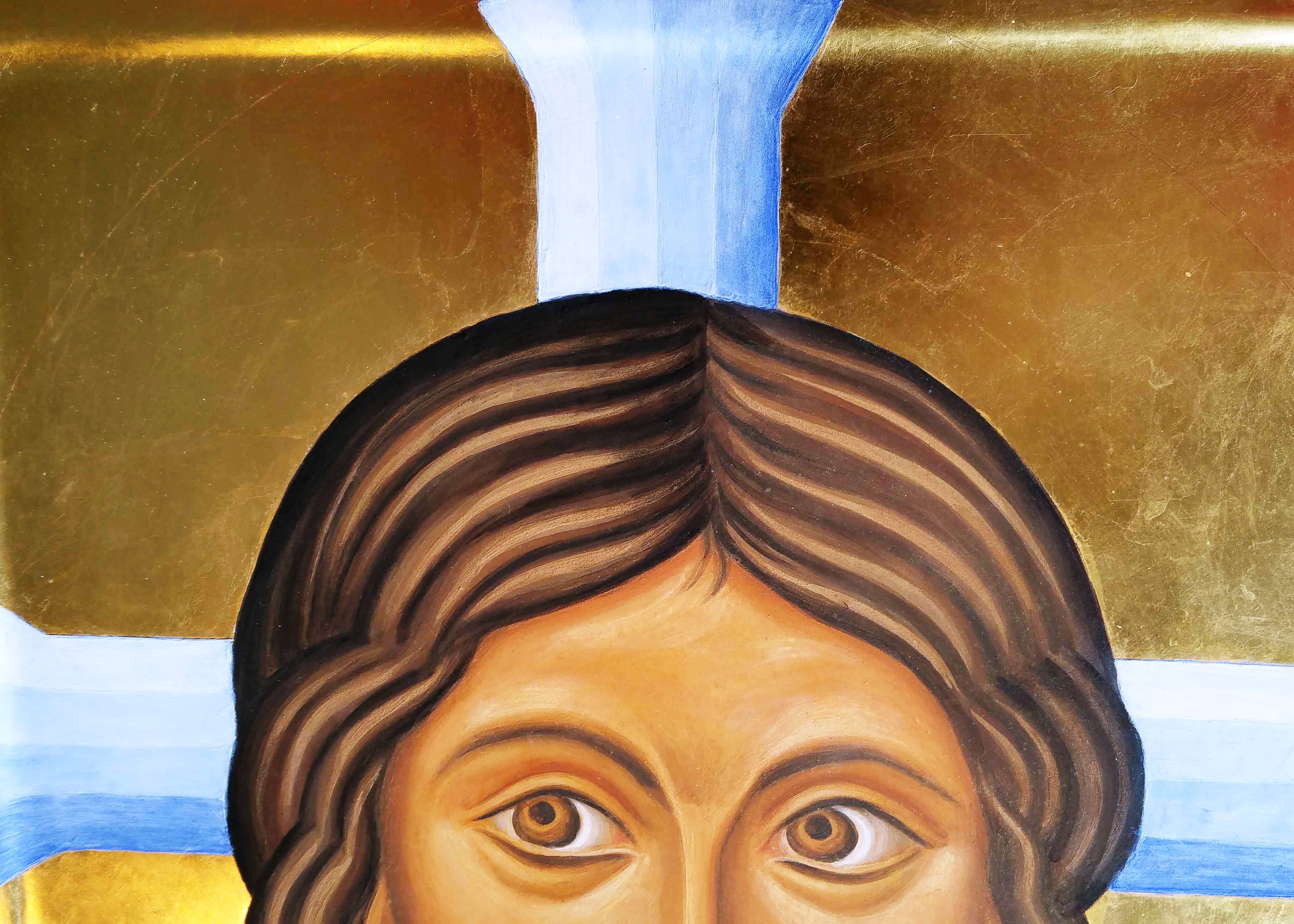
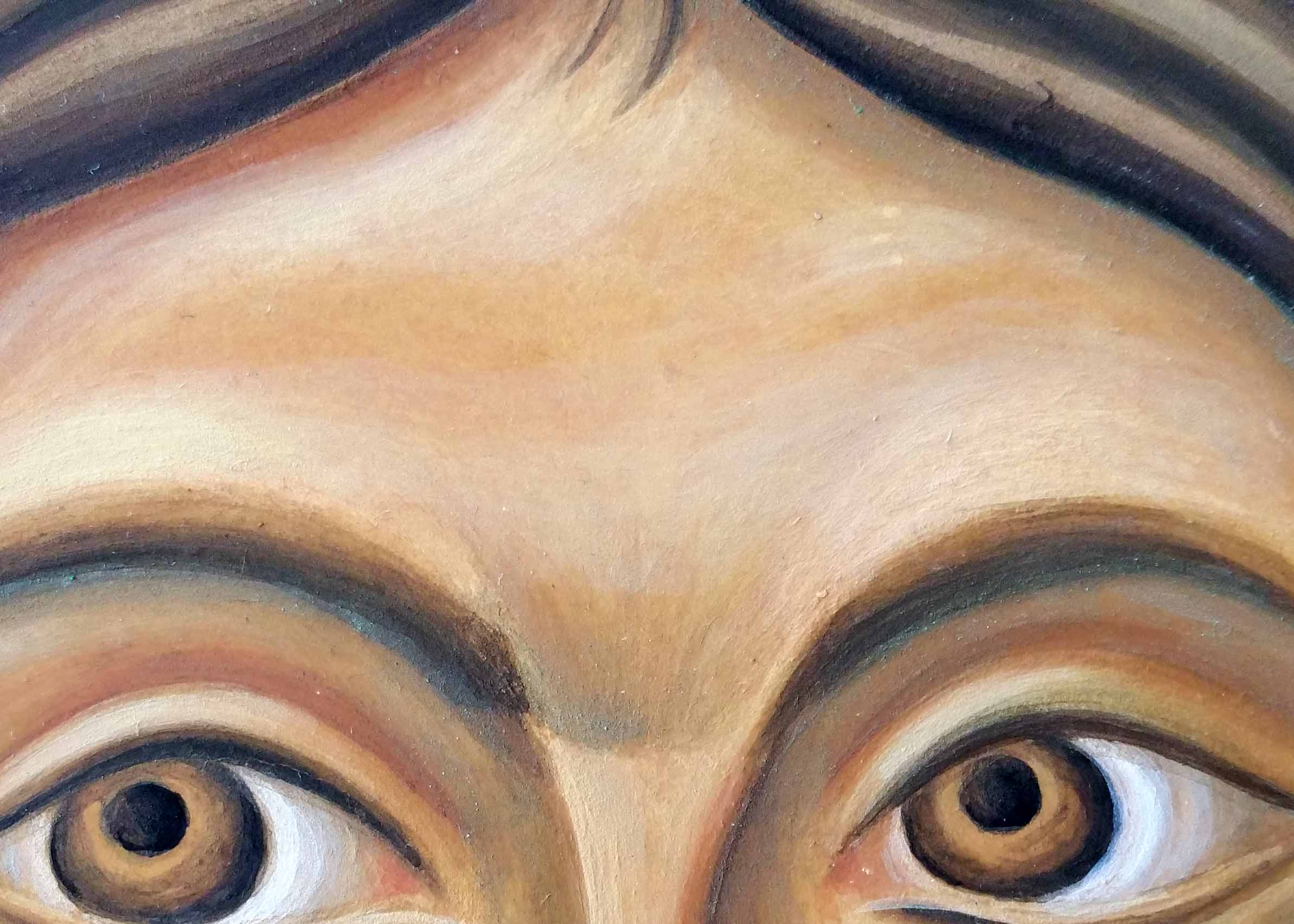
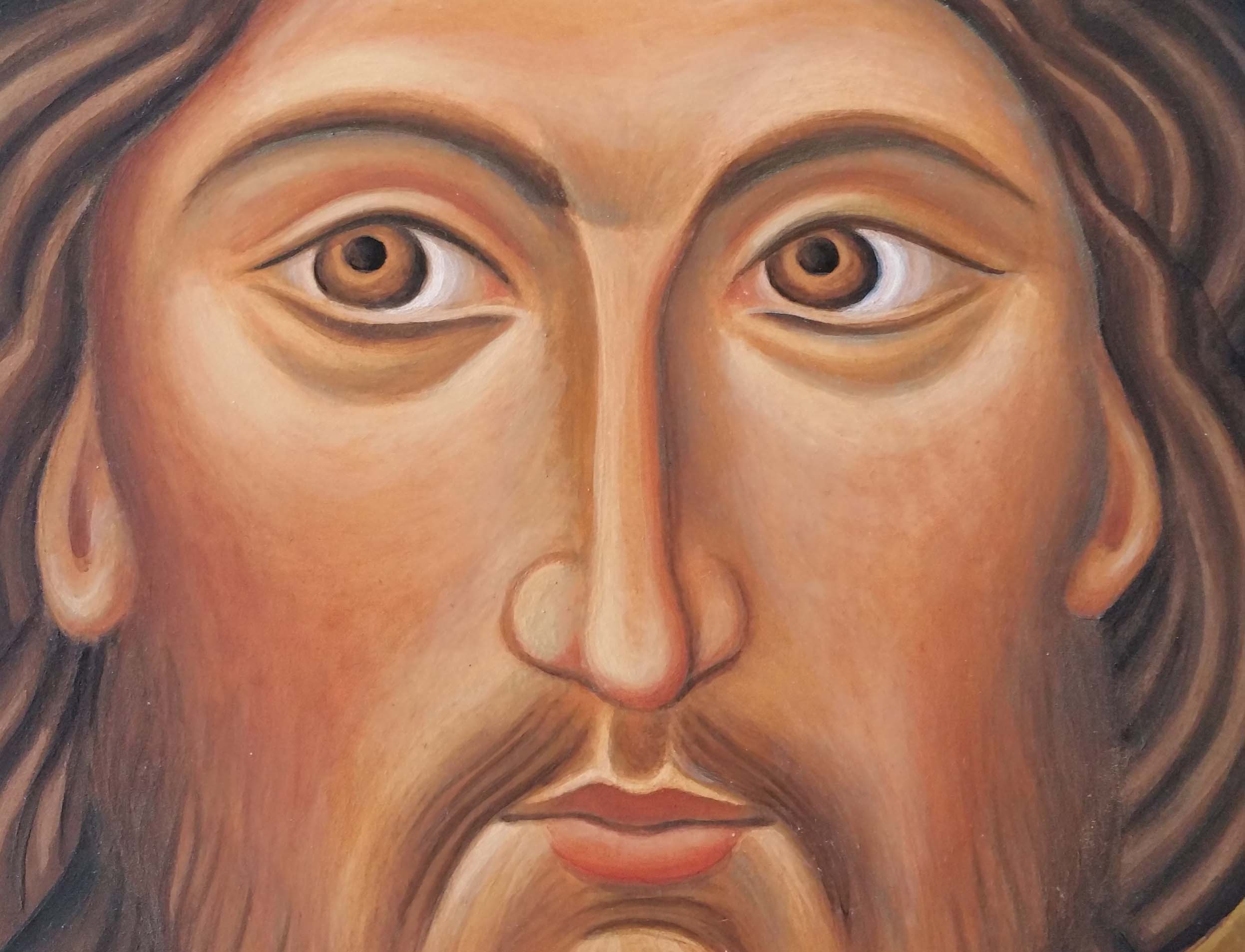
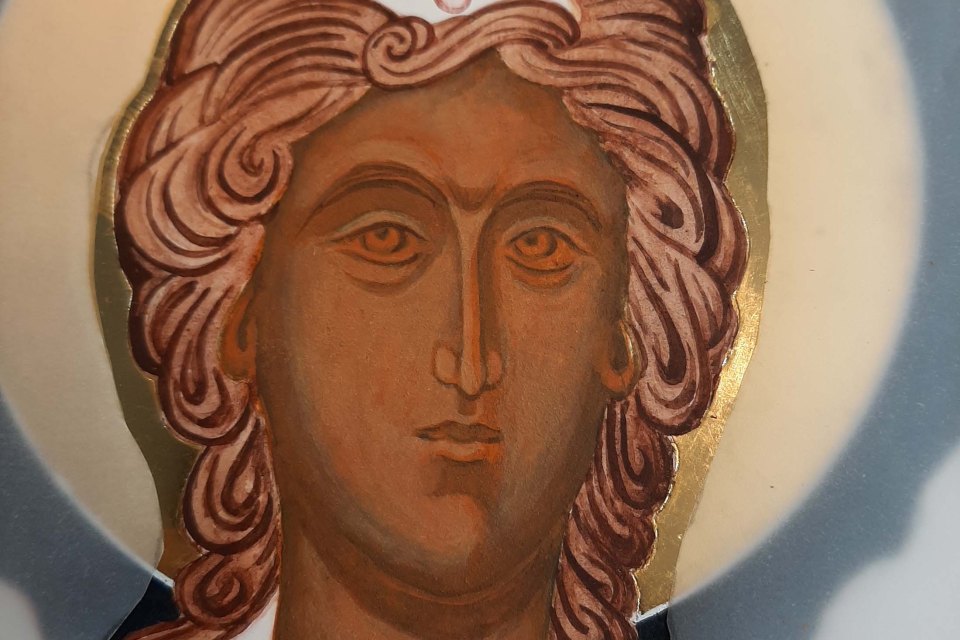
First thin layers of highlights applied to define the main forms of the face.

Hello again!

It’s time to add some face highlights. I’ve been looking through my old class notes (from 2014) and found some really helpful reminders. Aidan (Hart) recommends that we should aim to apply 3 (but no more than 4) layers of highlights – easier said than done!

First layer of face highlights:
Start by mixing plenty of the golden yellow (you don’t want to run out as it is very hard to remix the same shade). Use a light yellow which brightens gradually by approx. 20% with each layer. Mix yellow ochre light (Maimeri) and a touch of Titanium White. Paint sample swatches to see the contrasts as you want to avoid a big change such as 50%. The photo below shows me trying to find the 20% difference – I will keep trying! It might also help to use a palette with bigger dimples but this was for a different smaller icon.

Mix the white separately before adding to the yellow in very small quantities.

Include a brush of highlight over the lower lip.

You can’t tell if it is the right colour until you have applied a thin layer and let it dry. Start very lightly on the ear. Wait till it dries before you proceed with the colour. You are aiming for 20% lighter than the membrane layer.

Paint with accuracy. Look carefully 2 or 3 times before you begin. Use this opportunity to correct your underpainting.

With a size 3 brush, (maybe size 2), apply the paint thinly over the higher parts of the face, and feather out with dry brush technique. Use a watered down mix of your colour to feather out edges, but brush out most of the paint on your testing paper first. Build up layers thinly and watch out for puddling!
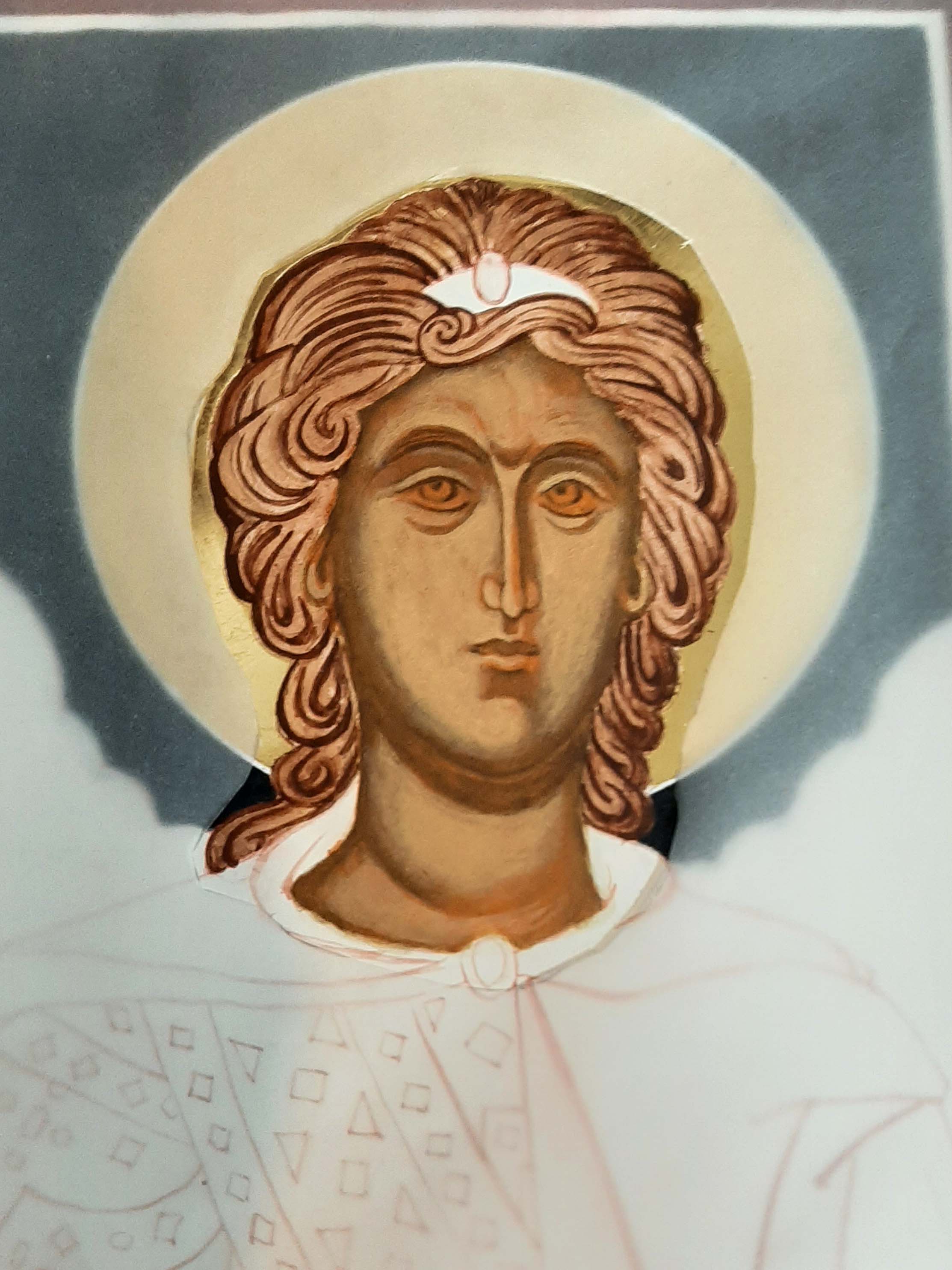
At this stage the layers have got quite patchy – a wash of ochre havanna will blend this.

Leave the eyes till a later stage, but include the flesh around them.

Tip: Look for curves and equally, don’t round up sharp corners.

Leave space around the highlights so the mid tone underpainting remains. Wait till it dries then apply another layer of the same mix as it will dry close to the colour of the membrane. Don’t cover all of the membrane.

Make sure the brow bone is deep. Keep the angles of the brow. Mind the direction of your brush strokes and spread the brush to feather out.

Second layer:
Make sure first layer has properly dried. Look closely at the original and identify the high points of the eyebrows, forehead, nose, cheeks, chin, ears. Note the direction of the face. Make sure you highlight the upper cheekbone to keep the width of the cheekbone next to the eye.

Add a little more white to your mix and test.

Tip: if you go too light too soon, add a thin warm glaze of Italian Warm ochre (French Havanna is very similar). It also acts a harmonising layer when all the highlights (except the ‘snow’) have been applied.

‘No confusion, no division’.

Third layer of highlights
Repeat the process over a smaller area. Be careful to look closely at the high points. The paint has more white and is more opaque. Again, be careful to apply thinly, not too much water, feather out edges and build up in layers. If it looks too white, add a warm glaze.

Tip: avoid sudden changes of depth or contrast. Shading should all be gradual.

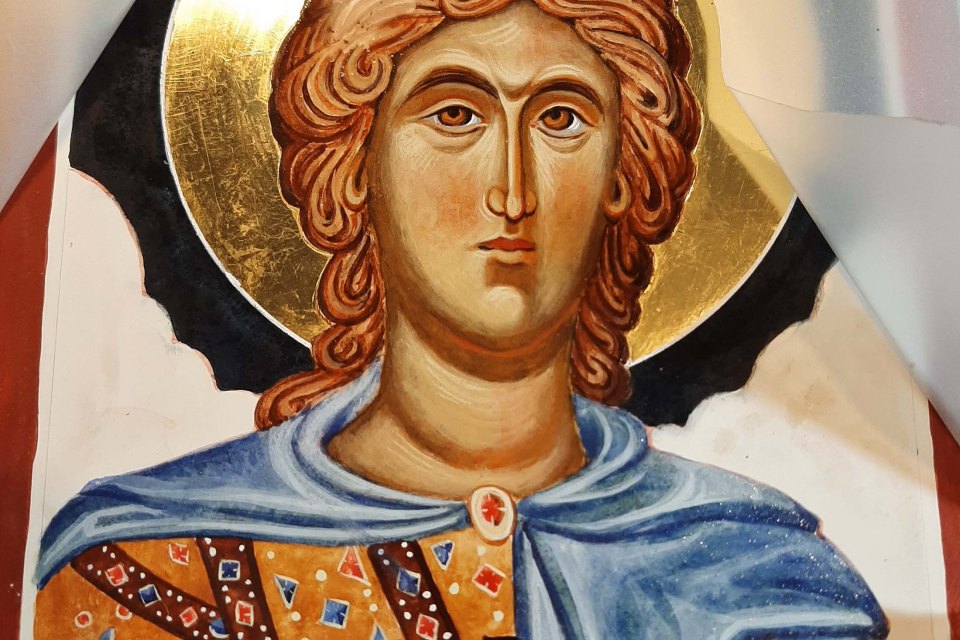
These two photos show that I’ve made a start on the eyes but I will cover the finishing details in my next post. I find the final highlights quite tricky and nearly always go adrift. That said I now leave the work for a week or so and come back to it with fresh eyes. I take a black and white photo and see where it’s out of balance. Or I cover the face with paper and start work building up the garments. There’s always plenty to work on!

I hope to be back soon to finish this sequence of posts and the final ‘snow’ highlights on the face but in the meantime, wishing you a peaceful and happy Advent.

Thanks for reading

Ronnie 🙂

Ps The finished icon can be seen here
Painting an icon of Archangel Michael – Part 1

A warm welcome and thanks to new subscribers – you’ve nudged me to write!  It’s been a while since I painted an icon so I thought I’d write a reminder to guide myself and maybe encourage others to pick up the brush again.

I’m looking back on the process of painting this icon of Archangel Michael (9.5 x 7” on 1” birch ply) looking in particular at the face painting stages with a summary of the earlier steps.

Working from my drawing of this icon, I transferred the key lines using tracing paper. I rubbed a pinch of deep red ochre pigment into the back of the paper with cotton wool, then located the tracing paper image on to the icon board and taped it top and bottom.   Using a hard pencil (H or 2H) I traced the lines to transfer the image on to the gesso.

Egg stock in the left dimple and a diluted mix alongside for glazing .

Next step is to fix the powdery lines to the gesso by painting over them with a dilute mix of red ochre.  My lines look a bit heavy-handed (see below) but the underpainting should be quite definite to withstand at least six or seven membrane layers.

Going right back to basics here: the egg stock is made up of 50% egg yolk, 25% distilled water and 25% alcohol (gin or vodka). A diluted mix of 20% egg stock and 80% water is used for thinning the paint/glazing. When mixing paint, add the pigment to the stock until it reaches consistency of thin cream. This mix can then be further watered down to get thin layers.  

Work stage of gilding halo in orthodox icon painting
Definite underpainting lines – important to get these in the right place at this stage! Note the small piece of card taped in place to protect gesso from compass point. Masking film applied either side of halo.

When the key lines are in place it’s time to water gild the halo. Water (and oil) gilding needs a chapter, let alone a single post! I’ve covered much of this technique in previous posts but a helpful tip is to apply liquid masking film (I use Winsor & Newton) before gilding.  I apply it around the edges of the bole in a band of about ¼” (5mm). Gold sticks to gesso during the gilding process and it can be fiddly to remove.

Painting background to icon
Applying background in thin layers

After burnishing the gold, I paint the background surrounding the halo before starting on the face. To get a crisp line for the halo, the compass line sits best on bone-dry tempera so I leave the background at least overnight. I use a compass with scribing nib attachment for the line around the halo. I draw the halo line before painting the face to avoid placing the compass point into the finished face.  I tape a small piece of card to the centre of the halo to protect the gesso from the compass point.

Drawing tools for inscribing halo in egg tempera on icon painting
Compass with the adjustable ink attachment

To paint the halo line I put a few drops of a fairly strong mix of white titanium (single cream consistency) into the side of the nib using a brush to transfer the paint. Dipping the nib directly into the paint usually leads to blobs!    

Outlines of drawing painted in thin layer of red ochre egg tempera
Gilding, background and halo line all in place – ready to start work on the face

Make sure all the features are where you want them to be. It’s a lot easier to move them at this stage! I double check my work by taking photos with my phone and zooming in/out to look again.

Aidan’s Tip: ‘Remember to paint with Distinction and Unity – there is no unity without distinction and no distinction without relationship’

After gilding, I apply a wash of dilute egg stock (10% egg stock 90% water) to seal the gesso using a squirrel mop brush. This offers an even surface for painting over. I apply these thin coats throughout the process – usually when I’m wrapping up the day’s painting session.

Aidan’s Tip: Remove any pigment which has strayed on to the gilding with a dry cotton bud. Do this as soon as possible as clay pigments set hard and will lift off the gold. 

Once the lines are in place then the underpainting and modelling of the face begins (I’ve used a different icon undepainting for this example). I’ve learnt that it’s important to spend time on this stage. Keep your drawing/icon master image close to refer to. Using Avana pigment, paint the form of the face evenly in thin layers ensuring that line weights vary in the appropriate places. For example, brows are thicker, eye socket line is light, the upper brow dense and the lower lid light. The underpainting should be clear and well shaded enough to withstand 6-7 membrane layers.

Building up the underpainting (a different icon)

Larger and more dominant shapes need stronger modelling whilst minor/ shallow forms are best left to be modelled by highlights.

Other colours can be used for underpainting skin tones such as Yellow Maimeri mixed with a little Ivory Black. Also 80% terre verte and 20% yellow ochre (Maimeri light). It’s worth experimenting to see the difference each combination makes.

Applying the first thin wash over the face
I cut a paper mask to protect all the other areas where I’m not working.

When the underpainting is in place I apply a very thin wash of avana over the face and leave it. The longer the better! Applying the membrane can be a bit tricky as it’s easy to make ‘holes’ during the process and disrupt the underpainting. If the underpainting has tempered/dried for at least a week it’s more stable to work over. Again not forgetting I live in cool, damp Scotland!  

My next post will be about applying the membrane layers and deepening the shadows but in the meantime, if you’d like to see the finished icon for encouragement – it’s over here

Thanks for reading and all the best with your own icon painting!

Ronnie 😊

Advent Two: The Shepherds Their Wonder

Quote from the Festal Manaion – Nativity Vespers

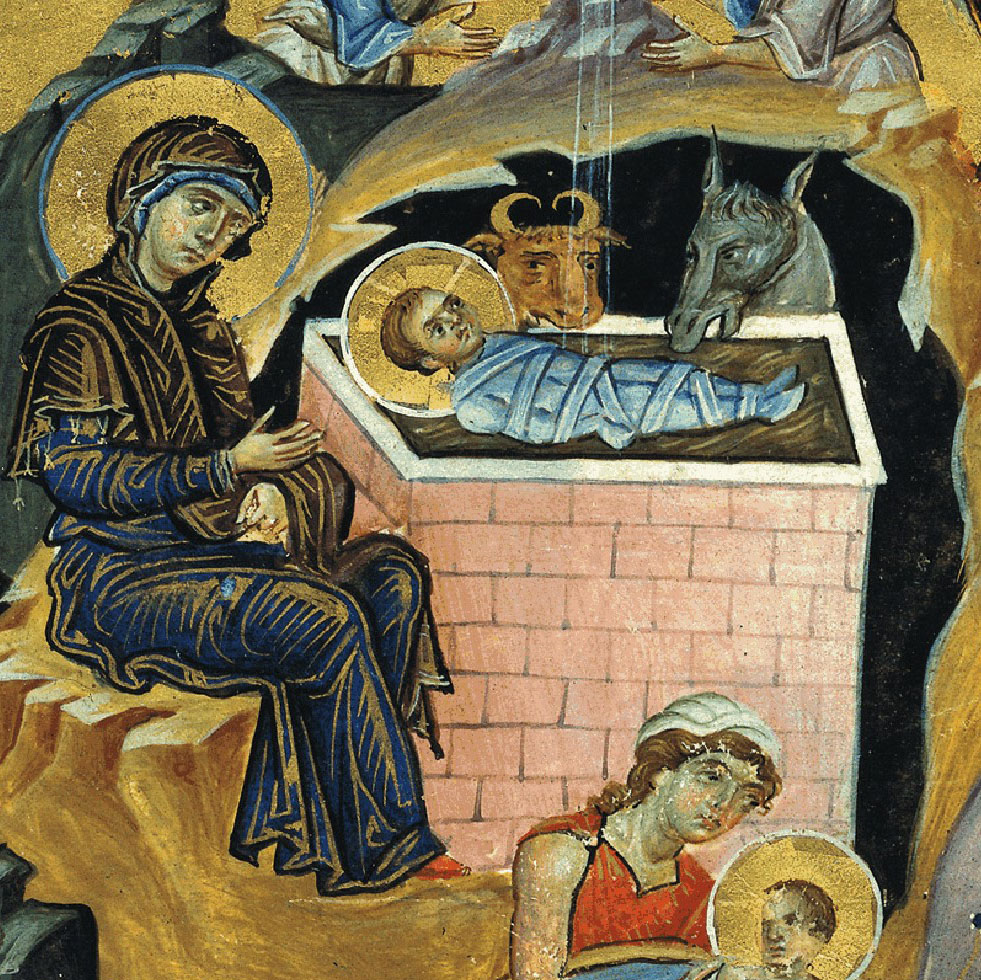
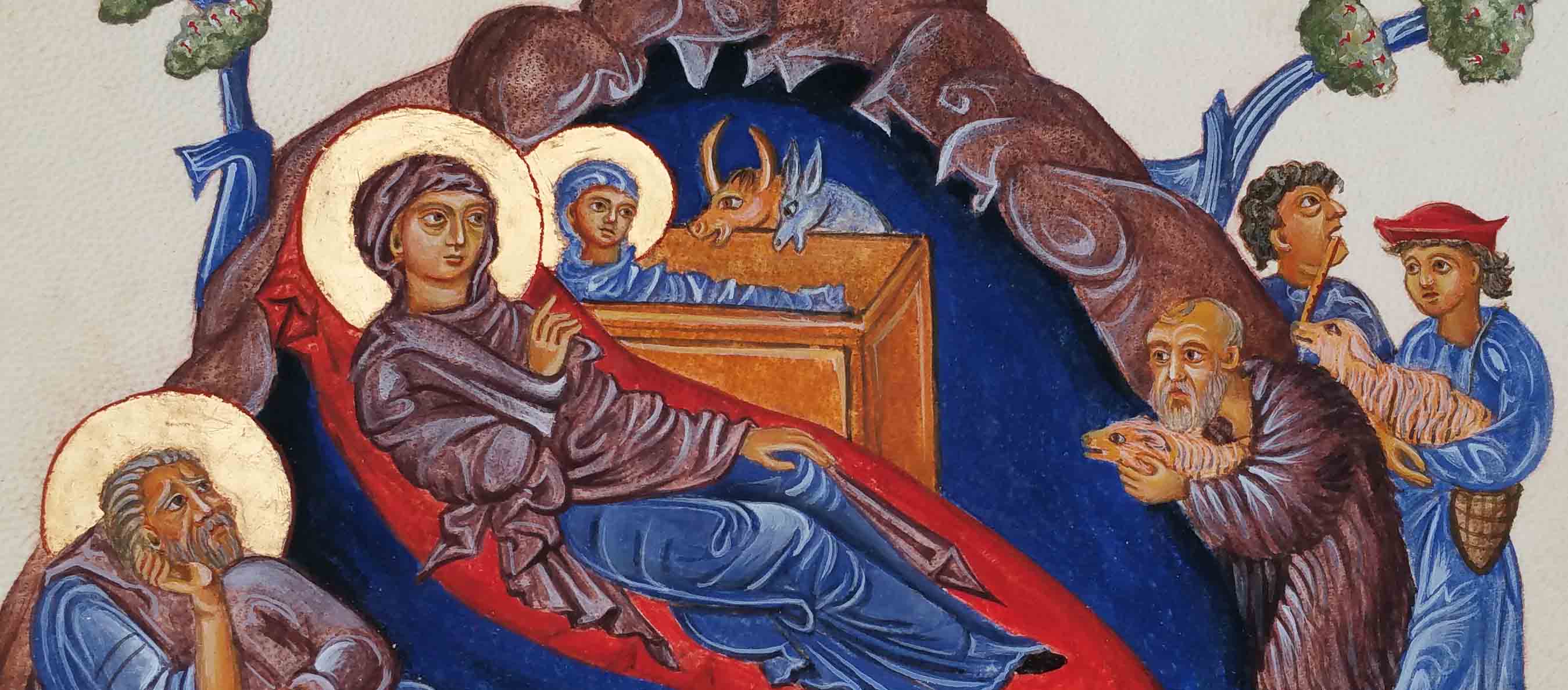
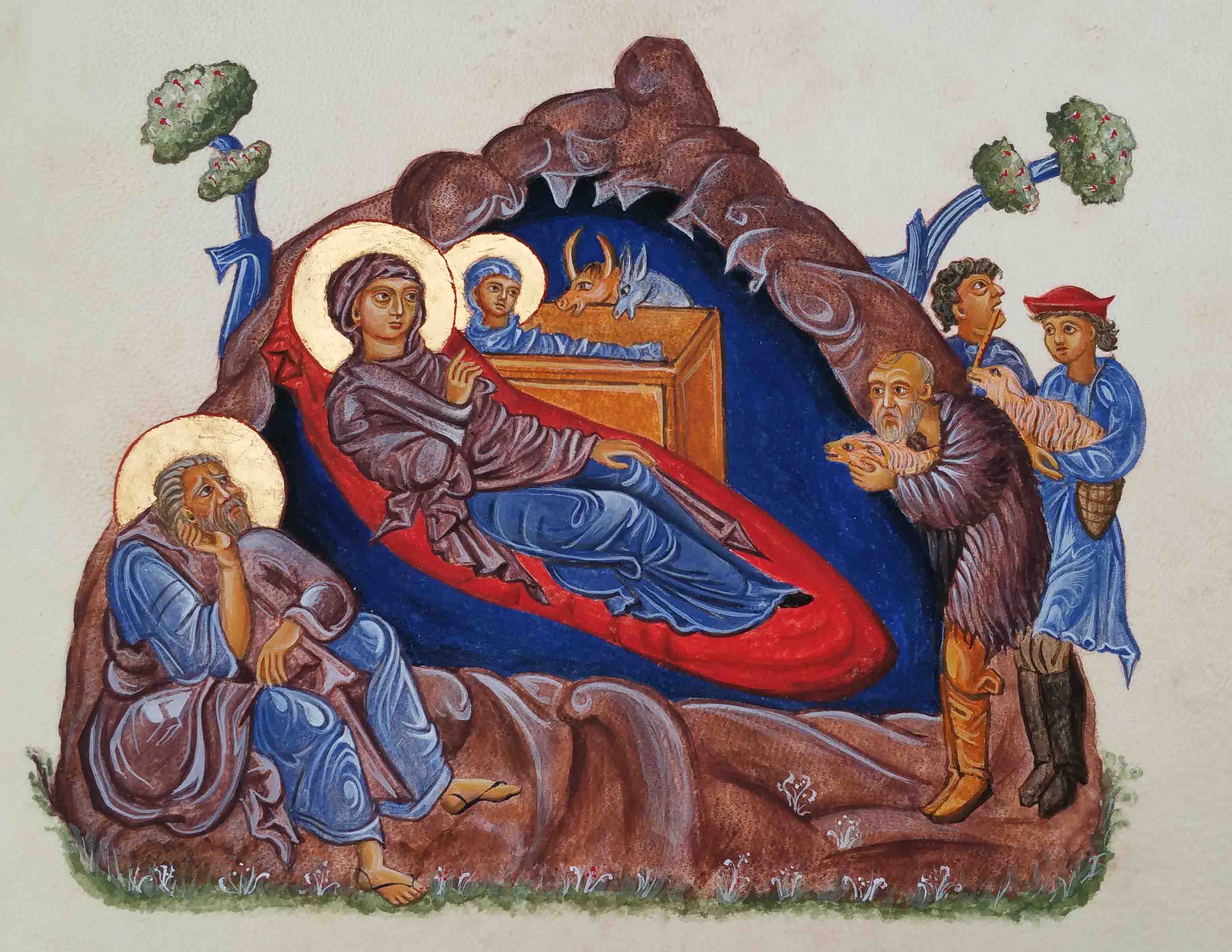
The profoundly beautiful Armenian Nativity created by T’oros Roslin in the 13th Century remains my favourite Nativity icon. I painted my own version on vellum back in January 2016 in preparation for the Festal Nativity icon (on a large gessoed panel) which was part of the final year of the Diploma.

This is a silly busy time of year for many of us but I’m posting this here now for you to find sometime in future when you do find a quiet moment.

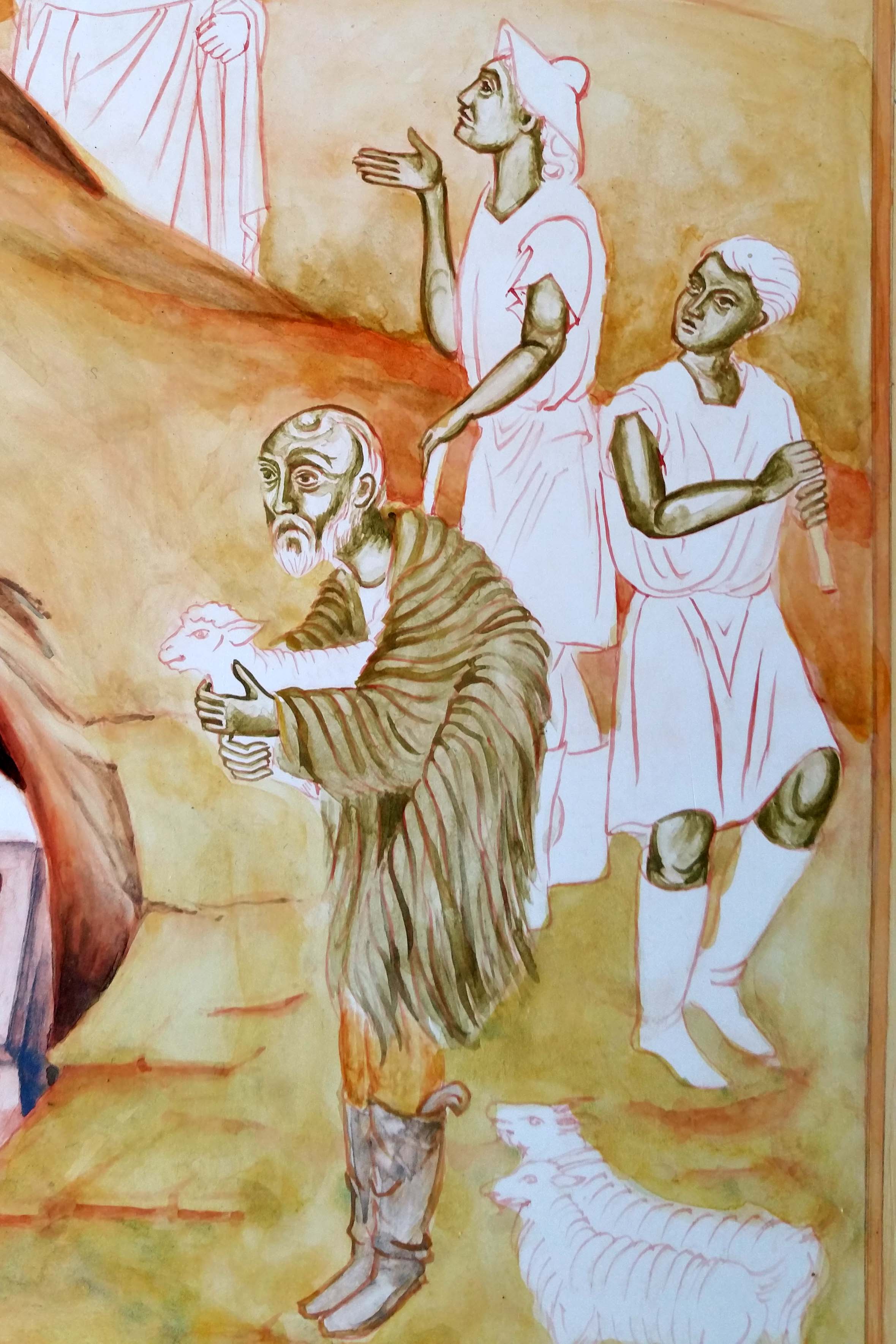
The primary shepherd on the large Nativity icon (above left) was a direct reference to the figure in the Armenian Nativity scene. I liked his expression and woolly tunic! (If you want to refer to the finished diploma icon you can see it in more detail here).

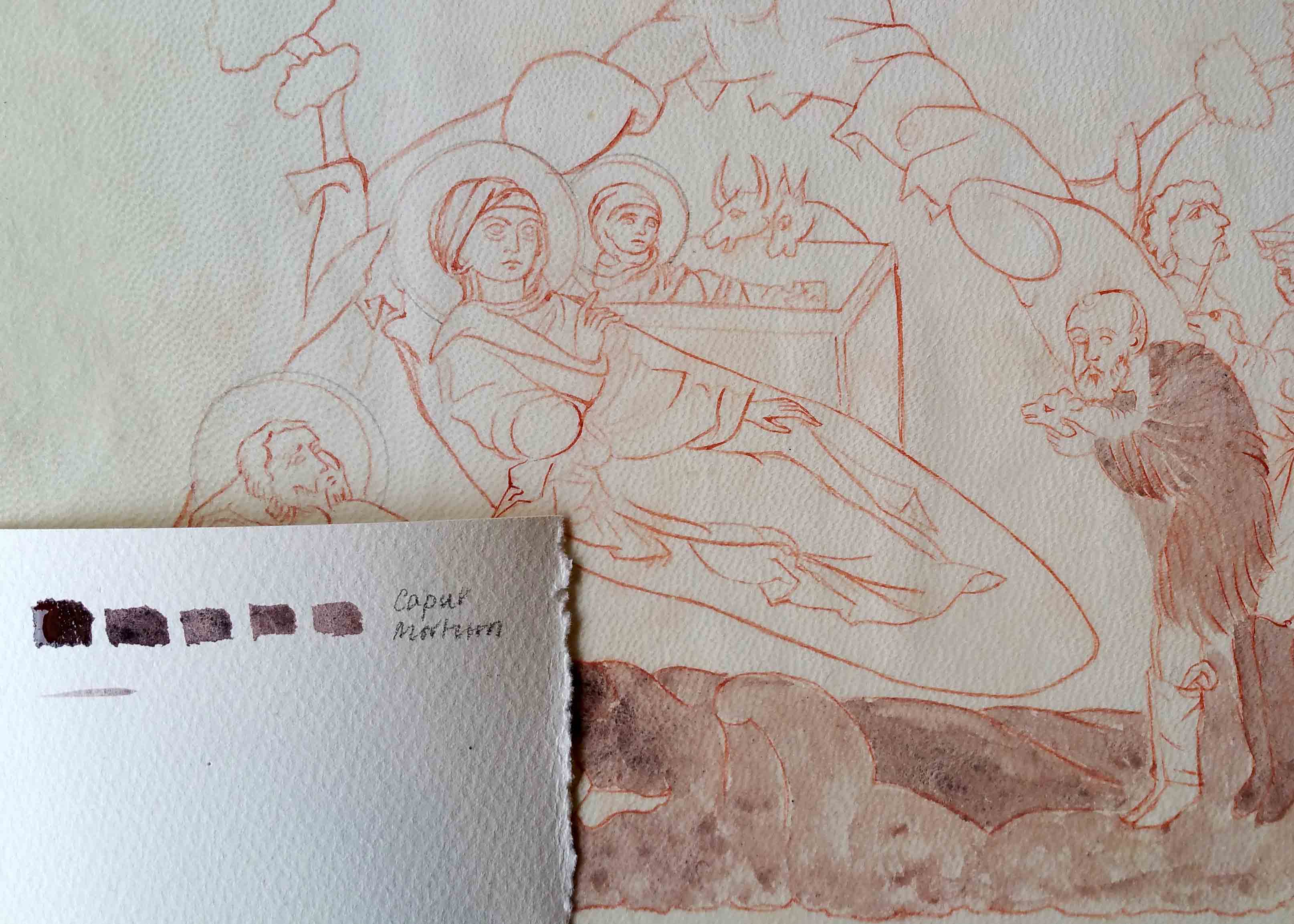
Caput Mortuum is a mysterious rich deep maroon colour and looks to me the colour used in the Armenian Nativity original. The name translation from Latin is ‘dead head’. In the Merriam Webster Definitions dictionary we find one definition “alchemy the residuum after distillation or sublimation” also “a red iron-oxide pigment made by calcining iron sulfate“. To me it’s the colour of an aubergine and when placed next to lapis lazuli, the colours sing.

Caput Mortuum next to Lapis Lazuli

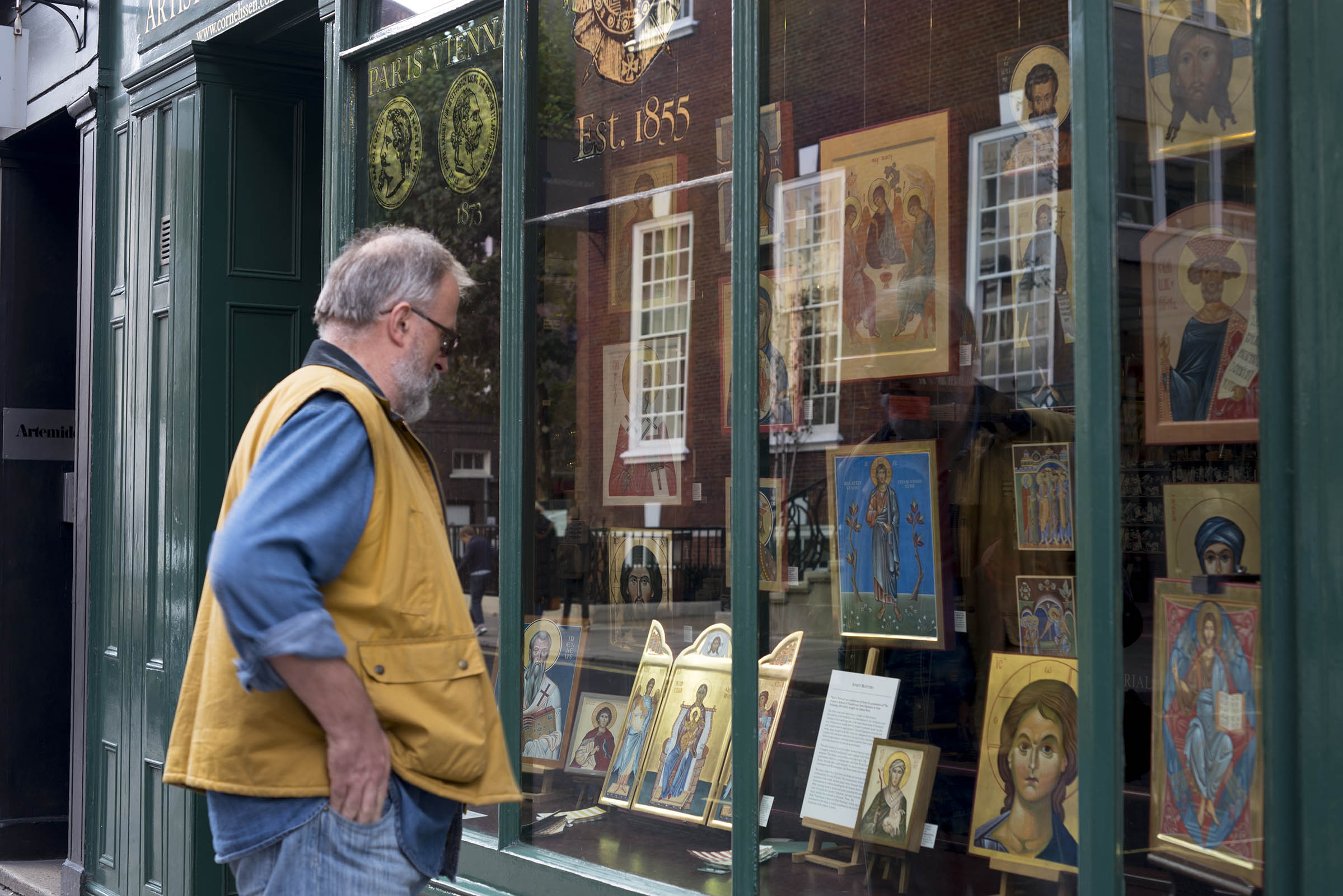
Reflecting back to the time that I painted the Armenian Nativity, you’ll have no idea how over the moon I was to participate in the exhibition curated by Patricia Lovett and held in the window of Cornelissen’s . It was all part of the Heritage Craft Week 2016 which I wrote about here. If you’ve never heard of Cornelissen’s then treat yourself to a minute inside their London shop here.

Patricia – if you are reading this, that exhibition and subsequent synchronicities led to the class of 2013-16 final-year diploma icons being displayed in the same window (below) and repeated three years later with the next icon student intake – THANK YOU!

Window shopping – Cornelissen’s, London

Back to work…

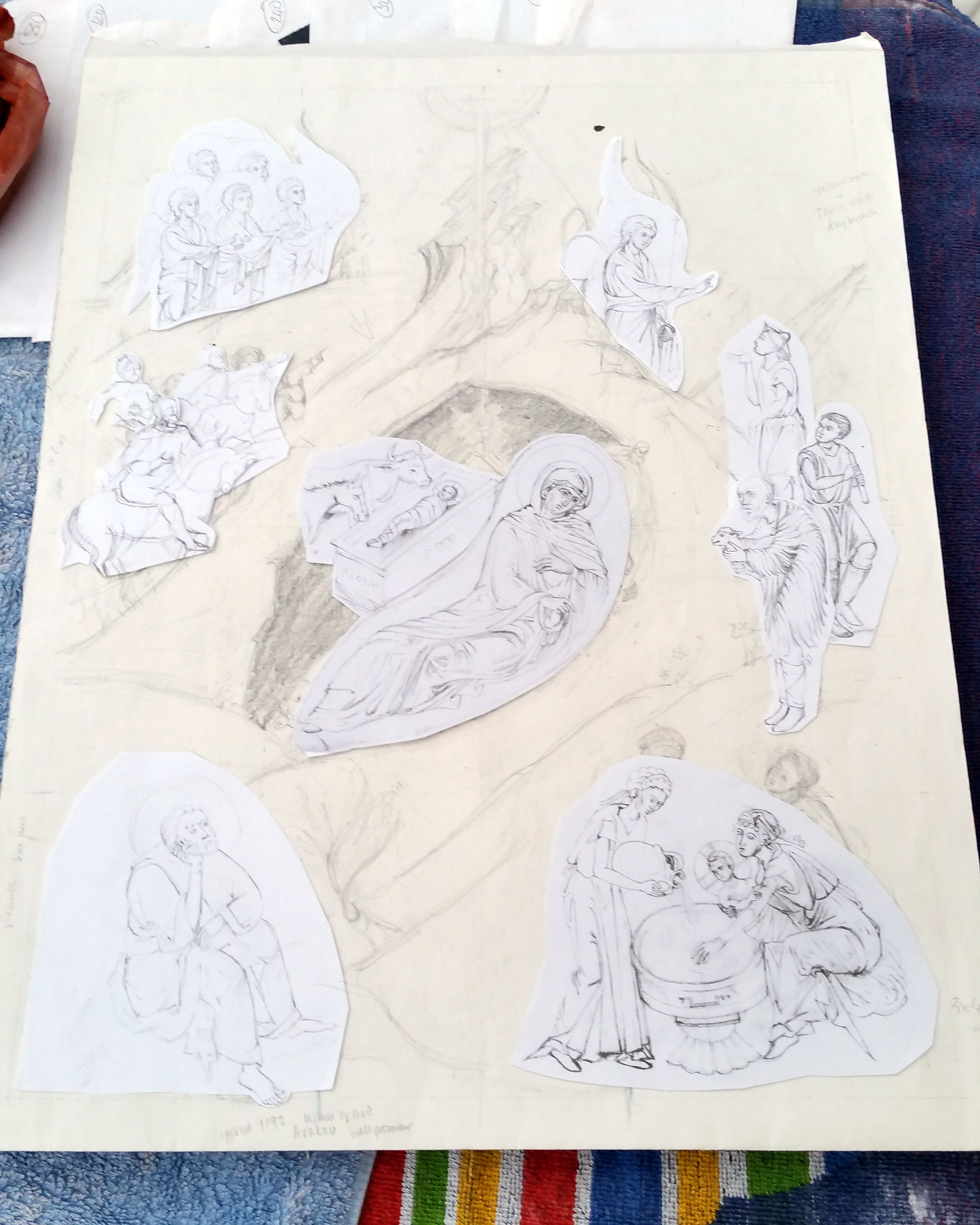
These shepherds have been shuffled around to get a balanced composition. Photocopying and cutting out the figures allows you to move them and see how they work in relationship to one another. It’s interesting how small shifts can make a difference in how your eye is led around the figures and around the overall composition.

Pencil drawing of three shepherds, photocopied and placed on the icon panel

Lines are transcribed onto the panel by rubbing red ochre onto the back of your traced drawing. The lines are fixed with a dilute mix of egg tempera in red ochre. Applying a dilute mix means it’s easy to blend into the layers that follow.

Composition settled and anchored on to the icon panel in a light red ochre line.

Yellow Ochre Maimeri and Ivory Black pigments mixed together give a lovely green for underpainting flesh tones – an alternative to Terre Verte which can be a bit sticky.

Since I had this earthy mix, I used it to under-paint the garments of the primary shepherd. I’ve used thin washes of earth ochre pigments to build up the landscape.

Colours vary here as I’ve taken photos at different times of the day.

When working on an icon, it’s important to work on it as a whole to keep it balanced. Sometimes weeks if not months go by between underpainting, mid-tones and highlights of the different clusters of figures.

Let’s close this post on these shepherds – almost finished. Just a few more highlights to add on their faces and hair.

Thanks for reading, whenever that might be 🙂

Ronnie

Advent one: What shall we offer?

It’s Advent as I write and timely to reflect on some of the foundation work for the Festal Nativity Icon which I worked on in the third and final year of the diploma course (2013-16) with Aidan Hart. I know that this is a silly-busy time of year for many of us but you don’t have to read it now – it’s here for later!

Detail from icon study on paper acknowledging the prototpye by Gabriel Toma Chituc

Before I get started, I also want to say that the British Association of Iconographers have an online exhibition ‘Icons Emerging from Lockdown 2021’ sharing the work of over 46 icon painters. The work is worth leaving this page right away and having a look!

Back to the Nativity icon – In this post, I want to look at the starting point of the icon – looking at the choices and decisions behind the composition.

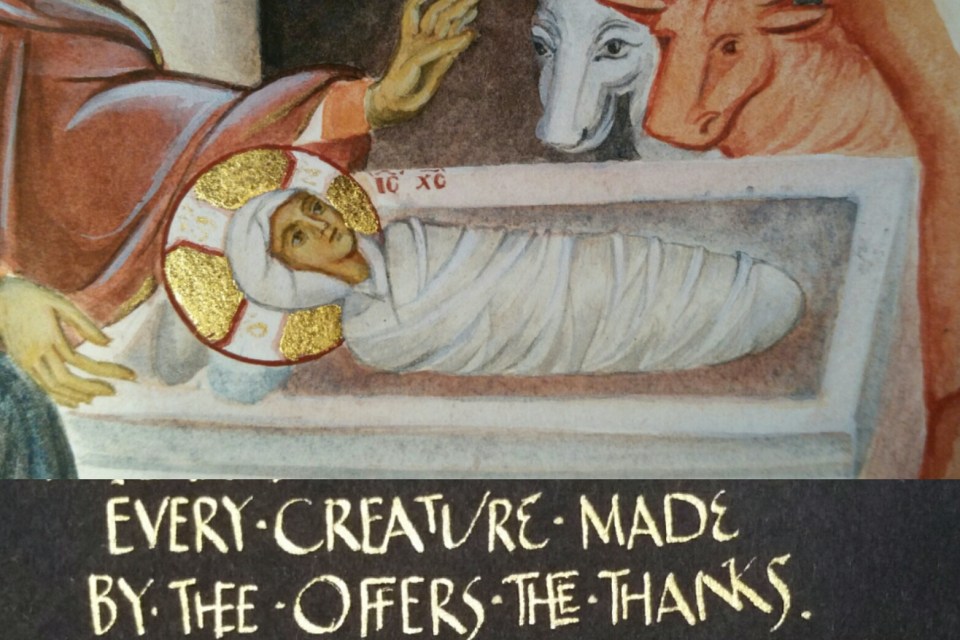
We were invited to work on a festal icon of our choice and to design a new composition which emphasised a particular aspect of the feast. I chose the Nativity – with the theme of praise and thanksgiving so beautifully expressed here in the Festal Menaion – Nativity Vespers:

Lettering in mapping pen and gold gouache on paper

We were encouraged to study good examples of our chosen festal icon referring to frescos and manuscripts. At first, the variety of prototypes felt overwhelming (just google ‘orthodox nativity icon‘) but I have a particular love of manuscripts and one in particular spoke to me with its beautiful simplicity – the Armenian Nativity by Toros Roslin, painted in the 13th century, so much so that I painted a reproduction on vellum (blog post here).

Egg tempera painting of the nativity on vellum
Armenian Nativity, from the Toros Roslin manuscript, 13thC egg tempera painted on vellum

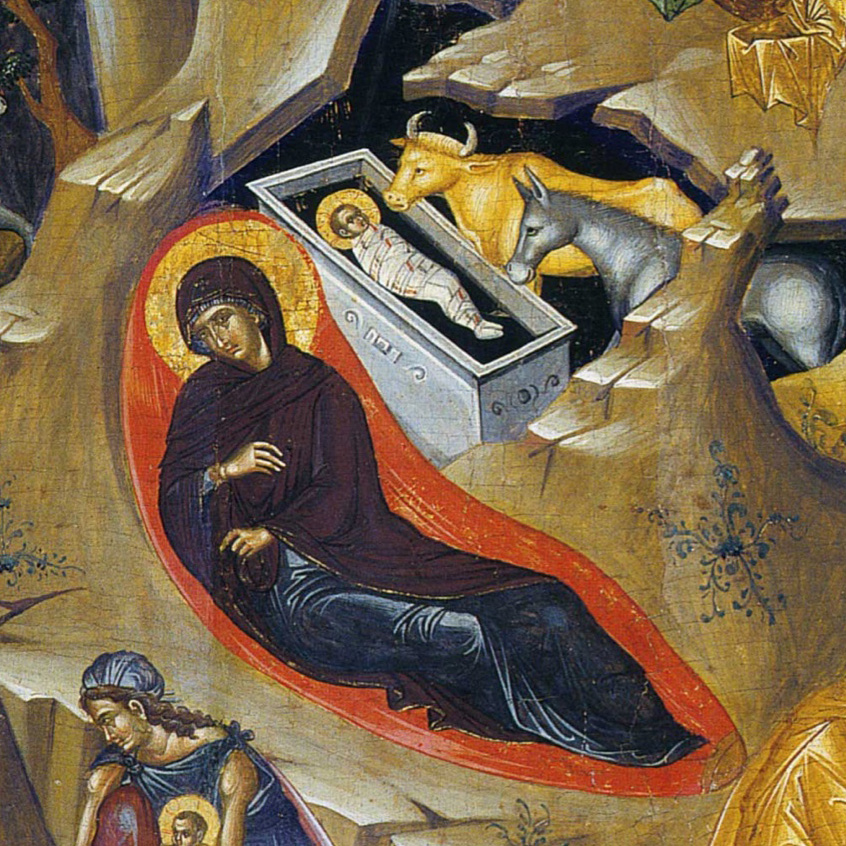
In October 2015, we made a course field trip to Thessaloniki to explore some of the beautiful icons and frescos that reach back into antiquity. In particular I loved the frescos of St Nicholas Orphanos Church (14thC), including this one of the Nativity. You can get a flavour of this trip in my post here.

St Nicholas Orphanos Church fresco, Thessaloniki showing the Nativity

Looking at the layout of the Orphanos fresco, light from heaven is directed vertically to the Christ Child, centrally placed in the heart of the cave where high contrast and curved lines frame the Blessed Virgin. Your eye is then led gently down and around to take in all the surrounding figures and back to centre.

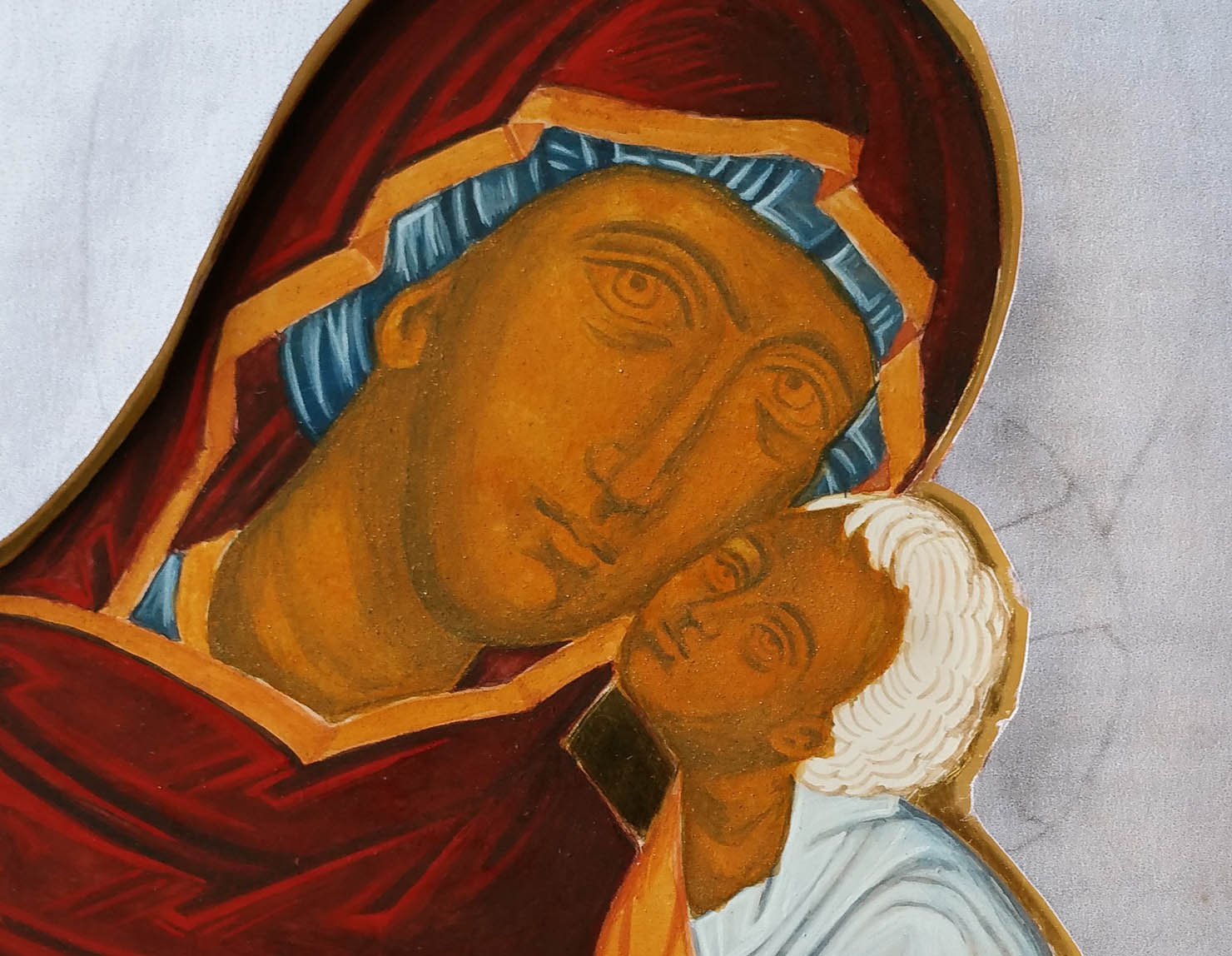
The most perplexing aspect of the composition for me was settling on a layout of the Virgin and Child which are diverse as you can see from a few examples below. I felt that it was unusual for a mother to turn away from her child, let alone this one!

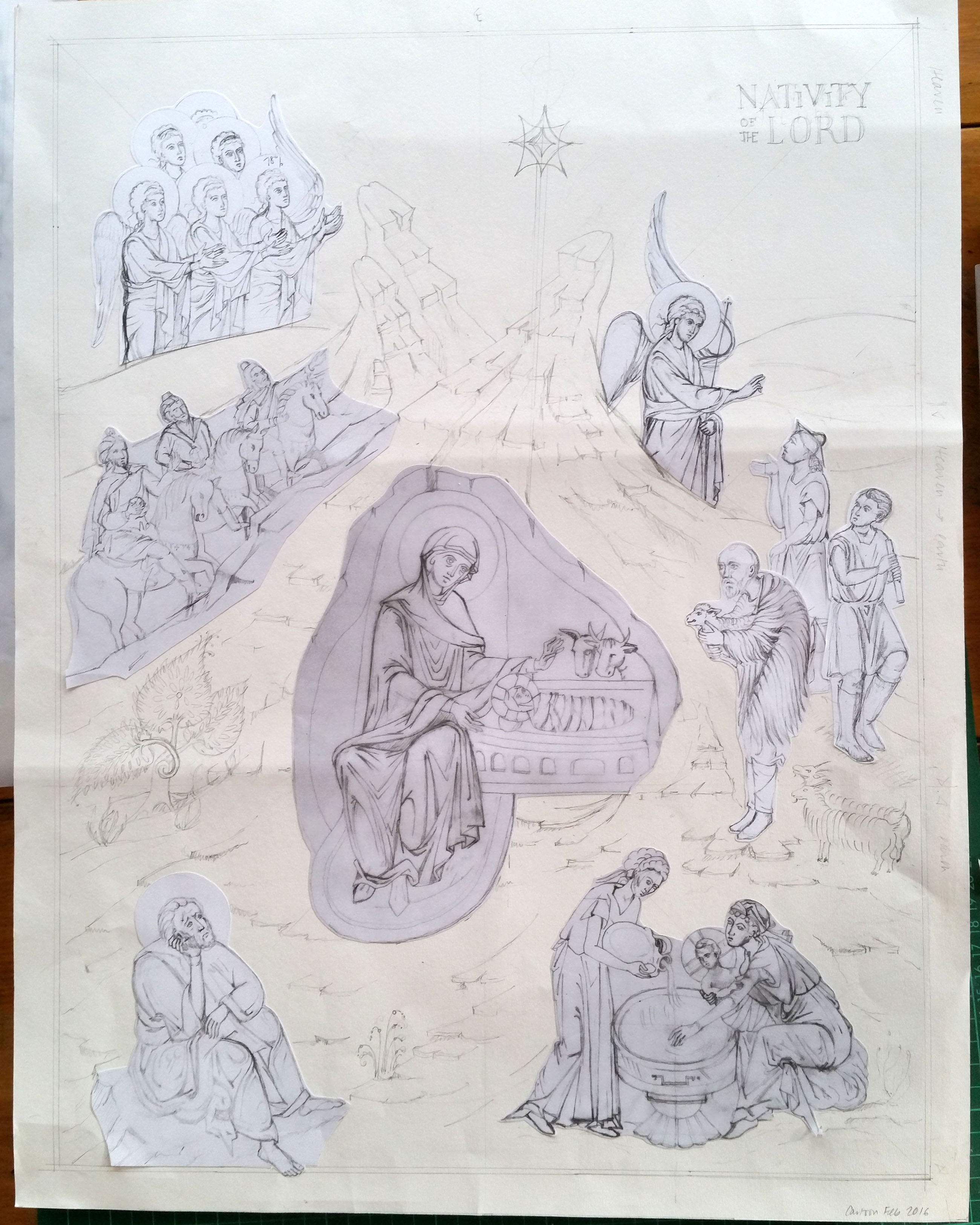
I made a start on the cartoon – sketching out the overall composition on a large sheet of cartridge paper cut to the size of my gessoed panel (53 x 42cm). To help keep things fluid at this stage, I made separate sketches of each cluster of figures which I was able to photocopy, cut out and move around. I had also been working on the figures and colours in a workbook (you can see some examples here).

It was important to align the composition with our chosen theme and to allow the viewer’s eye to flow and pause in a rhythmical and meaningful way around the icon. You can see on this example, I had shown the Virgin looking towards her infant being bathed by the midwives – I wasn’t entirely happy with this but this was the exploration stage.

Looking back at my notes I have found some helpful comments from Aidan and Sr Petra Clare:

  1. The mountains are not responding to the light of the star – move them to turn towards the light of the star and so they curve to contain the angels.
  2. The length of the Virgin’s legs not quite right, the knee to heel should be the same on both legs.
  3. Archangel Gabriel too high up the mountain and right wing not quite right.
  4. Adjust the shepherd cluster to flow directionally towards the Virgin and Child
  5. Magi better in a linear format to direct the eye back up the icon to the star.
  6. Finally, Aidan reminded me that ‘the star represents heaven so it needs to be joined up to some form of half circle to show a connection between heaven and earth through the incarnation. A star in the sky by itself doesn’t convey this connection so well.’

It was somewhere during this exploration stage that I came across the translucently beautiful work of the Romanian master iconographer Gabriel Toma Chituc. This detail from his Nativity icon was an answered prayer for me as it expressed so eloquently the union of heaven and earth, Mary placed vertically and the Christ Child horizontal with the light of the star reaching into the cave.

Nativity by Gabriel Toma Chituc
Progress on the cartoon but not amended the star yet.

For the ancient Greeks, the cave symbolised the convergence point of divine or cosmic energies and was considered a sacred point where the soul could enter earth and subsequently leave and return to earth.

Shorthand version of preparing the gessoed board! Tips on gessoing here.

I will close here for now showing the cartoon transferred on to the panel, using red ochre rubbed on to the back of the traced paper image and setting the lines with a dilute mix of red ochre tempera. If you would like to see the finished icon, you can see it here.

As always, thanks for reading and wishing you a peaceful and blessed Advent.

Ronnie

Final composition settled and outline painted on to the panel

Membrane Technique for icon faces

icon painter's work space

Spring cleaned workspace

I’ve had a few requests for a glimpse at my notes from the icon diploma course taught by Aidan Hart at the PSTA. There are a lot to sift through and they’re a bit illegible, even to me. However, I plan to revisit and re-write them at each stage of painting an icon but bear with me as this may take a while!

painting with italian Gold Ochre pigment and Ivory black

Underpainting the faces

I’ve already made a start with the pigment grinding crib sheet and now that I’m currently underpainting an icon, I’ve written up my notes for this stage. They are on my website on the Crib Sheet page and I will share a link at the end of this post.

underpainting face of Blessed Virgin and Christ Child

Underpainting complete

For the underpainting, I’ve found that mixing an earth green from Italian yellow ochre and ivory black has been a little less sticky than using terre verte.

Don’t forget to apply a dilute wash over all the unpainted areas before applying the membrane or it won’t cover evenly.

I still find it tricky to apply the membrane layers evenly but at least I know better not to fiddle with uneven areas. Just go and do something else for a few hours to let it properly dry then apply another couple of thin layers.

icon painting with membrane technique

Three layers of thinly painted membrane applied

Next stage is applying the shading and highlights, but for now here are my notes: Membrane technique part one underpainting and membrane

By the way, the pigment grinding demonstration went well. More on the results of that when I use the pigment to paint!

finished mid tones on an icon face

Five layers of the membrane applied

Thanks for reading,

Ronnie

All gone quiet

It’s all hands on deck at home as finishing off seems to take almost as long as actually painting an icon. Our last icon session is only days away and details of the graduation show next month are now up on the PSTA website. I would be delighted if you could come along though I know many of you are miles away. It promises to be a great show as my fellow students have produced some breath-taking work.

I plan to continue with the blog after the course has finished as I haven’t posted any where near as much as I had intended.

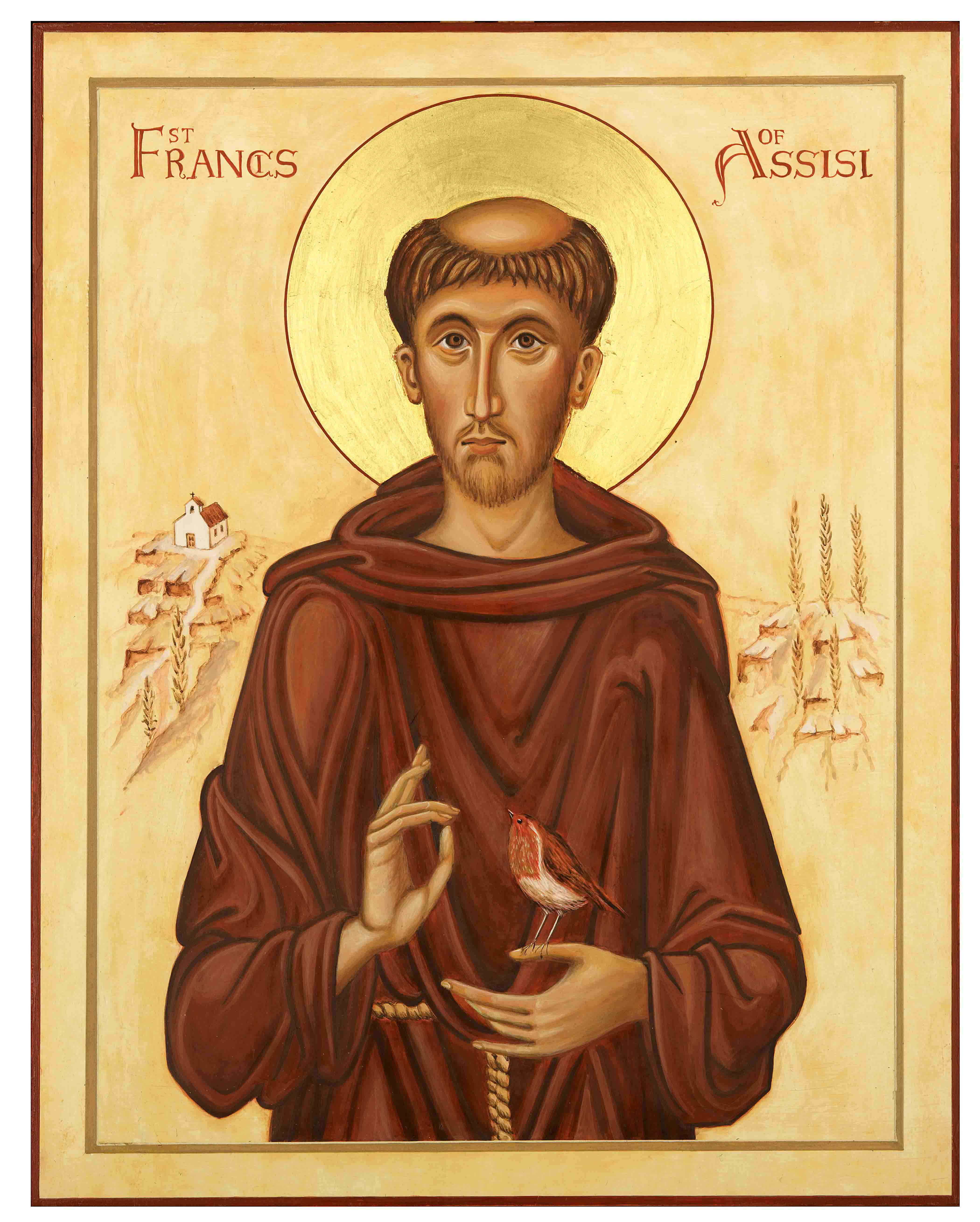
I will be back in touch when I get a moment and will leave you with these two icons which are almost complete…varnishing, picture hooks and cord still to add.

iconpainting of St Hilda of Whitby by Ronnie Cruwys

St Hilda of Whitby

Icon painting in egg tempera of St Francis of Assisi

St Francis of Assis

Thanks for reading!

Ronnie


Northern Grace

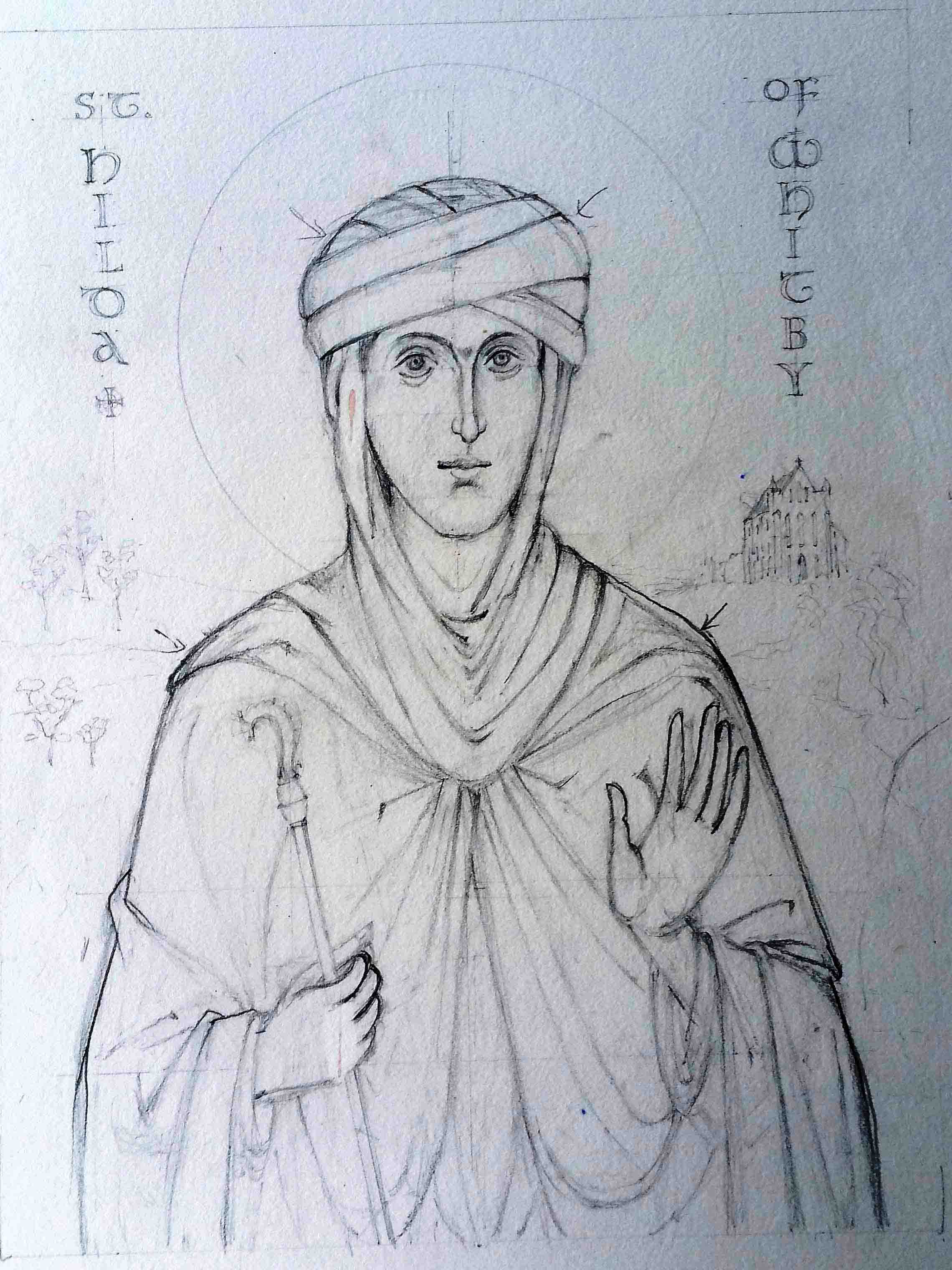
monochrome study of st hilda of whitby on fabriano paper

St Hilda of Whitby

St Hilda had been left to one side as a drawing on stretched paper (fabriano artistico 300gsm hot pressed) for the past two years.  I chose to paint St Hilda because she is a local saint to me. When I was a youngster, Mum and Dad used to take us to Whitby on family trips and as a teenager, I worked in York Minster, close to where she was baptised, so she has always been there in the background.

The drawing was in preparation for my painted panel icon which I last wrote about here, but had always intended to paint it. Today was the day.

Here’s the drawing in full – I’ve darkened the photo so you can see my construction and correction lines. After erasing lines that might be distracting, I began painting using a blend of pigments which I know are really warm and earthy.

2 Hilda first washes of colour

Building up the tones

There are some pigment combinations which are lovely to work with – one of which is French Ochre Sahara and French Ochre Havanna. Pigments look quite soft on water colour paper.

3 Pigments ochre sahara

Mixing pigments

Mixing up pigments is best done separately (unlike how I’ve shown!) then add small quantities of the stronger colour to the weaker colour. A very strong pigment, such as English Red Ochre, would overwhelm any other pigment and has to be used sparingly when mixing.

When all the painting was done, I gilded the halo.

St Hilda work in prog Cruwys

Gilding paper is a breeze compared with water or oil gilding an icon boards!  I used Roberson’s acrylic gold size which works well with transfer gold . The size is painted on in two layers, thinned down with a few drops of water. The first layer seals the paper. (Tip: If you rub some washing up liquid into the brush before you use the size, it’s easier to wash out after and protects the brush).  I add a touch of red ochre to show where I’ve painted and to give some background to the gold.

5 applying gold size to halo

Applying gold size to the halo

It’s been good to reflect on the life of this strong northern saint, patron of learning and culture especially in these post-Brexit days. St Hilda lived through dangerous and difficult times – her father was murdered when she was a child. Baptised in 627AD, close to the place where York Minster now stands, she grew up as a noble woman but later became the founding abbess of a monastery in Whitby. More pertinently, as a Celtic Christian, she chose to graciously accept a vote at the Synod of Whitby which didn’t go the way she had wished. Quoting from this last link:

     ‘In Northumbria, along with the politics of the time, there were two strains of Catholic Christianity, and they could not be reconciled: Celtic and Roman. Celtic Christianity, which emanated from Ireland, was less structured than the Roman variety. The Celts were independent, wandering from place to place all over Europe, where they would establish centers of learning and teach. Celtic Christianity relied on monasteries and abbeys where the abbot was supreme rather than the cathedral and bishop system the Romans followed. The Romans viewed the Celtic brand of Christianity as “rural.”’

6 st Hilda monochrome gilded Cruwys.jpg

Completed study on paper

If you would like to read a little more about St Hilda, there is a good write-up about her life by the Order of the Holy Paraclete here.

We still live in troubled times and it helps to connect with the saints. Hilda was considered so wise that kings and princes sought her advice. The Venerable Bede describes her:

“All who knew her called her mother because of her outstanding devotion and grace”.

Thanks for reading,

Ronnie

Face lifts and highlights

banner mandilion

It’s now feeling uncomfortably close to the end of this course – and I haven’t finished one of my set icon pieces!  So, for the last few days I have knuckled down and revisited my first project, the Mandilion. It’s been untouched now for two years and looking back I’ve learned a bit but there is much more still to practice.

Before we go on, if you’d like to see the earlier stages of this mandilion project, you can look back here and a bit later here.

I deliberately stopped working on the mandilion as I wanted to get a bit more experience under my belt before I finished it. I’m glad I did as looking at it afresh, I could see quite a few things that need attention.

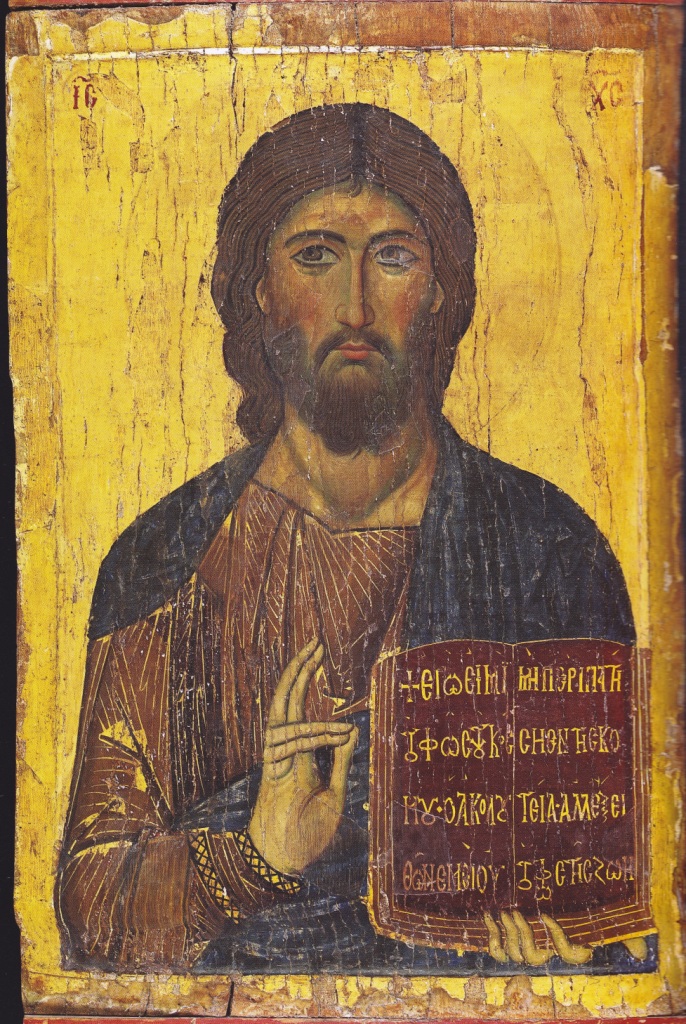
Before I set to work, I had a good look again at the prototype that I’m working from:

icon of Sinai Christ Pantocrator

Christ from the Grand Deeisis, St Catherine’s monastery, Sinai

mandilion  before editing.jpg

My version of the mandilion from two years ago.

Here’s the list of the main things to work on:

  1. Halo too bright. Vibrant lapis lazuli competes too much with the face.
  2. Left side is the ‘nearer’ side yet the righ eye is much bigger. Rebalance eyes and brow.
  3. Hair is a bit dull and lifeless.
  4. Facial tones lacks warmth.
  5. Strengthen eyebrows and shadows.

1 Rub out halo on mandilion.jpg

Scrubbing off the bright blue

Since it’s such a long time since I’ve worked on the icon, I started by applying a couple  of glaze coats over the entire face and hair to provide a key between old and new. When these had dried I then applied two thin glazes of French Ochre Havanna over the face (but not hair/eyes). Whilst it was drying, I made a start removing the bright blue halo and the unsightly black lines – what was I thinking?! I still wanted a blue halo but not as vivid, so I used a flat headed brush to soak the paint and scrub most of it off. The black lines had set quite hard though and I ended up carefully scraping them off with the tip of a blade.

3 halo and hair mandilion.jpg

Underpainting the halo and adding shading to the hair parting

I had seen a graded blue halo on a contemporary mandilion which I thought would work, and began by underpainting the bands of blue using lapis lazuli dark, titanium white and a touch of ivory black .

4 fine coat of white.jpg

When the paint is dry, I applied a weak egg glaze, then added a fine mist coat of white.

At first, the fine coat of white seems to cloak the colour too much but if it is applied as a thin layer, it soon dries much lighter and transulcent. It took three or four mist coats before the blues blended and softened.

While the paint was drying, I made a start on modelling the hair. I applied ivory black in thin layers to the parting and to the sides of the head to strengthen the form, paying attention to the ‘waves’ and the ‘ripples’.

5 modelling hair 2.jpg

To add a little warmth to the hair, I added a thin layer of English Red Ochre either side of some of the ripples towards the front.

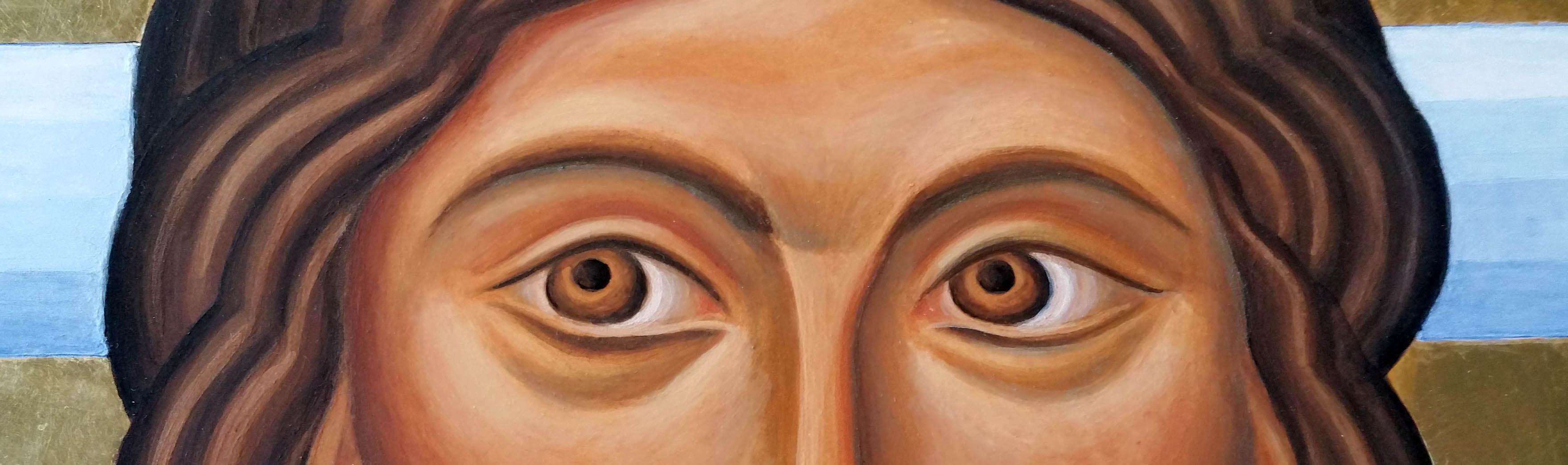
Now for the eye surgery. The eye on the right was much too big, especially as it is on the receding side. I applied a thin layer of white over the upper eye lid and it looked green! I reduced the right hand side of the iris and lowered the shadow between lid and brow. When all dry, I then applied French ochre havanah over the eye flesh to help harmonise the colours.

eye op 1.jpg

Eye surgery – lowering the upper lid and lifting the lower lid

Then, on the pic below, you can see where I added the new line of the upper eye lid. I may revisit this eye, but it’s step in the right direction.


red and green

Red shadow under hair on near side to help it advance, green to the right

Warm colours advance and cool colours recede and you can often find faces with a wash of red somewhere on the near side and cool green on the far side.  On this icon, the left side of the face is the nearest, so I used a thin wash of red ochre under the hair line to add a warm shadow and a light green (cool)  on the right to help this side recede.

eye surgery 2

I added a little more cinnabar to the lips, corners of eyes, nose and ears (after this photo was taken) and will let it settle overnight.

Thanks for reading.

Ronnie

PS Prints and cards are now available to order from Smith York Printers.


Armenian Nativity on Vellum

1 banner armenian nativity Cruwys

Armenian Nativity on Vellum

Every now and then, I come across a manuscript or icon that captivates me. This is one of those pieces. The original can be seen here attributed to Toros Roslin, the 13th century Armenian illuminator.
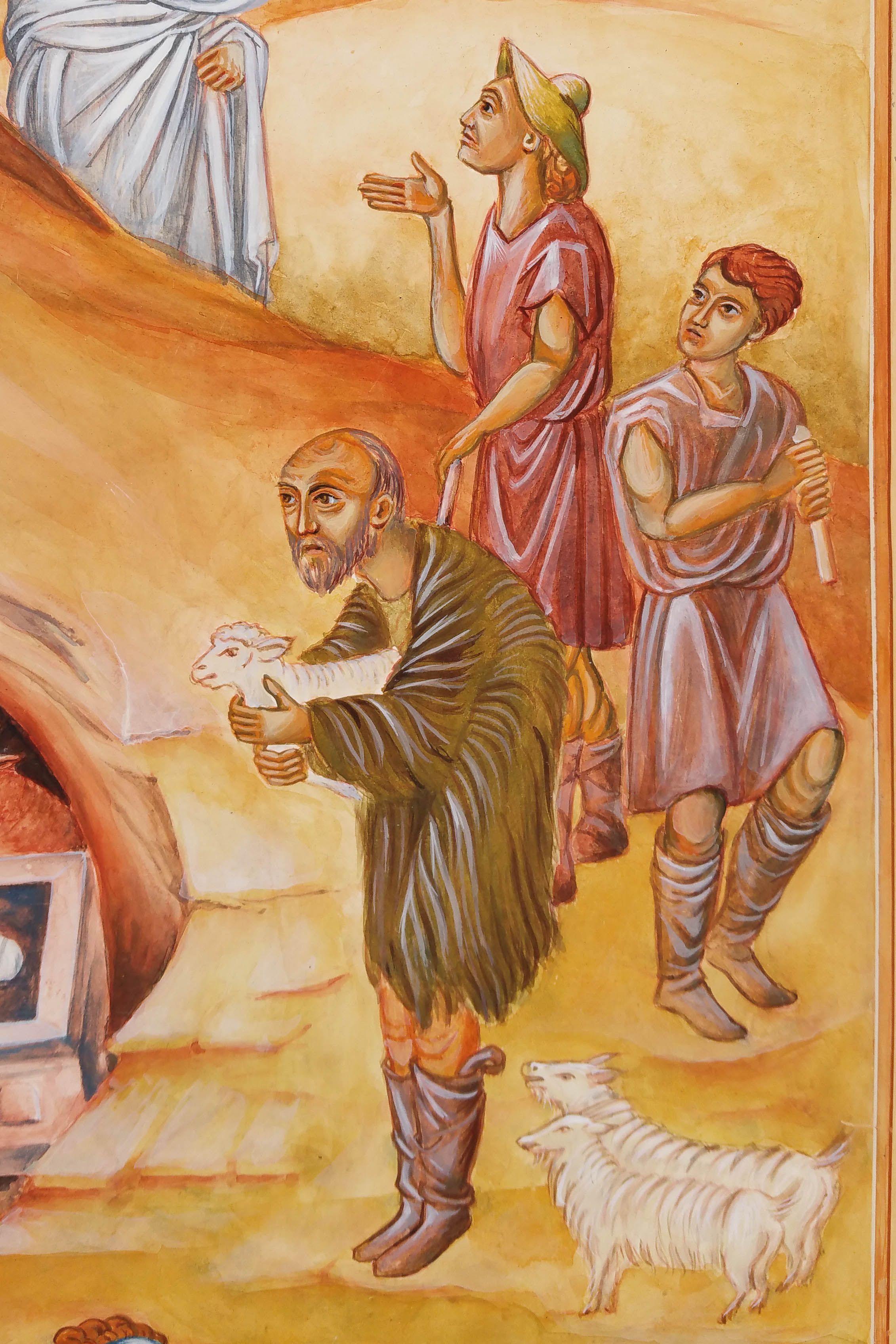
Although I’m currently working on a large nativity icon for the diploma (which we have to compose ourselves rather than copy)  I side-tracked to paint this particular nativity scene on vellum as Aidan has encouraged us to study other icons to really get into the essence of the feast we have chosen.

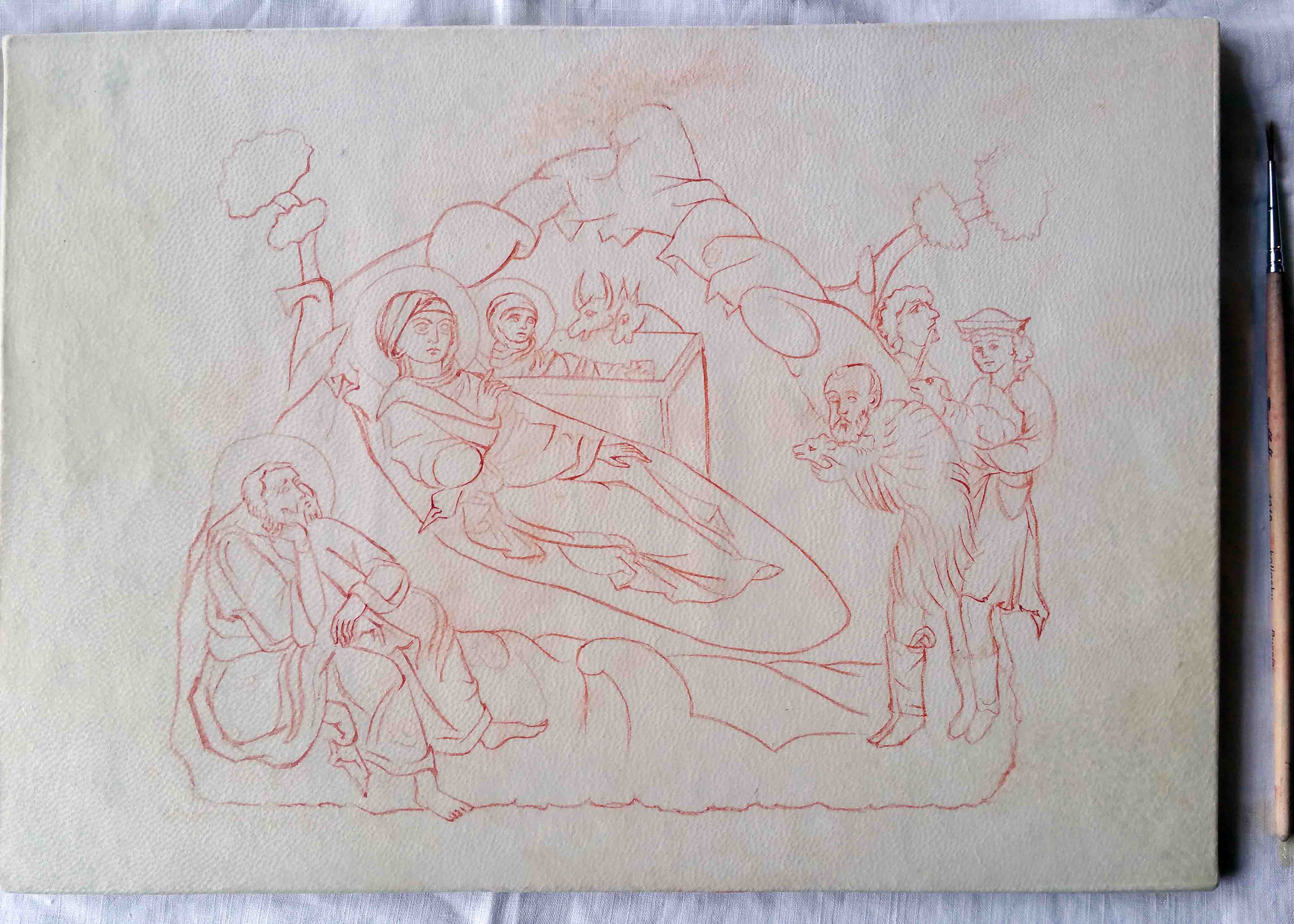
Some 12 years ago, I went to Patricia Lovett’s Traditional Skills and Gilding course, which she ran over four days. I learnt how to stretch vellum and to prepare it for painting and gilding and she ignited an enthusiasm for this art which helped direct me towards embarking on the icon diploma. I had a piece of goatskin vellum from William Cowley already stretched on to a plywood board ready for painting so I set straight to work transferring the cartoon on to the vellum in the same way as I would for an icon, by rubbing red pigment in to the back of the cartoon paper, then setting the pigment with a watery red ochre line.

Red drawing outlines on to vellum

Transfer the cartoon on to the vellum

Next step was to lay the gesso for gilding. When we were on Patricia’s gilding course, she advised us to make detailed notes on the method. For anyone who would like to learn more, my notes from one of the gilding days are here and I would also recommend Patricia’s books and dvd’s on gilding available through her website. The ‘Gilding gesso on vellum’ notes can be downloaded as a pdf here.

First washes of Caput Mortum on vellum

Caput mortum used for the earth and shepherd figure

gesso on vellum

Laying gesso for halos, irregularities to be scraped and burnished then gilded.

close up of the gesso halo on St Joseph

Note the pin prick holes in the gesso that shouldn’t be there!

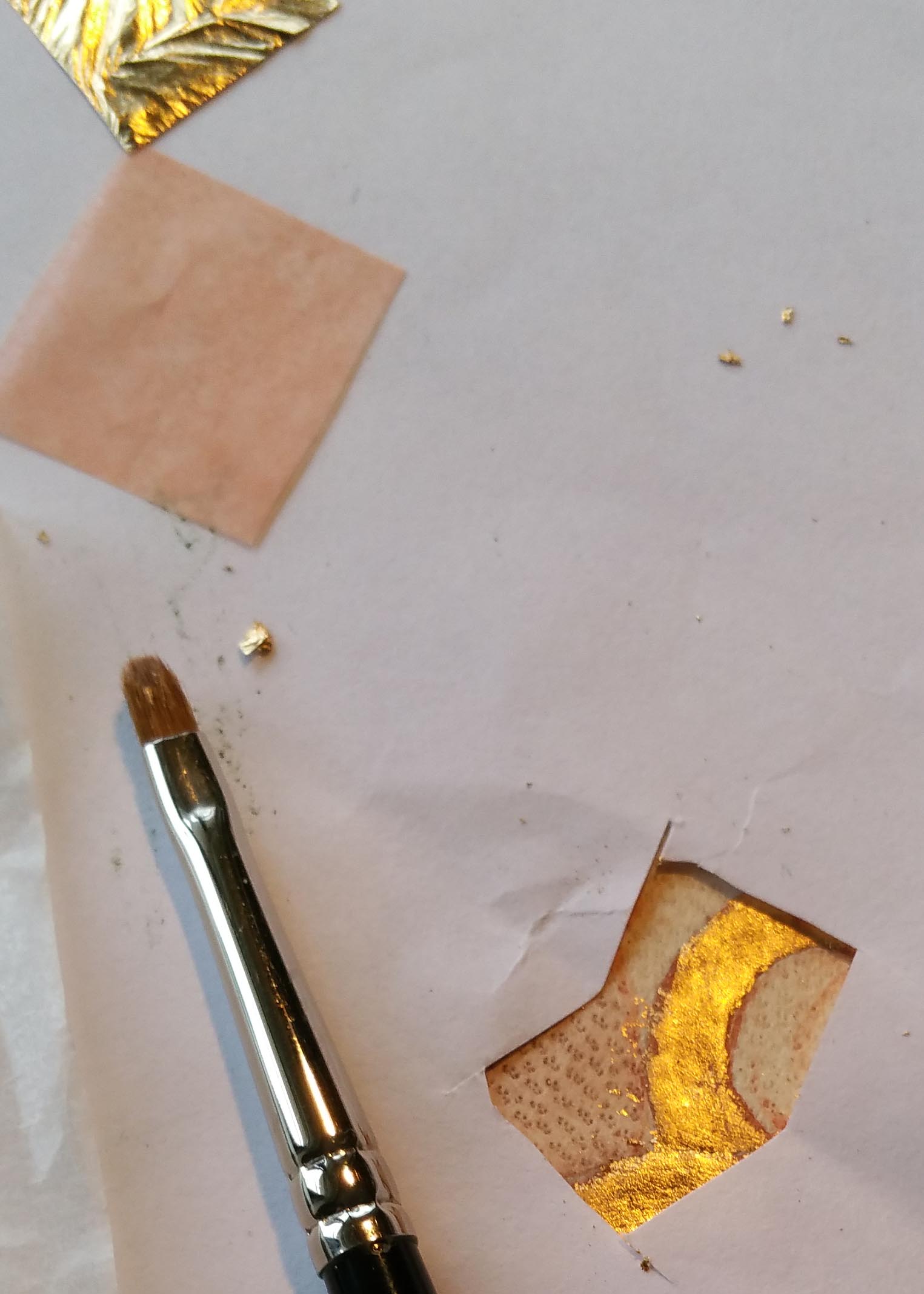
gold leaf on vellum

Applying the first layer of loose gold leaf

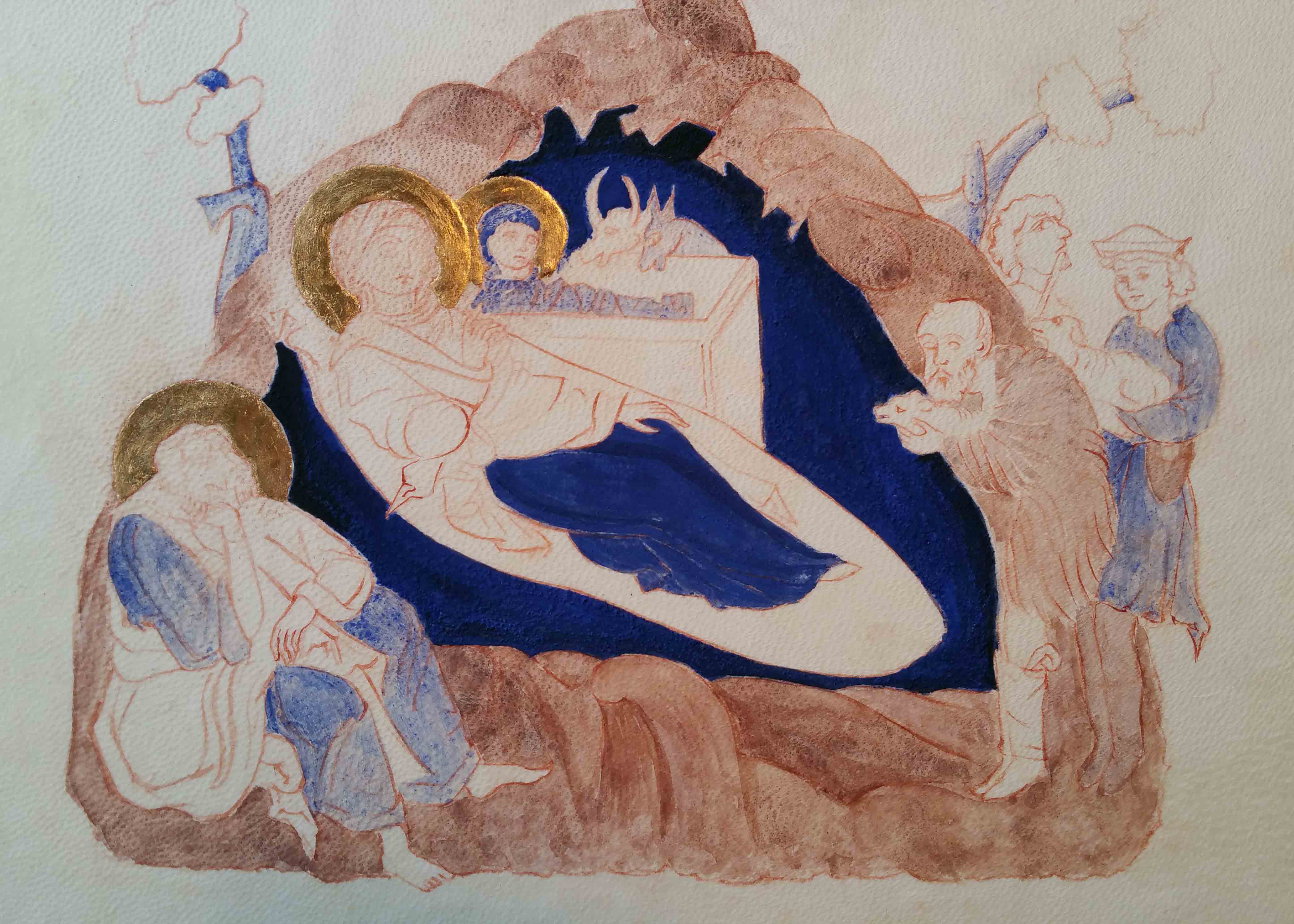
lapis lazuli and azurite pigments applied

Layers of azurite and lapiz applied to reach a deep blue within the cave

First wash of Caput Mortuum pigment applied on the earth and shepherd.

Blessed Virgin and Christ child painted in egg tempera on vellum

Close up of the tiny faces of the Blessed Virgin and Christ child

9 finished armenian nativity Cruwys

Completed illumination on vellum of the Armenian Nativity

Colour palette: Caput Mortuum, Azurite, Lapis lazuli dark, vermillion, terre verte, ivory black and titanium white.

All these pigments can be obtained from L. Cornelissen & Son, Great Russell Street, London where this piece is now on display as part of the Heritage Craft Association‘s exhibition with Cornelissen’s celebrating ‘Gold on Parchment’, for the upcoming London Craft Week, where some practical demonstrations will be taking place.

Thanks for reading!

Ronnie


Back to lettering Bury Style

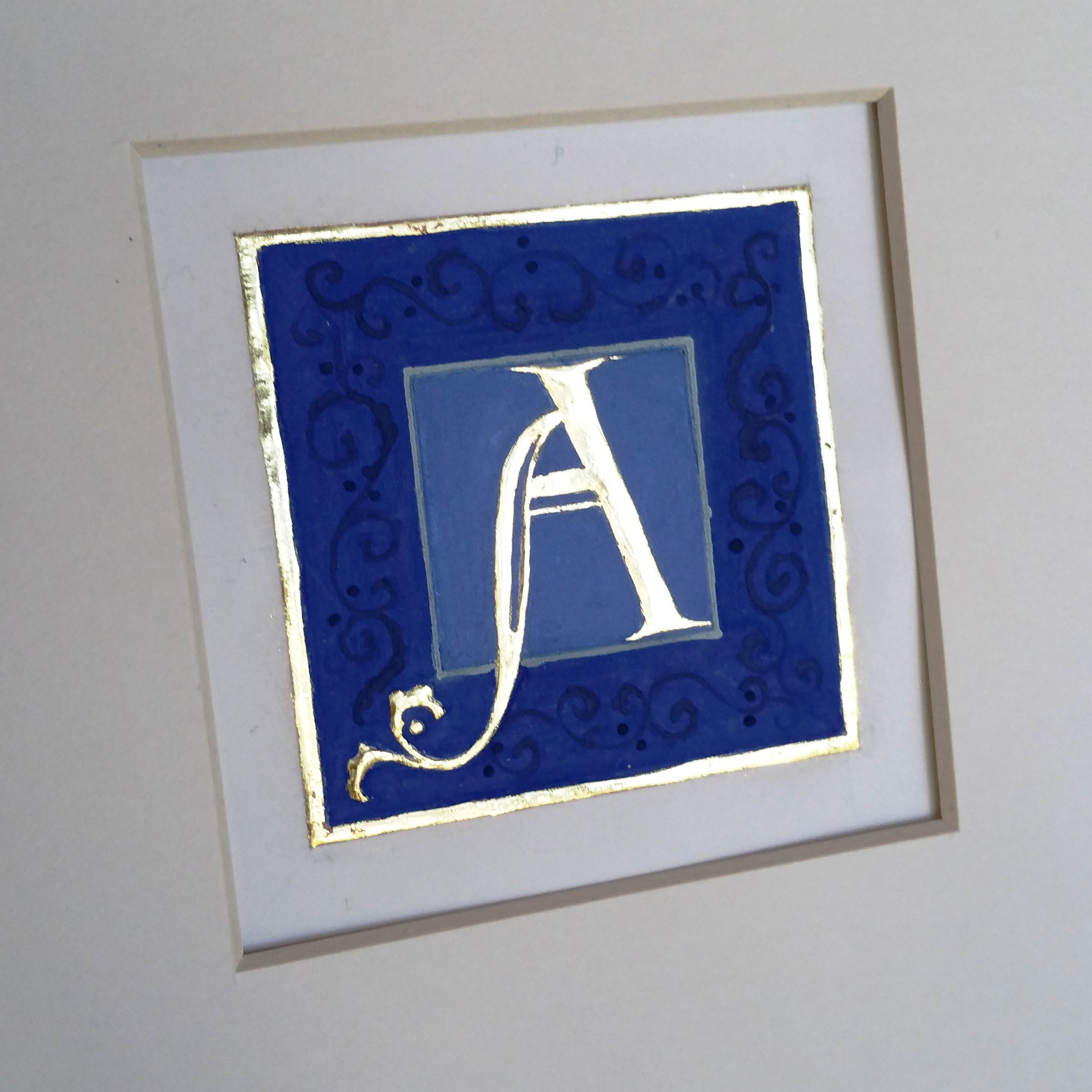
4 Letter A Bury

Gilded Letter A adapted from the Bury Bible

I’d like to pick up where I left off on my previous taster post of the Bury Bible’s Romanesque lettering (you can refer back to it here). I’d like to share some examples which I’ve gathered from this great work which may be suitable for naming saints of this period, for example:

Some saints with direct or indirect associations with this manuscript or who lived during the early 12th Century:

Edmund the Martyr (also known as St Edmund or Edmund of East Anglia, died 20 November 869

St Anselm feast day 21 April

St Cellach (Ceilach Keilach) b1080 Ireland d 1129 Archbishop Armagh

St Elisabeth Rose, Benedictine nun, b 1130 Courtenay France

St Stephen Harding, b 1059, d 1134 co-founder of Cistercian order

St William of York, England, b 1154, Archbishop of York

St Wulfric, b 1080, Bristol, England

St Thomas Becket of Canterbury, b1118, Cheapside, London, martyr

St Hildegarde of Bingen b 1098, Germany

St Lawrence O’Toole, b1125, Kildare, Ireland, Archbishop Dublin

St Gilbert of Sempringham, b 1083

St Bartholomew of Farne b1193, Whitby Northumbria

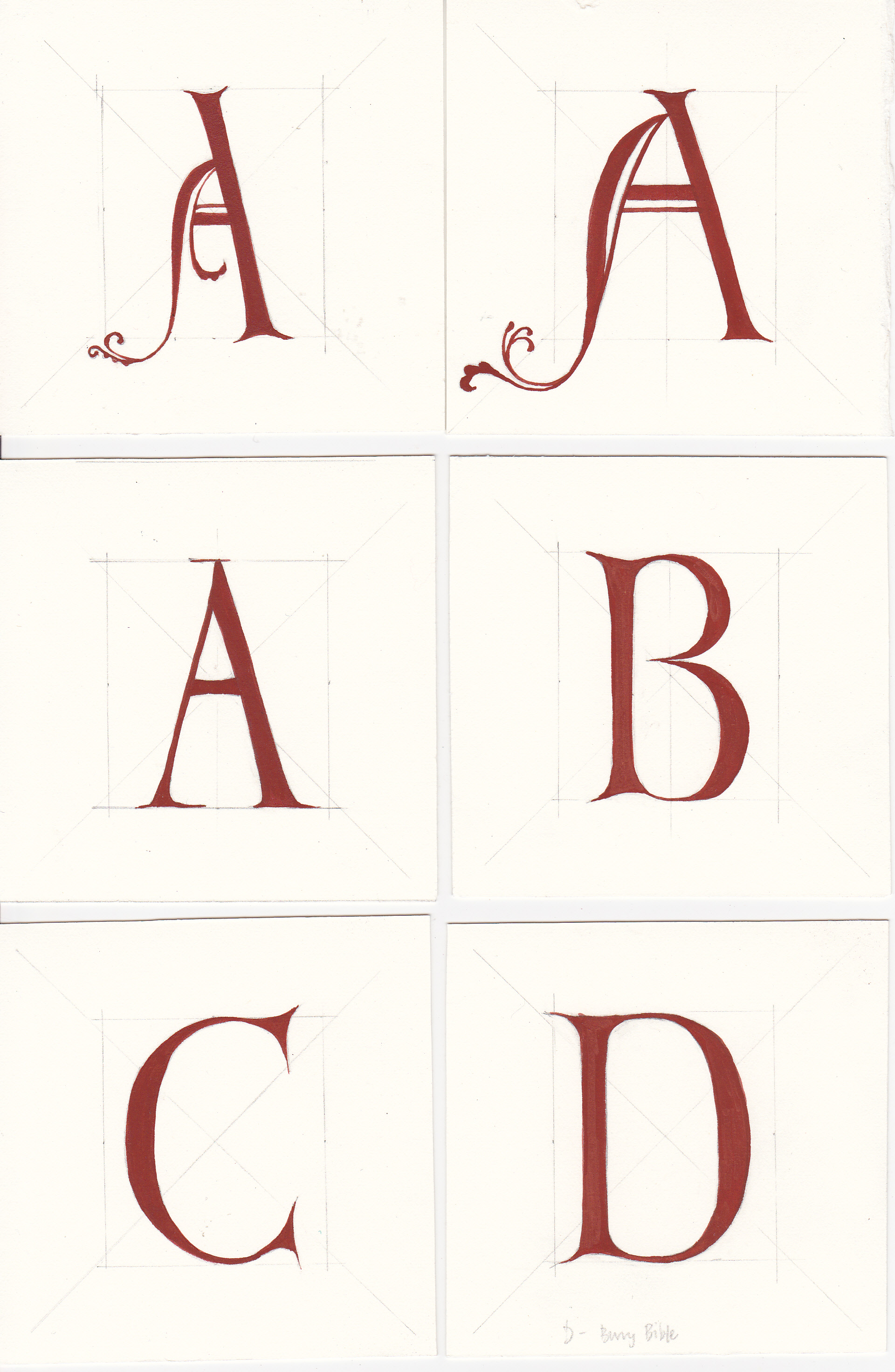
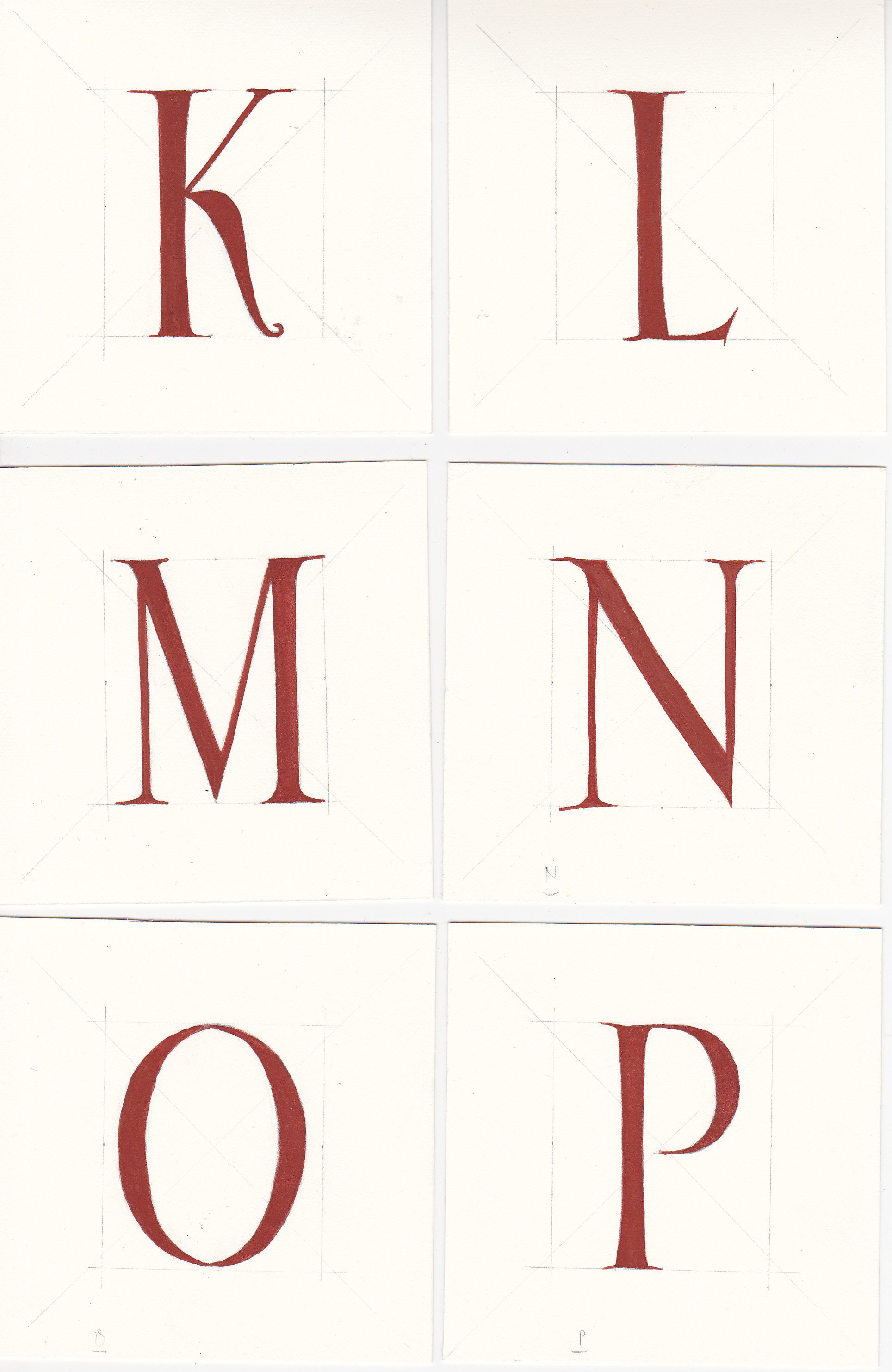
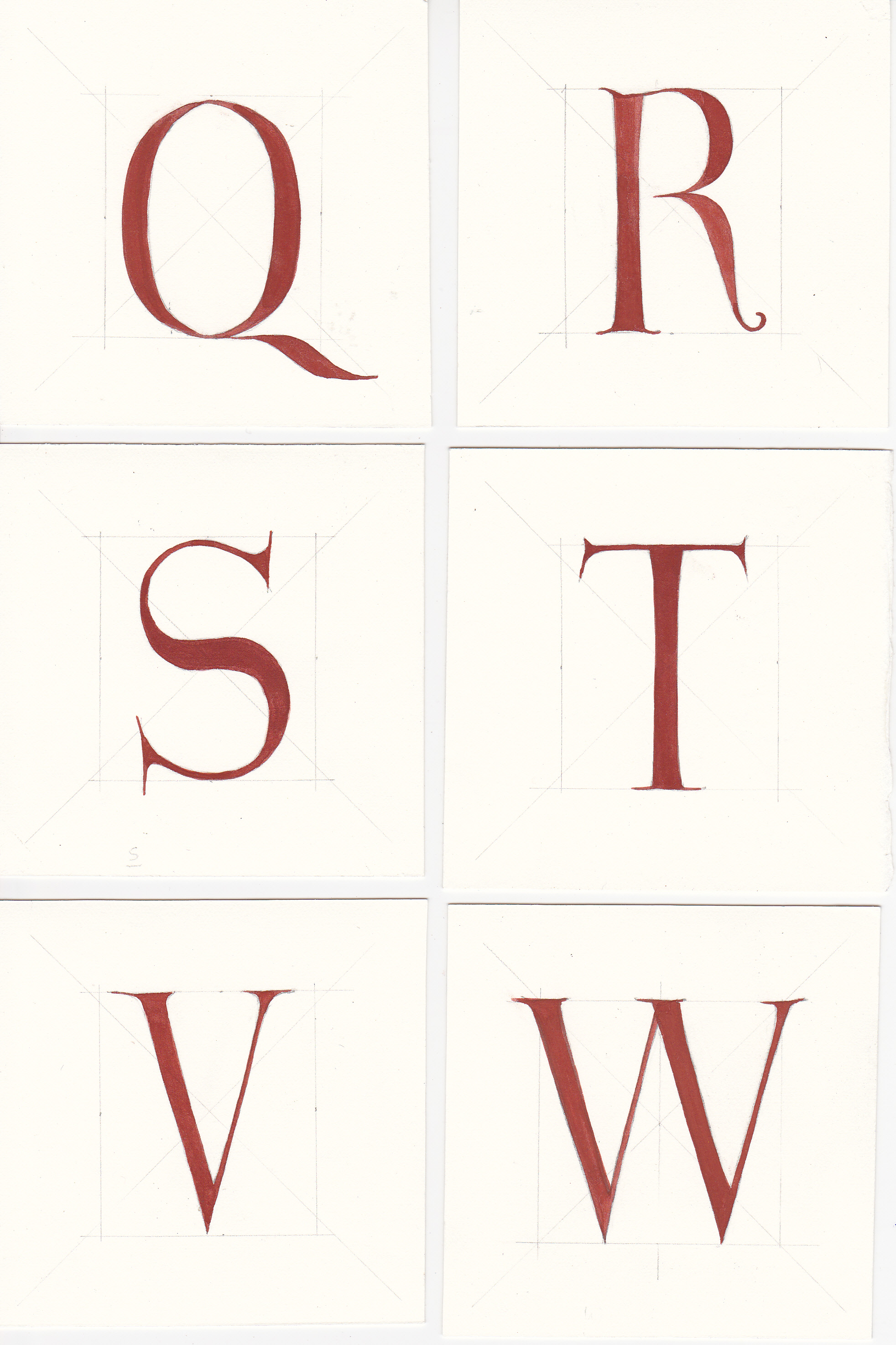
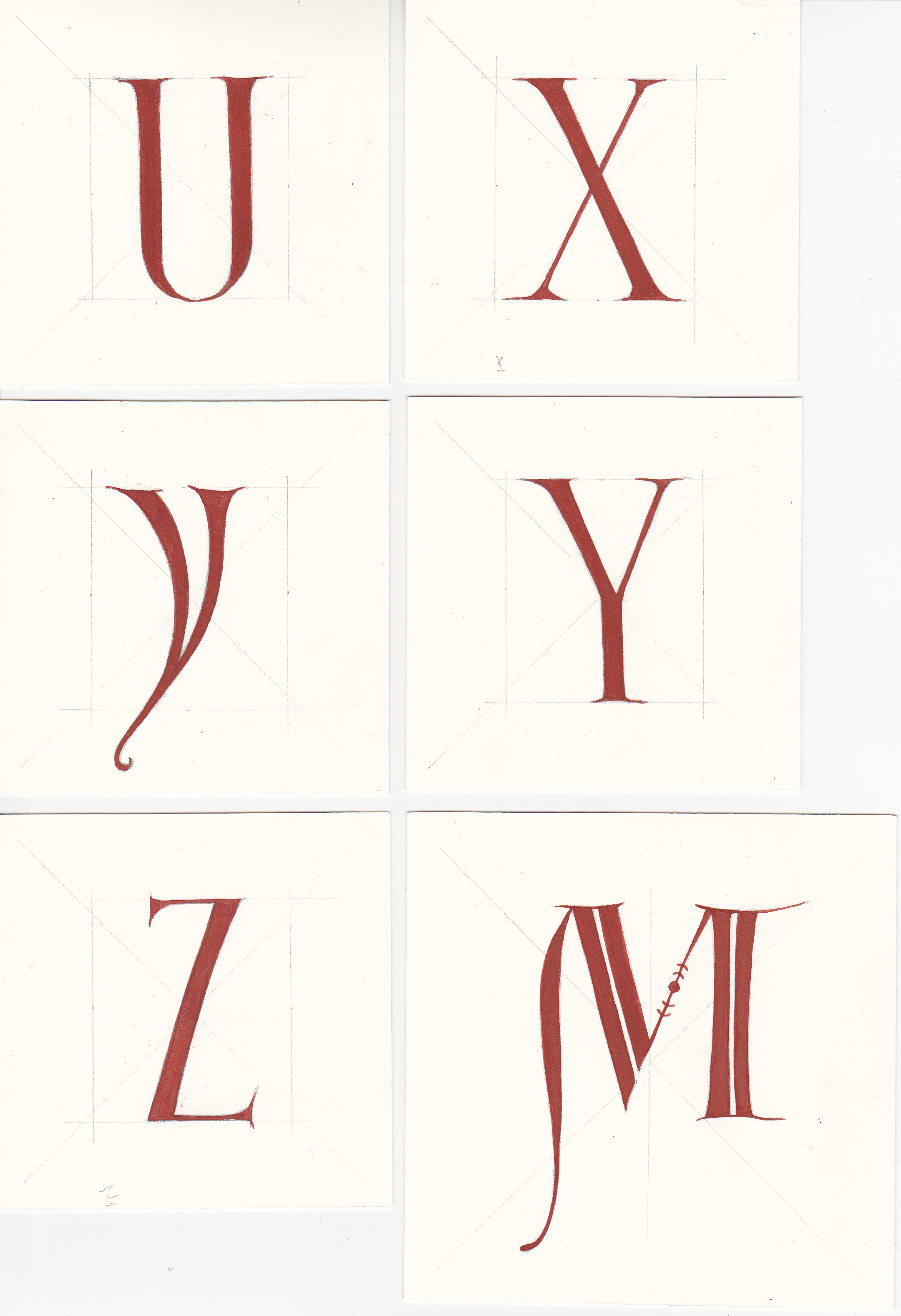
I’m hoping that the painted letters which I’m sharing here will be clear enough to save to your desktop for your own use. They need a bit more refining but they are a reasonable start. If you do get round to using them – I would love to see your work!

lettering based on bury bible

Letters A to D ‘Bury Style’

lettering in red ochre

Letters E to J ‘Bury Style’

KLMNOP

letters K to P ‘Bury Style’


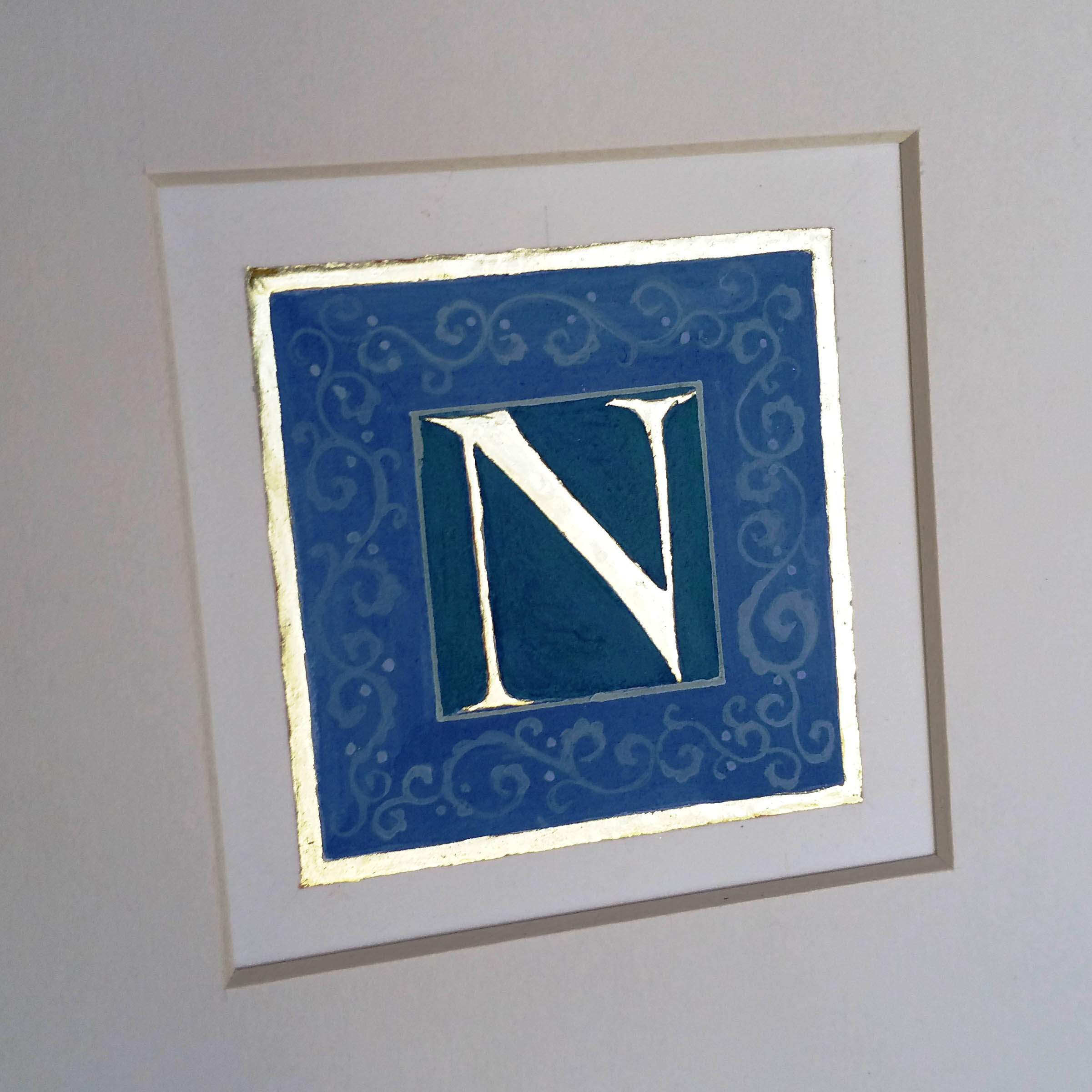
4 Letter N Bury

Crisp balanced lines of the Bury letter N

QRSTVW.jpg

Letters Q to W ‘Bury Style’

UXYYZM

Letters U to Z (plus an extra fancy M) ‘Bury Style’

Hope these are useful some day and thanks for reading!

Ronnie