Icon Diploma Student

Learning to see with the eye of the heart

Posts from the ‘Uncategorized’ category

Archangel Michael part 3

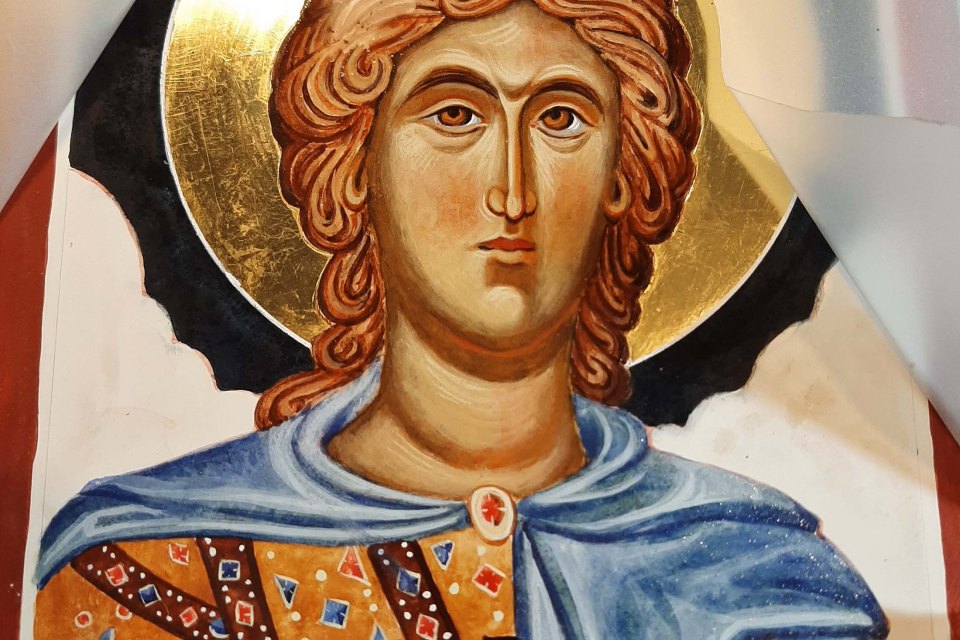
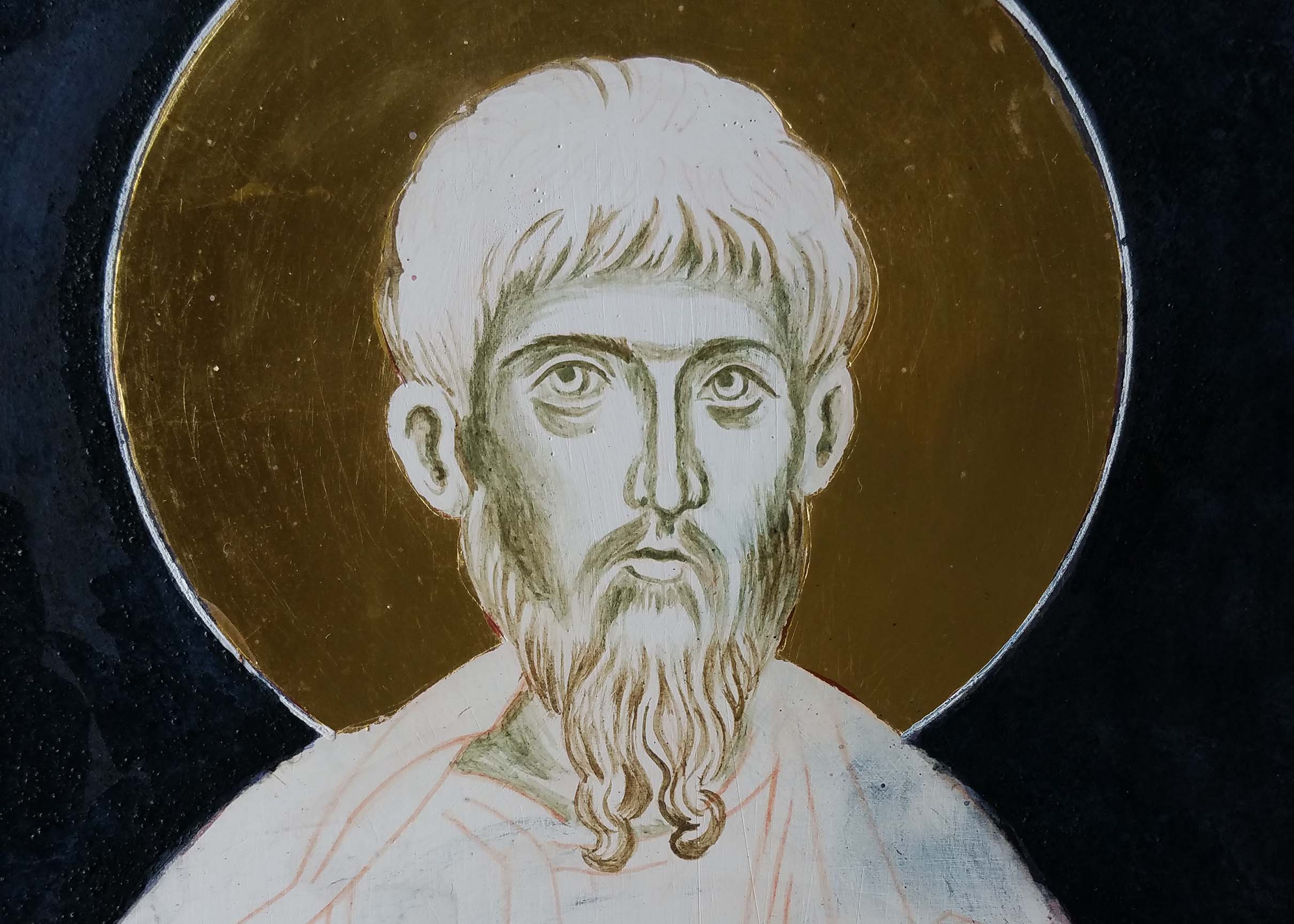
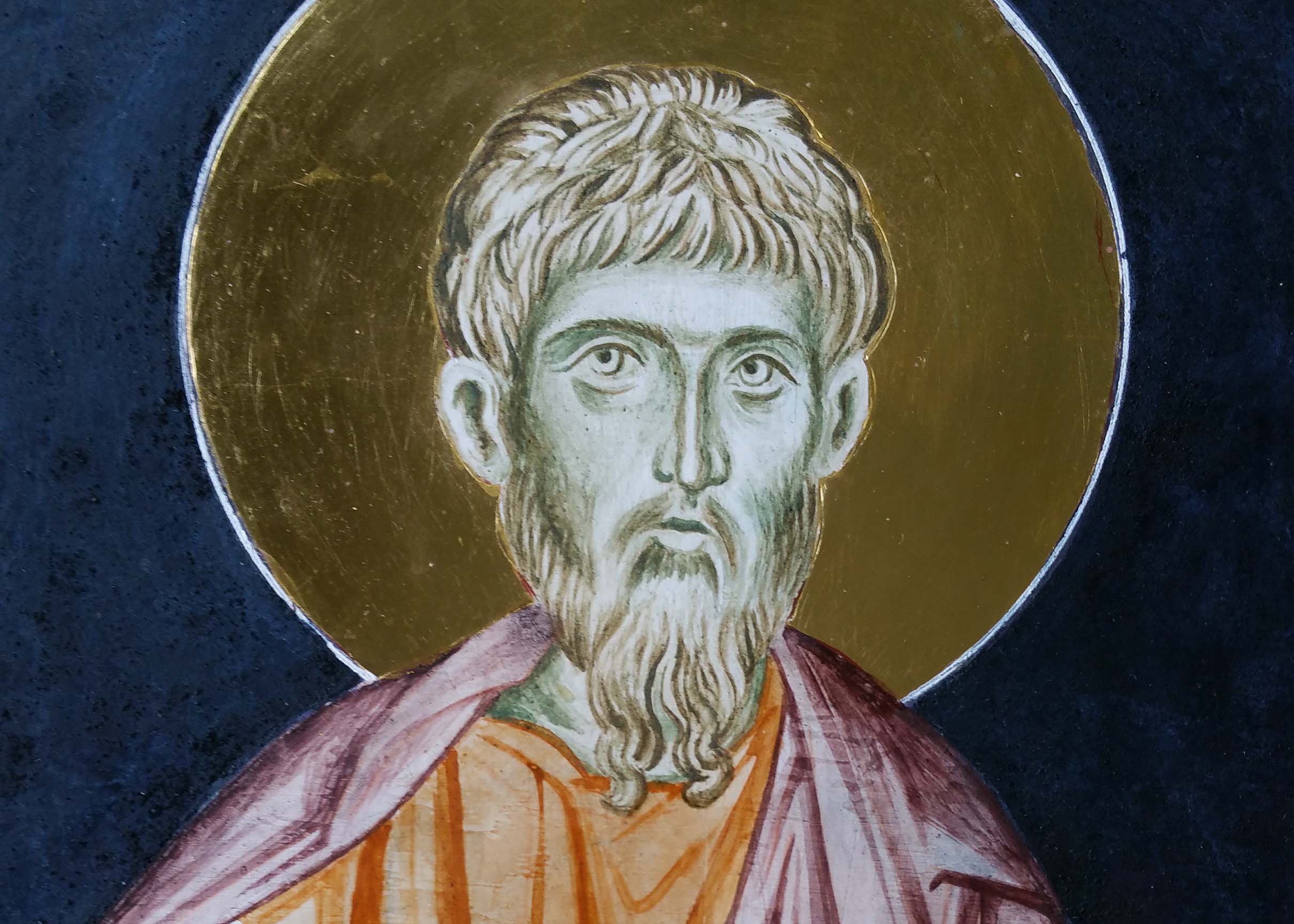
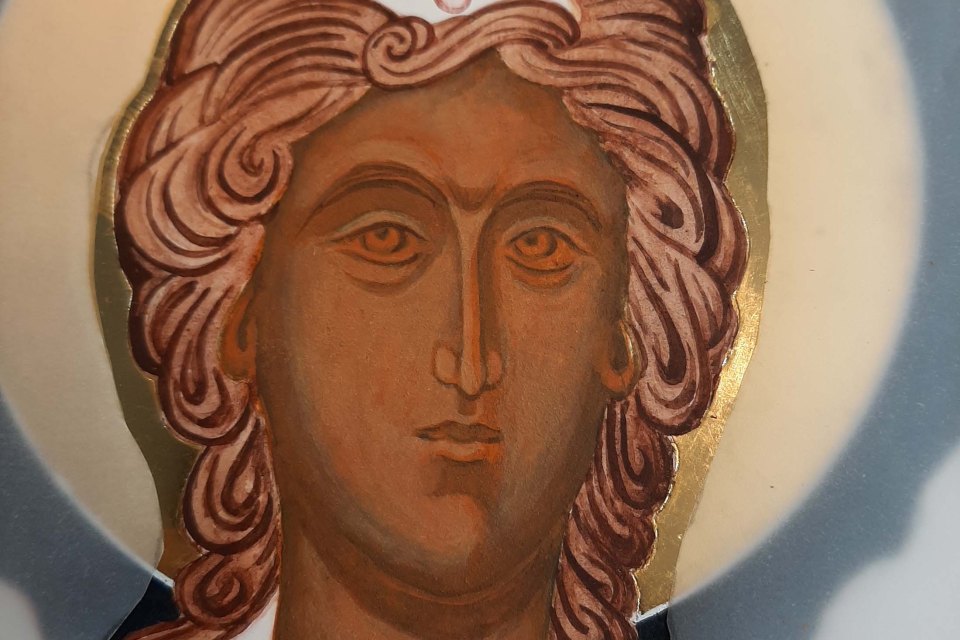
First thin layers of highlights applied to define the main forms of the face.

Hello again!

It’s time to add some face highlights. I’ve been looking through my old class notes (from 2014) and found some really helpful reminders. Aidan (Hart) recommends that we should aim to apply 3 (but no more than 4) layers of highlights – easier said than done!

First layer of face highlights:
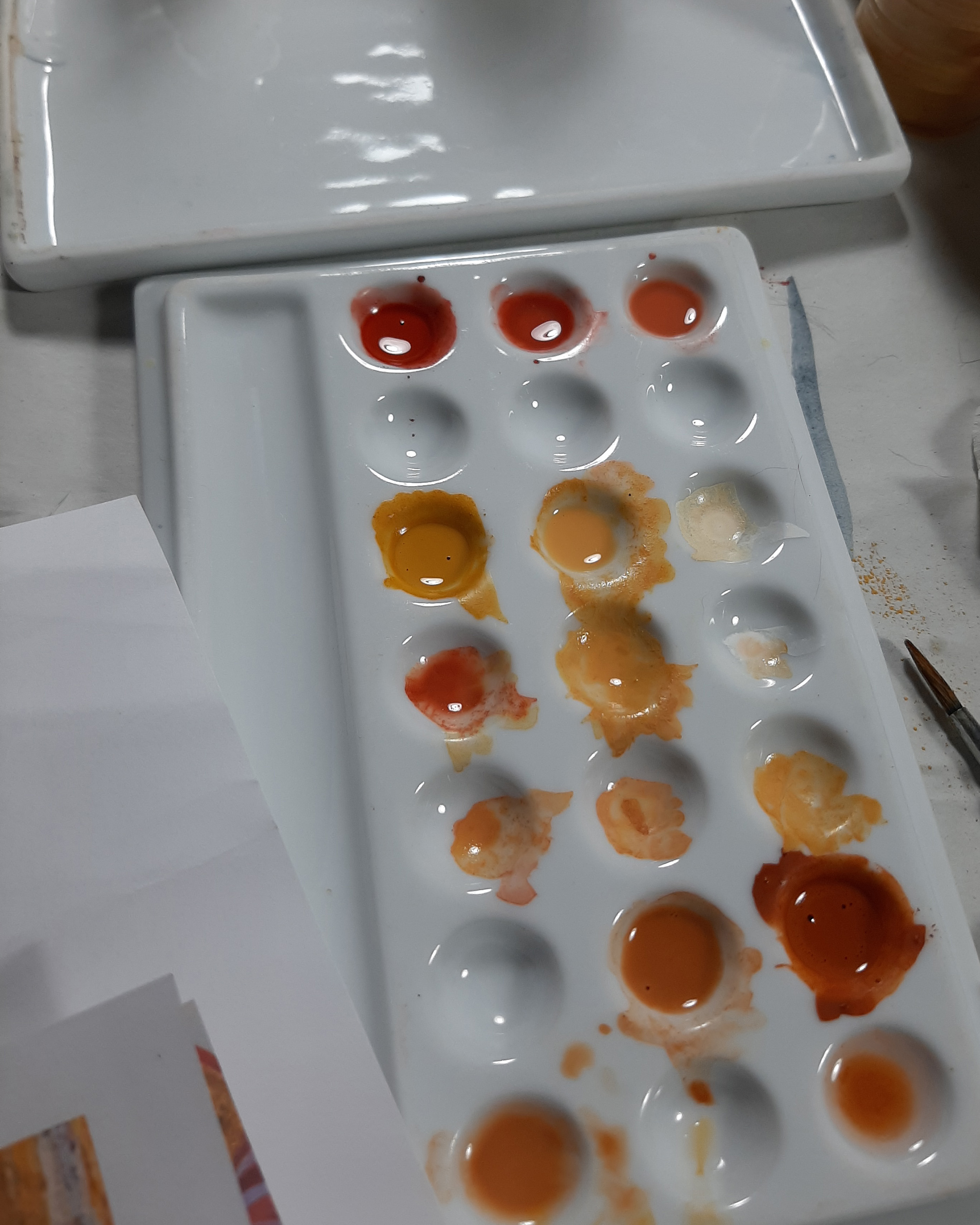
Start by mixing plenty of the golden yellow (you don’t want to run out as it is very hard to remix the same shade). Use a light yellow which brightens gradually by approx. 20% with each layer. Mix yellow ochre light (Maimeri) and a touch of Titanium White. Paint sample swatches to see the contrasts as you want to avoid a big change such as 50%. The photo below shows me trying to find the 20% difference – I will keep trying! It might also help to use a palette with bigger dimples but this was for a different smaller icon.

Mix the white separately before adding to the yellow in very small quantities.

Include a brush of highlight over the lower lip.

You can’t tell if it is the right colour until you have applied a thin layer and let it dry. Start very lightly on the ear. Wait till it dries before you proceed with the colour. You are aiming for 20% lighter than the membrane layer.

Paint with accuracy. Look carefully 2 or 3 times before you begin. Use this opportunity to correct your underpainting.

With a size 3 brush, (maybe size 2), apply the paint thinly over the higher parts of the face, and feather out with dry brush technique. Use a watered down mix of your colour to feather out edges, but brush out most of the paint on your testing paper first. Build up layers thinly and watch out for puddling!
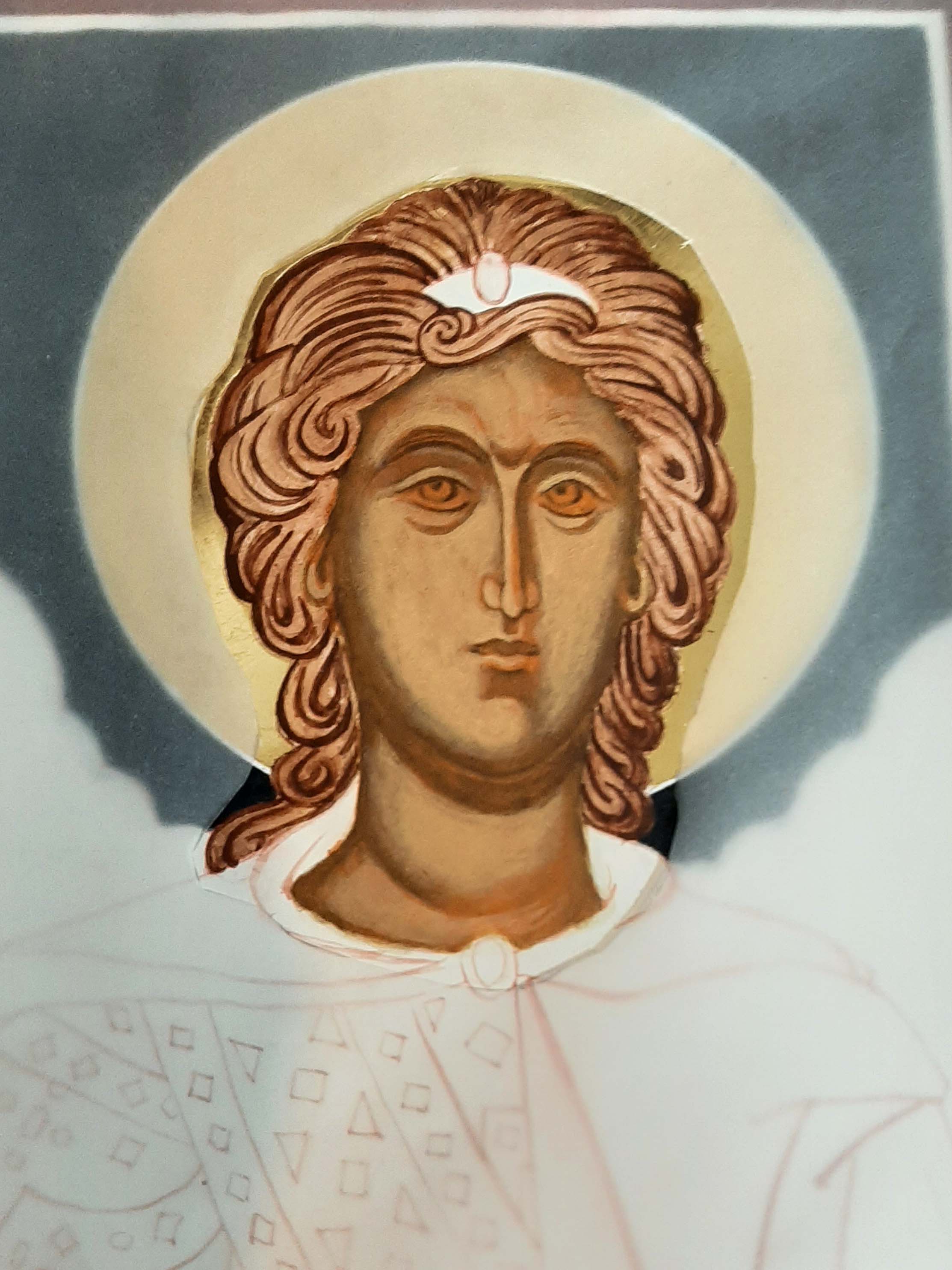
At this stage the layers have got quite patchy – a wash of ochre havanna will blend this.

Leave the eyes till a later stage, but include the flesh around them.

Tip: Look for curves and equally, don’t round up sharp corners.

Leave space around the highlights so the mid tone underpainting remains. Wait till it dries then apply another layer of the same mix as it will dry close to the colour of the membrane. Don’t cover all of the membrane.

Make sure the brow bone is deep. Keep the angles of the brow. Mind the direction of your brush strokes and spread the brush to feather out.

Second layer:
Make sure first layer has properly dried. Look closely at the original and identify the high points of the eyebrows, forehead, nose, cheeks, chin, ears. Note the direction of the face. Make sure you highlight the upper cheekbone to keep the width of the cheekbone next to the eye.

Add a little more white to your mix and test.

Tip: if you go too light too soon, add a thin warm glaze of Italian Warm ochre (French Havanna is very similar). It also acts a harmonising layer when all the highlights (except the ‘snow’) have been applied.

‘No confusion, no division’.

Third layer of highlights
Repeat the process over a smaller area. Be careful to look closely at the high points. The paint has more white and is more opaque. Again, be careful to apply thinly, not too much water, feather out edges and build up in layers. If it looks too white, add a warm glaze.

Tip: avoid sudden changes of depth or contrast. Shading should all be gradual.

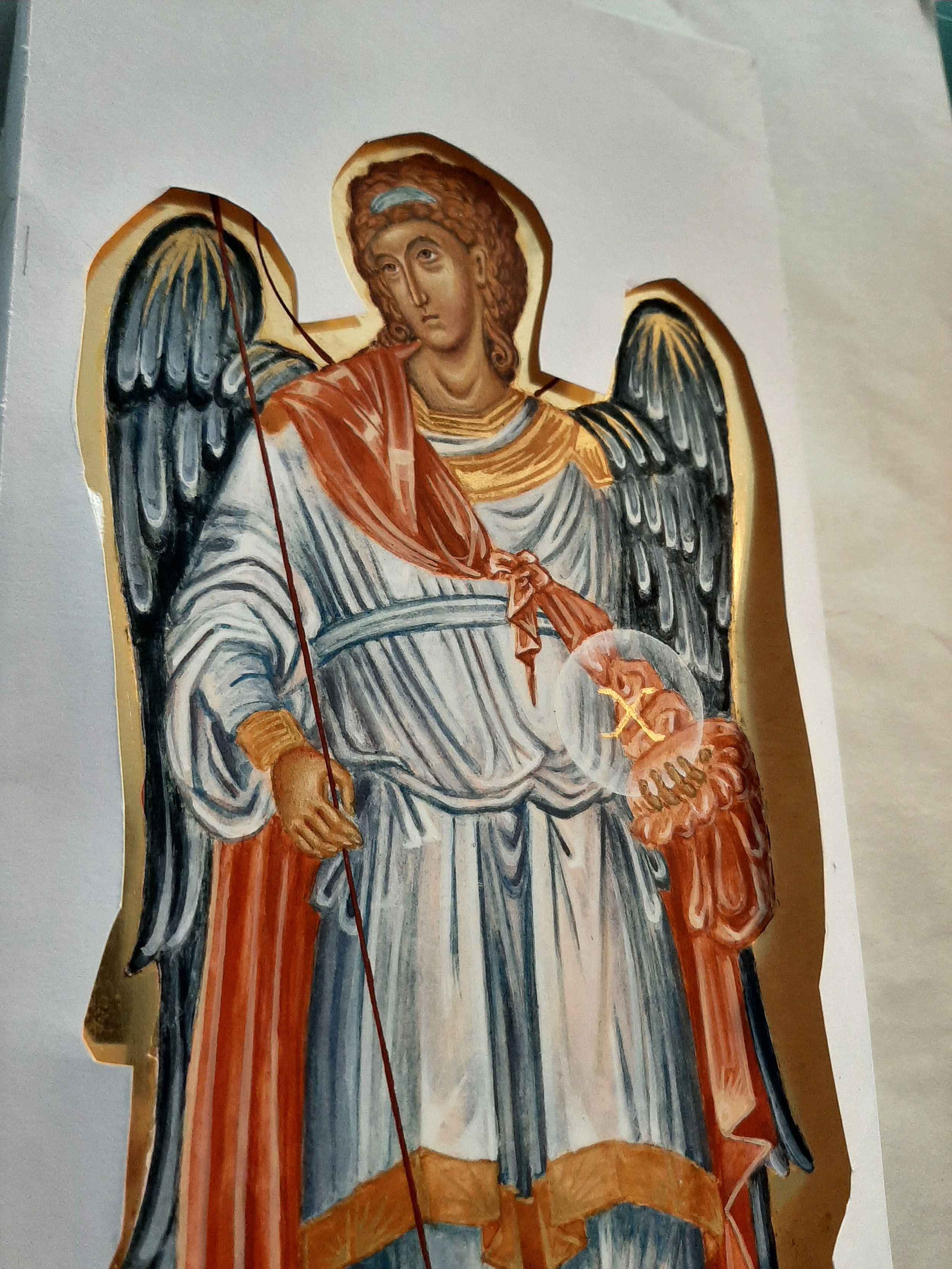
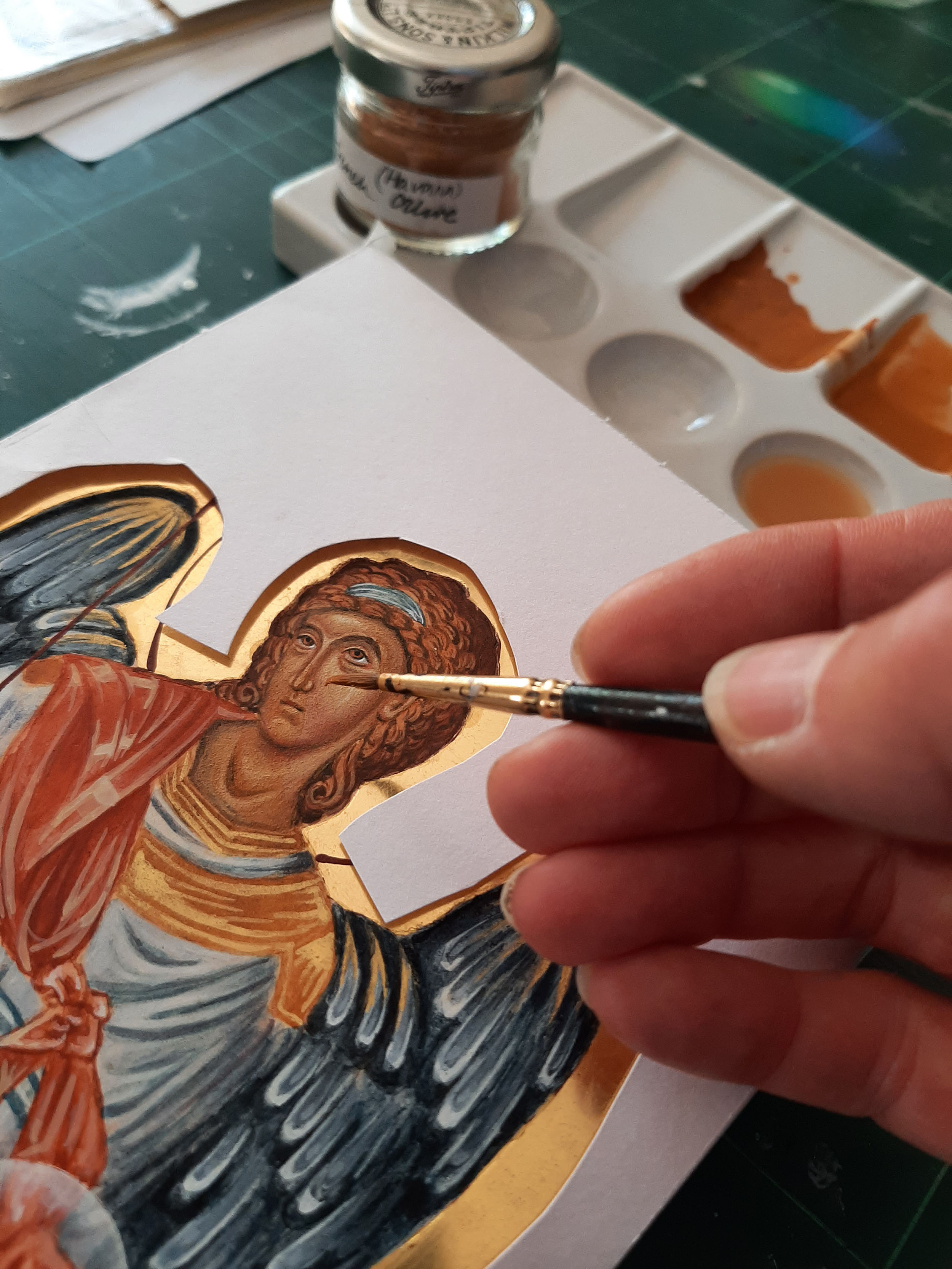
These two photos show that I’ve made a start on the eyes but I will cover the finishing details in my next post. I find the final highlights quite tricky and nearly always go adrift. That said I now leave the work for a week or so and come back to it with fresh eyes. I take a black and white photo and see where it’s out of balance. Or I cover the face with paper and start work building up the garments. There’s always plenty to work on!

I hope to be back soon to finish this sequence of posts and the final ‘snow’ highlights on the face but in the meantime, wishing you a peaceful and happy Advent.

Thanks for reading

Ronnie 🙂

Ps The finished icon can be seen here

Archangel Michael – Part 2

Welcome back to this reminder to myself as to how I painted this icon of Archangel Michael. By this time, the underpainting should be dry and stable ready for the membrane layers. 

These layers give the middle tone and I’ve found them quite tricky and easy to go wrong! I’ve learnt that if I smear or smudge it at any stage, just leave it! Go have a cup of tea and wait till the layer has fully dried and only then paint over it. If I do try and tidy up too soon – it leads to patchy holes back to the gesso.  

Using Yellow Ochre light (Maimeri) and a little Vermillion or English Red Ochre light and a touch of Titanium White, mix up a warm golden orange. French Ochre Havannah is another favourite of mine for the membrane. Go easy with the white as it’s a strong pigment. It’s best to mix it up separately then add a dash with the tip of your brush until you get a warm rich red gold. Paint out samples of the colour on some paper to see how it looks.  

Deepening the layers of the membrane onthe face of icon painting
Build up layers until you have a rich deep gold for the mid tones.

With a large squirrel mop held at 45 degrees or less to the board, not upright, sweep a light, even wash of membrane colour over the face but NOT the hair. Apply at least 4 or 5 membranes until you get a rich even golden colour. This is where you see how important it is to have a strong underpainting. If there are area on the membrane which are patchy, apply another layer and puddle in extra pigment where thin. 

Adding a thin layer of egg stock over the hair
I’ve added a glaze over the hair to seal the bare gesso

When the membranes are complete, you can apply a separating glaze of 10% egg, 90% water.

Aidan’s Tip: Go easy with the dilute egg stock mix – too much egg leaves a slippery surface which is hard to paint on.

Next stage is to work to deepen the shadows using Avana and a dash of ivory black or raw umber dark.

Defining the icon features with darkened tempera painting
Modelling the shape of the face with the darker layers

Again, building the forms up in thin layers – deepen the upper and lower eye sockets, the sides of the nose, the cheeks, jaw and hair lines. Deepen the upper lip, the shadow below the nose tip, the mouth meeting line, the corners of the mouth and the dip below the lower lip and round the chin.  Model the shape of the neck and where the garments leave a shadow. Last of all, finish the shadows with a thin glaze of dilute egg stock and leave it at least overnight.

Aidan’s Tip: If you get a paintbrush hair (or cat hair!) in the mix leave it alone until the paint is dry, then brush it off. It’s really easy to mess up at this stage and damaging the underpainting.

That’s all for this post…to be continued with adding the highlights.

In the meantime, if you’d like to see the finished icon for encouragement – it’s over here

Thanks for reading,

Ronnie 🙂

Painting an icon of Archangel Michael – Part 1

A warm welcome and thanks to new subscribers – you’ve nudged me to write!  It’s been a while since I painted an icon so I thought I’d write a reminder to guide myself and maybe encourage others to pick up the brush again.

I’m looking back on the process of painting this icon of Archangel Michael (9.5 x 7” on 1” birch ply) looking in particular at the face painting stages with a summary of the earlier steps.

Working from my drawing of this icon, I transferred the key lines using tracing paper. I rubbed a pinch of deep red ochre pigment into the back of the paper with cotton wool, then located the tracing paper image on to the icon board and taped it top and bottom.   Using a hard pencil (H or 2H) I traced the lines to transfer the image on to the gesso.

Egg stock in the left dimple and a diluted mix alongside for glazing .

Next step is to fix the powdery lines to the gesso by painting over them with a dilute mix of red ochre.  My lines look a bit heavy-handed (see below) but the underpainting should be quite definite to withstand at least six or seven membrane layers.

Going right back to basics here: the egg stock is made up of 50% egg yolk, 25% distilled water and 25% alcohol (gin or vodka). A diluted mix of 20% egg stock and 80% water is used for thinning the paint/glazing. When mixing paint, add the pigment to the stock until it reaches consistency of thin cream. This mix can then be further watered down to get thin layers.  

Work stage of gilding halo in orthodox icon painting
Definite underpainting lines – important to get these in the right place at this stage! Note the small piece of card taped in place to protect gesso from compass point. Masking film applied either side of halo.

When the key lines are in place it’s time to water gild the halo. Water (and oil) gilding needs a chapter, let alone a single post! I’ve covered much of this technique in previous posts but a helpful tip is to apply liquid masking film (I use Winsor & Newton) before gilding.  I apply it around the edges of the bole in a band of about ¼” (5mm). Gold sticks to gesso during the gilding process and it can be fiddly to remove.

Painting background to icon
Applying background in thin layers

After burnishing the gold, I paint the background surrounding the halo before starting on the face. To get a crisp line for the halo, the compass line sits best on bone-dry tempera so I leave the background at least overnight. I use a compass with scribing nib attachment for the line around the halo. I draw the halo line before painting the face to avoid placing the compass point into the finished face.  I tape a small piece of card to the centre of the halo to protect the gesso from the compass point.

Drawing tools for inscribing halo in egg tempera on icon painting
Compass with the adjustable ink attachment

To paint the halo line I put a few drops of a fairly strong mix of white titanium (single cream consistency) into the side of the nib using a brush to transfer the paint. Dipping the nib directly into the paint usually leads to blobs!    

Outlines of drawing painted in thin layer of red ochre egg tempera
Gilding, background and halo line all in place – ready to start work on the face

Make sure all the features are where you want them to be. It’s a lot easier to move them at this stage! I double check my work by taking photos with my phone and zooming in/out to look again.

Aidan’s Tip: ‘Remember to paint with Distinction and Unity – there is no unity without distinction and no distinction without relationship’

After gilding, I apply a wash of dilute egg stock (10% egg stock 90% water) to seal the gesso using a squirrel mop brush. This offers an even surface for painting over. I apply these thin coats throughout the process – usually when I’m wrapping up the day’s painting session.

Aidan’s Tip: Remove any pigment which has strayed on to the gilding with a dry cotton bud. Do this as soon as possible as clay pigments set hard and will lift off the gold. 

Once the lines are in place then the underpainting and modelling of the face begins (I’ve used a different icon undepainting for this example). I’ve learnt that it’s important to spend time on this stage. Keep your drawing/icon master image close to refer to. Using Avana pigment, paint the form of the face evenly in thin layers ensuring that line weights vary in the appropriate places. For example, brows are thicker, eye socket line is light, the upper brow dense and the lower lid light. The underpainting should be clear and well shaded enough to withstand 6-7 membrane layers.

Building up the underpainting (a different icon)

Larger and more dominant shapes need stronger modelling whilst minor/ shallow forms are best left to be modelled by highlights.

Other colours can be used for underpainting skin tones such as Yellow Maimeri mixed with a little Ivory Black. Also 80% terre verte and 20% yellow ochre (Maimeri light). It’s worth experimenting to see the difference each combination makes.

Applying the first thin wash over the face
I cut a paper mask to protect all the other areas where I’m not working.

When the underpainting is in place I apply a very thin wash of avana over the face and leave it. The longer the better! Applying the membrane can be a bit tricky as it’s easy to make ‘holes’ during the process and disrupt the underpainting. If the underpainting has tempered/dried for at least a week it’s more stable to work over. Again not forgetting I live in cool, damp Scotland!  

My next post will be about applying the membrane layers and deepening the shadows but in the meantime, if you’d like to see the finished icon for encouragement – it’s over here

Thanks for reading and all the best with your own icon painting!

Ronnie 😊

Always we begin again

I recently unwrapped a pair of standing angel icons which I painted three years ago for the exhibition ‘A Street of Angels’ in York at Blossom Street Gallery. I remember thinking that the faces weren’t quite right but time had run out as we were relocating up to Scotland and so they went on display, got packed away afterwards and that was that.

Life has taken quite a turn since and I don’t get much time to paint icons however I have committed to revisiting and finishing off all the icons that had things that I considered weren’t quite right. I thought that it would be worth sharing how I get along with this exercise as it is a bit of an adventure!

Here are the two icons before I started work on them. It was Archangel Raphael’s expression that I thought needed most work. It’s hard to tell from these photos but the blending was a bit heavy handed and if I was to refresh one, then I should work on them both for consistency.

First thing was to ‘wake up’ the surface with several coats of an egg glaze. Using the tempera mix, I made a glaze with about 1 drop of egg to 10 drops of water. I also made a protective paper cover for the gilding and taped it down. Looking at these photos, the faces don’t seem so bad, but they were just not properly finished.

I let the glazes settle for a few days, then using the wonderful pigment French Ochre Havanna, I applied three or four glazes over the face. This pigment is warm and a great one to calm down clumsy highlights. These faces are fairly small, about 2cm from hairline to chin, so I used fine brushes for the details.

Applying glazes over the entire face.

Glazes of French Ochre Havanna even out the skin tones and deepen the gold mid tones. I also applied a few washes of English Red Ochre Light over the hair to deepen the mid-tones so I could tidy up the modelling. I’ve found that leaving the glazes to dry overnight means less likelihood of making holes in it when applying the next layers.

I’m putting on the darker tones here, with a 1010 kolinsky sable brush. I’ve mixed some English yellow ochre, raw umber and ivory black. I also used Ochre Avana which is another really versatile pigment. I have deepened the hair line and then used a thin egg glaze to feather and blend away the hard lines next to the brow. To get the highlights, I used Yellow Maimeri and titanium white, but I also added a small amount of French Havanna to keep the highlights a warm gold. I mix small quantities in this ceramic palette which comes with a lid – perfect to stop them drying out and keep the cats off!

Painting on the first layer of face highlights

I find that taking photos of my work as I go along helps as I can zoom in and see exactly where I need to tidy up. The other thing I do now is to add very thin glazes of ochre havanna as it helps with blending especially after I have been remodelling.

I added highlights in thin, thin layers, softened and shaped the eyebrows, moved the brow highlights to the right, eased back the highlights on the right of the neck, added vermillion to the nose tip, upper lip, under the chin and inner eye. Added white highlights to the eyes, with the sides of the eyes a grey mixed with black and white. Added a very thin glaze of vermillion to warm the cheeks. Then added the hair highlights back and added the ribbons which I had missed altogether. The finished face is on the left. I’m happy with this as the expression is much kinder! You can see the finished icon in my Etsy shop.

I hope that this is helpful in some way with your own icon painting. Thank you to everyone who has followed this blog during the quiet years, but I will go through the same process with Archangel Raphael in my next post.

Thanks as ever for reading and your patience!

Ronnie

Living up a Tree (St David pt 2 of 3)

study on watercolour paper of st david of thessaloniki

St David offering food to a bird

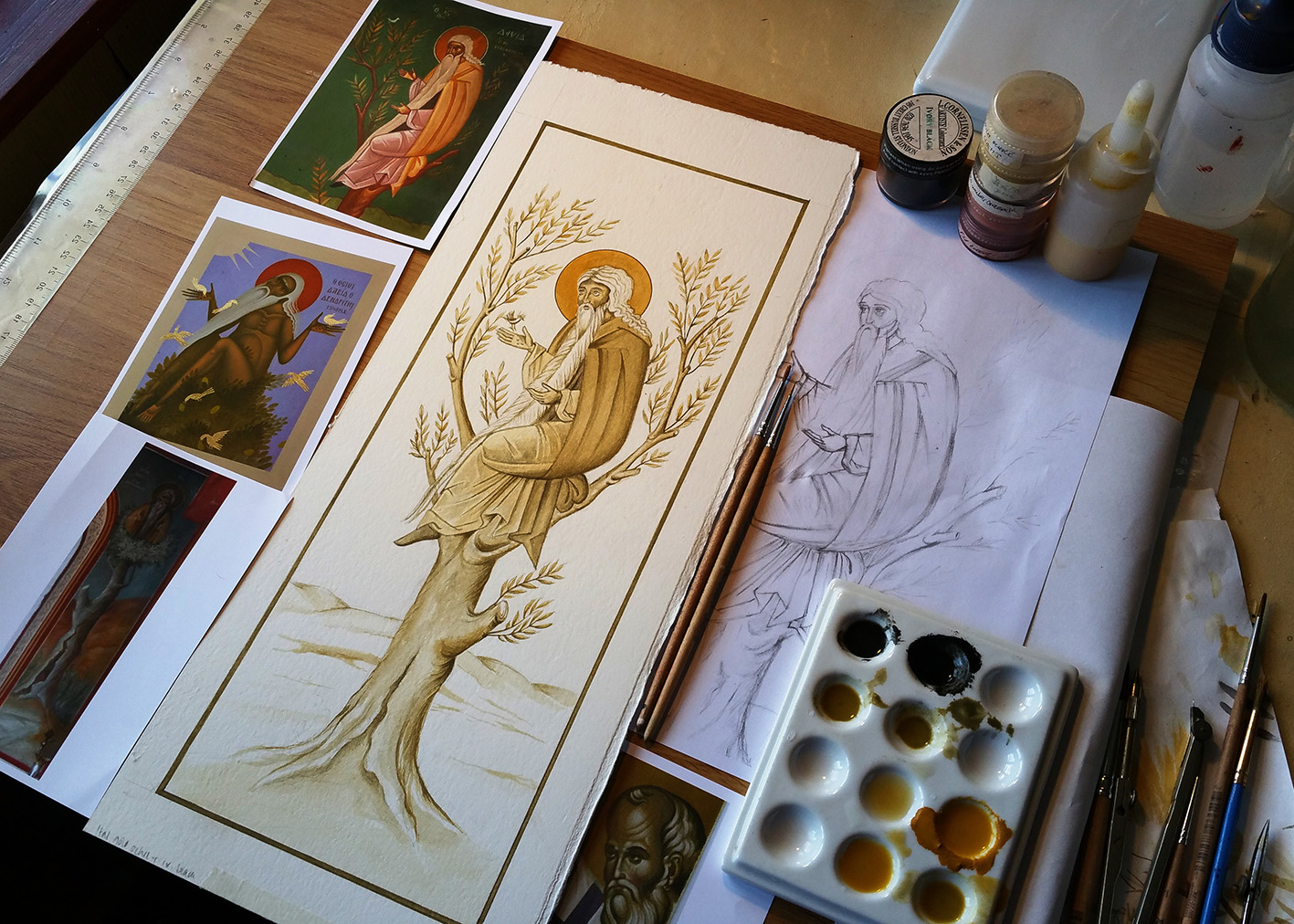
Before I began to paint an icon of St David the Dendrite, I sat down to draw him. There are many lovely icons of St David, but there is one fresco in particular which really appealed to me.  The saint is depicted as an elongated figure with a toe-length beard wearing a light ochre garment set against a green background, amidst a leafy almond tree.

I haven’t been able to find the name of the iconographer to acknowledge him or her and would love to hear from you if you recognise the original fresco image.

pencil sketch of st David

Pencil sketch of Saint David up a tree with print of fresco image alongside

I used this fresco image as a reference to make my own drawing sketched on watercolour paper. Adding colour was the best way of seeing how it would look on the long thin icon board which I had already gessoed using a thick 25mm birch ply.

pencil sketch of st David

Pencil drawing of St David the Dendrite

I referred to my library of icon images to find male saints which helped me to construct the face.


English ochre and black - colour palette

Colour palette – English ochre and black

Here’s the overall study with some more icons of this tree dweller.

st david of thessaloniki icon

Drawing and study on watercolour paper together with reference images

This icon study is now available to buy in my Etsy shop here. I will sign off with an image of my finished study in black and white.

drawing st David
Drawing of St David of Thessaloniki

Last part of this article will be about the finished icon…to be continued soon.

Thanks for reading,

Ronnie


St David the Dendrite (pt 1 of 3)

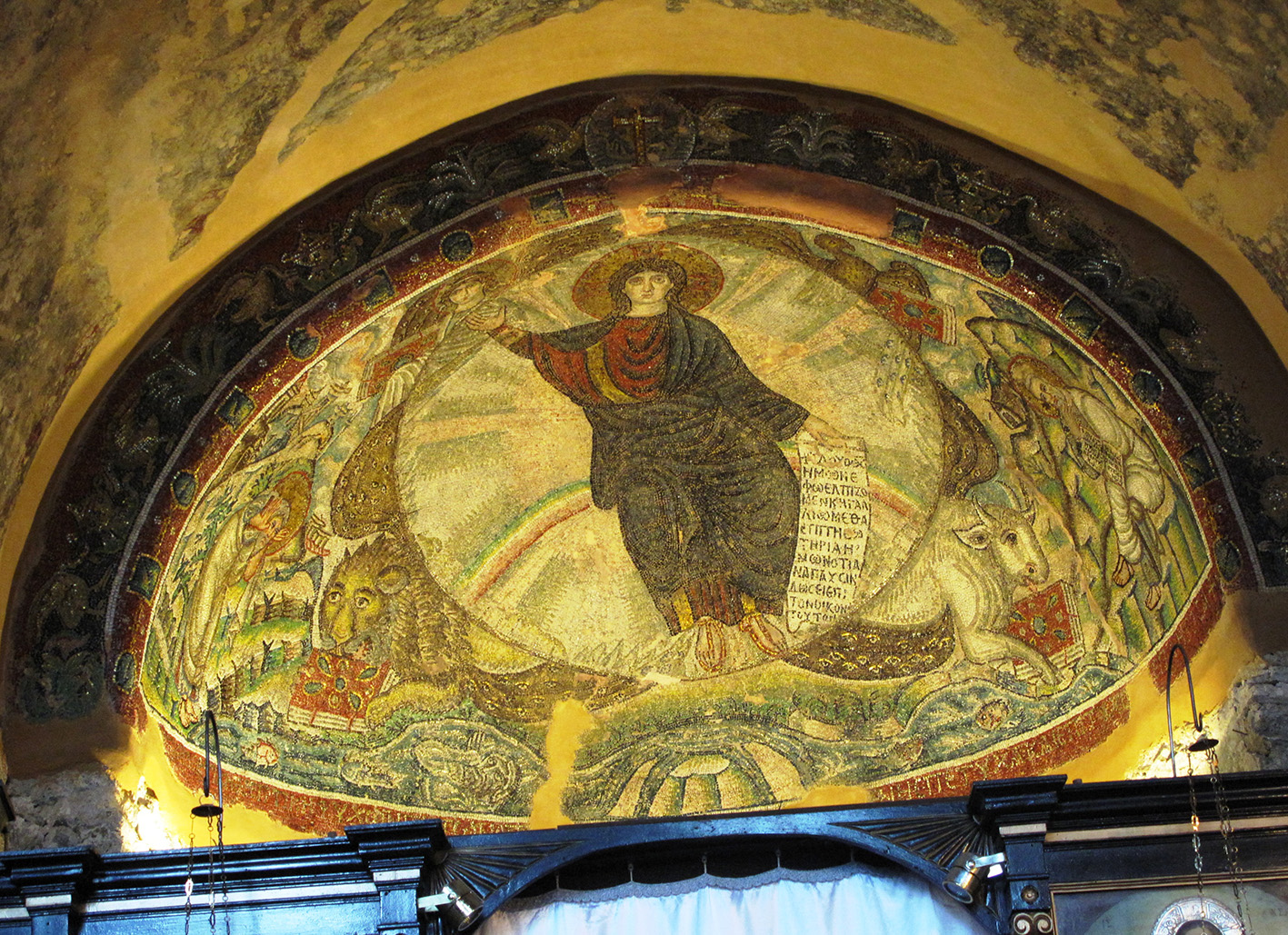
Mosaic of Christ in Majesty at Hosios David, Thessaloniki

Mosaic of Christ in Majesty at Hosios David, Thessaloniki

I’d like to dedicate the next few posts to my brother David, in Canada who will shortly be celebrating his 70th birthday. This will only be a matter of weeks after my nephew Joe marries Yasmin, so it’s a momentous time for the Canadian Sharps.

Reflecting on our icon diploma trip to Thessaloniki in 2015, one place remains firmly in my mind – Hosios David; Hosios/Osios is the title used for a monastic male saint in Greek. This was the first place we visited, climbing up the hill, looking out over the city and sea, then finding it was closed!

Janina, Keith and Susan climbing the streets aof Thessaloniki

Janina, Keith and Susan climbing the streets of Thessaloniki

The church is dedicated to St David, one of the patron saints of Thessaloniki, a 6th century Dendrite or ‘tree dweller’ and renowned ‘holy fool’.

Thessaloniki has a lot of happy memories for our family. We first heard about it when David drove his new Hillman overland from UK to Bahrain with Mum in 1975, forty years before our diploma trip. We lived in Bahrain for a few years and David taught at Gulf Technical College.


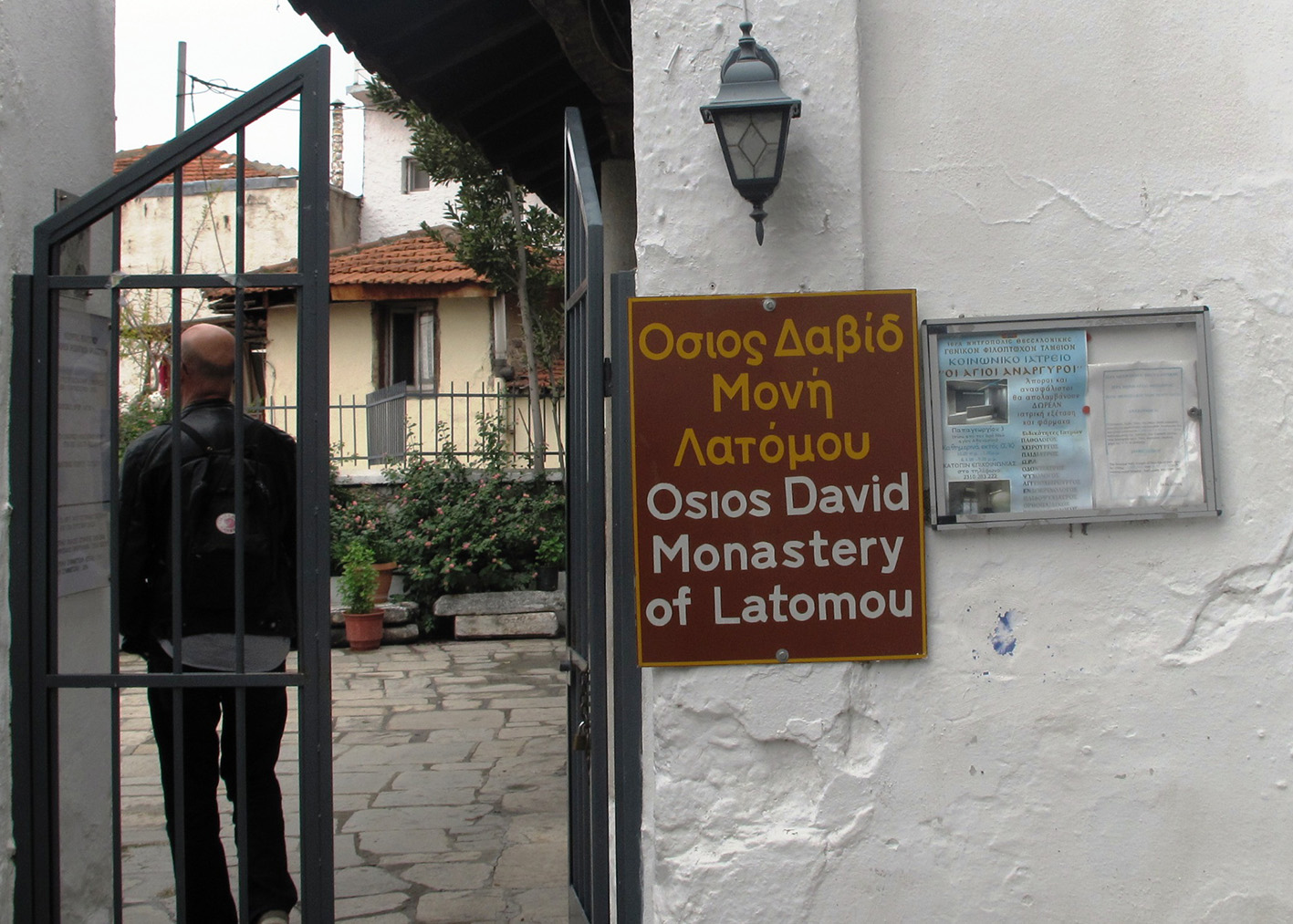
Entrance to the church of St David the Dendrite of Thessaloniki

Entrance to the church of St David the Dendrite of Thessaloniki

We went back to Hosios David later in the week and this time we went inside this late 5th century church which has a full mosaic of the vision of Ezekiel made in the late fifth/early sixth century.

St David the Dendrite came from Mesopotamia and became a monk at the Monastery of Saints Merkourios and Theodore outside Thessaloniki.

From Wikipedia he was: ‘Famed for his sound advice, he was hounded by crowds seeking words of wisdom and prayer. Wishing a quiet, contemplative life, David fled to the seclusion of an almond tree, where he lived for three years.  He left the tree to petition the Byzantine emperor Justinian the Great in Constantinople to send soldiers to defend Thessaloniki from attack. David died in 540 as his ship was en route to Macedonia.’

Hokku writes: ‘After that time, an angel appeared to him (David), saying that God had heard his prayers, but that it was time for David to climb down and live in a monastic cell like other monks.  Because of his eccentric asceticism, David gained a local reputation as a holy man and healer, and was visited by many people seeking his help.’

The church is full of wonderful mosaics and frescos. The lighting was low but here are a few photos.

first glimpse of the mosaic in the apse

First glimpse of the 5-6th C mosaic in the apse with an icon of St David the Dendrite at the right

Hosios David Thessaloniki sketch

Sketch of the mosaic of the ‘Beardless Christ’ in the apse of Hosios David

Detail of a fresco of the nativity

Detail of a fresco of the nativity

detail of mosaic

Glimpse of mosaic in the apse, St David’s church, Thessaloniki

thessaloniki cat

Thessaloniki cat

St David is commemorated on June 26 by the Catholic Church and the Eastern Orthodox Church on July 17.

To be continued…

Thanks for reading

Ronnie

Cornelia and Hironmoy remembered

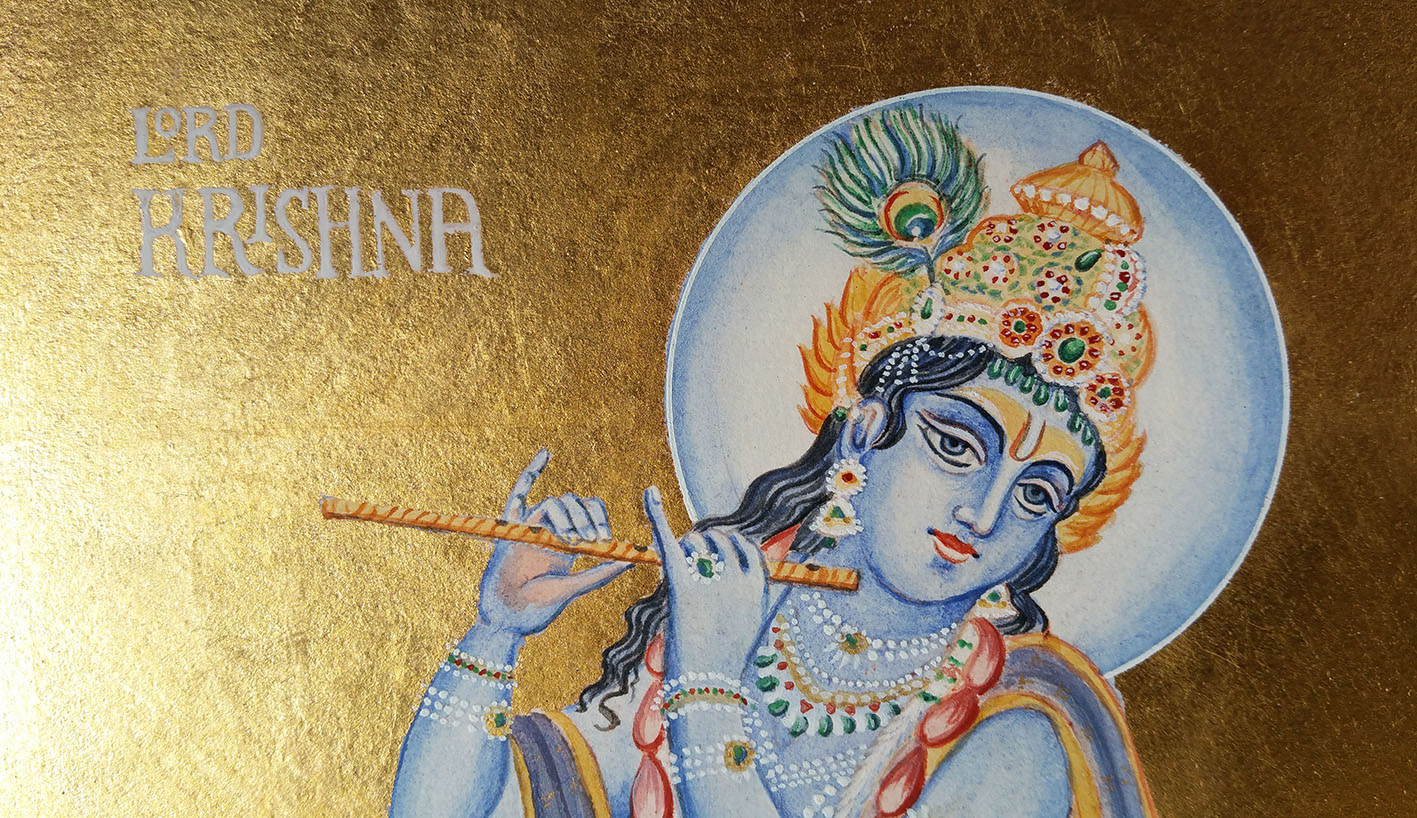
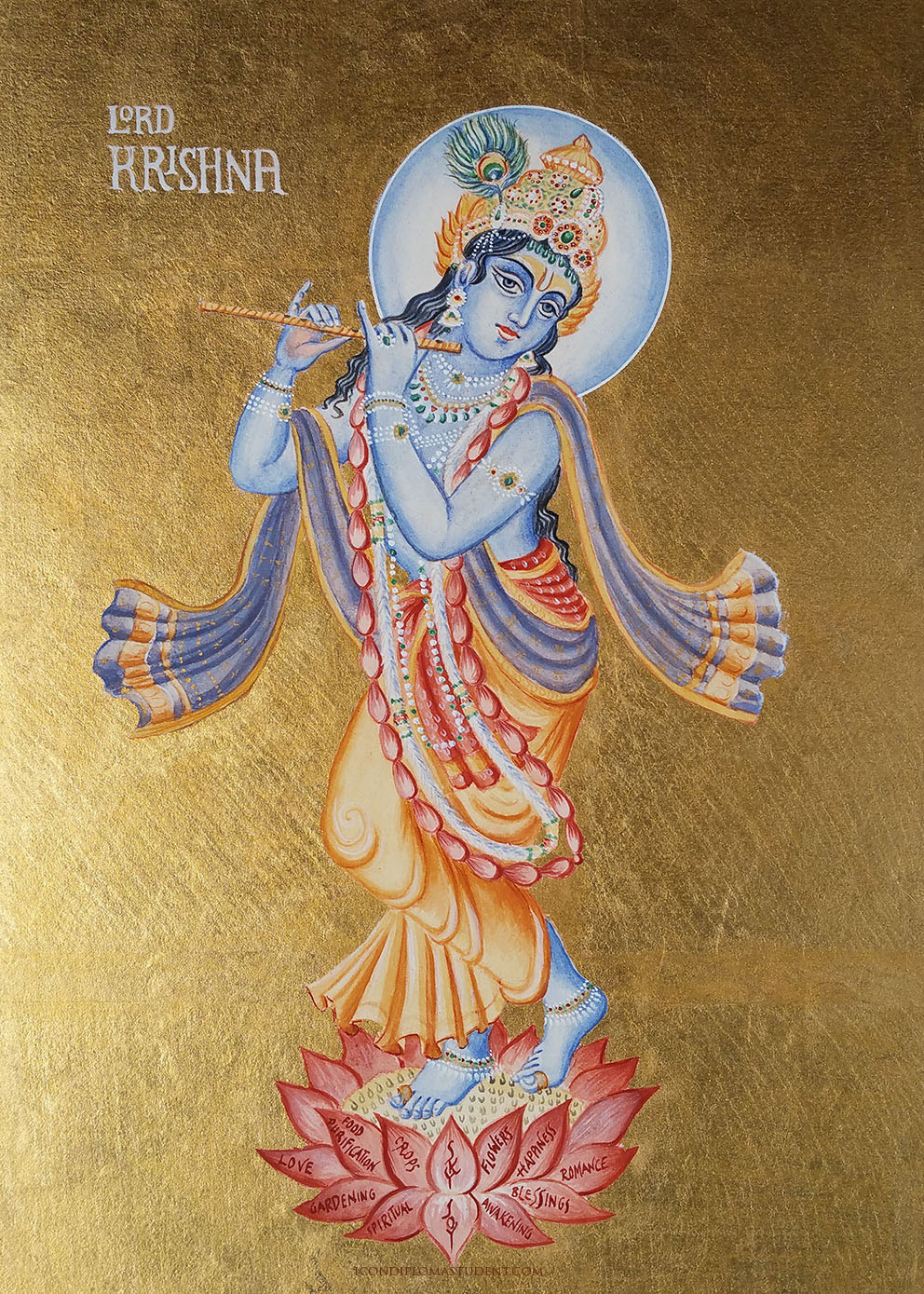
paionting of lord krishna on watercolour paper

Lord Krishna

My great aunt, Cornelia Maria Georgina Sharp, was born on 8th December 1891, the second child in a family of six. It was years later that we discovered a little more of this courageous woman’s life when Dad’s cousin researched into what had happened to his absent father.

I am touching on her story here as I was delighted to be commissioned to paint an icon of Lord Krishna, the god of compassion, tenderness and love in Hinduism and happy that we have a family connection to this rich faith.

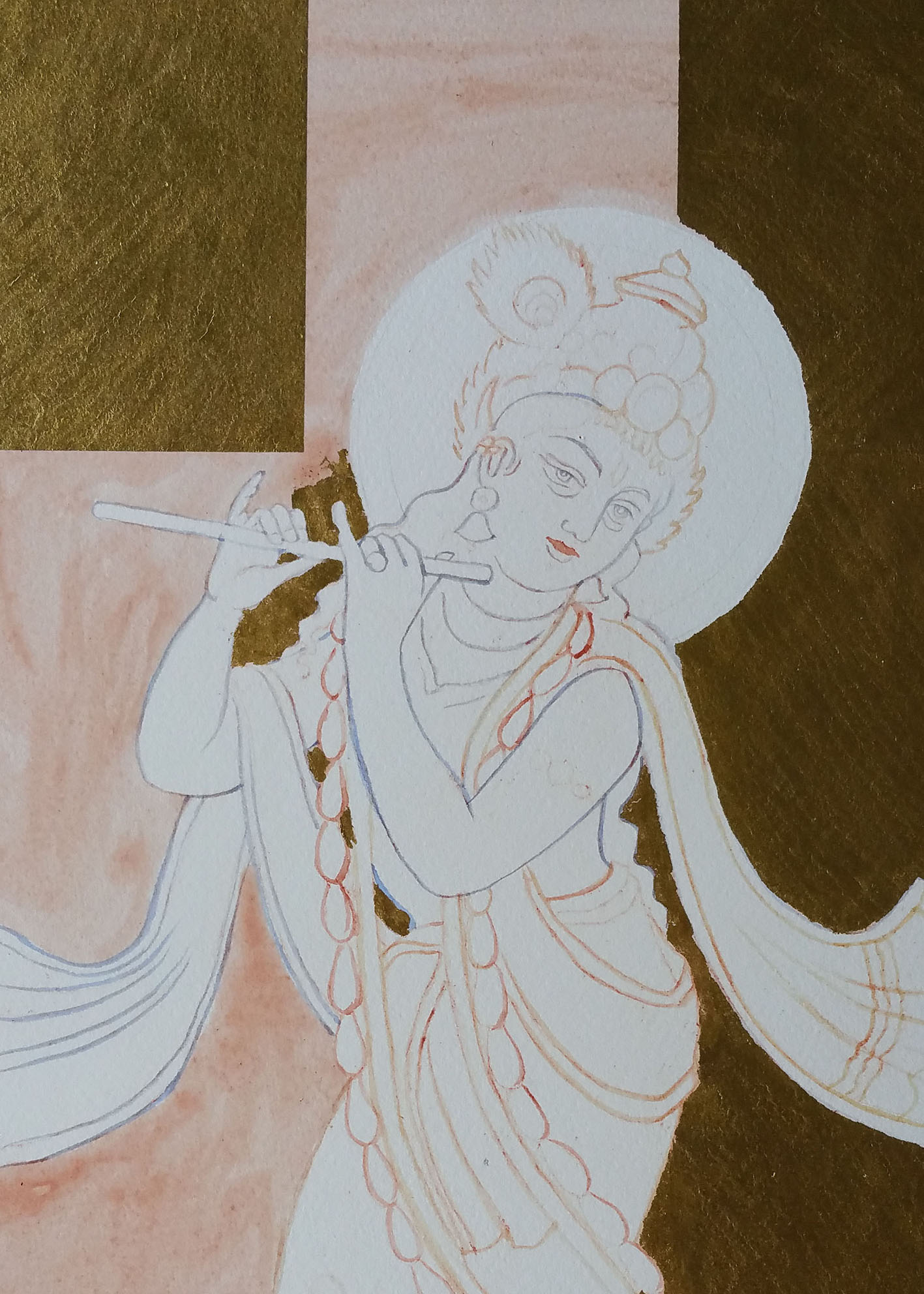
lord krishna outline drawing

Transcribing the lines of outline drawing onto paper

In brief, Cornelia, a young English Catholic woman working in service, married a young Indian Hindu man named Hironmoy Roy-Chowdury in the Church of the Holy Rood, Watford. All the more extraordinary was that her new husband was the nephew of poet and winner of the Nobel Prize for literature  Rabindranath Tagore 

Hironmoy was a sculptor studying at the Royal College of Art. Their only child, Francis Roy Chowdury (Dad’s cousin), was born in October 1914 two months after the outbreak of the first world war. The marriage wasn’t to last long as Hironmoy went to France to volunteer in an abulance unit and then his family heard of the marriage and insisted he return to India.

2 line on paper

First lines on paper

Back to the icon of Lord Krishna where I’ve depicted him as a young man playing the flute, standing on a lotus flower. He is painted on 600gsm hot pressed paper mounted on a 25mm ply board rather than on gesso thereby avoiding the use of rabbit skin size.

gold leaf on lord krishna drawing

Applying 24 carat transfer gold leaf over acrylic size coloured with a little red ochre

lord krishna on heavenly gold background

Lord Krishna standing against the gold of heaven

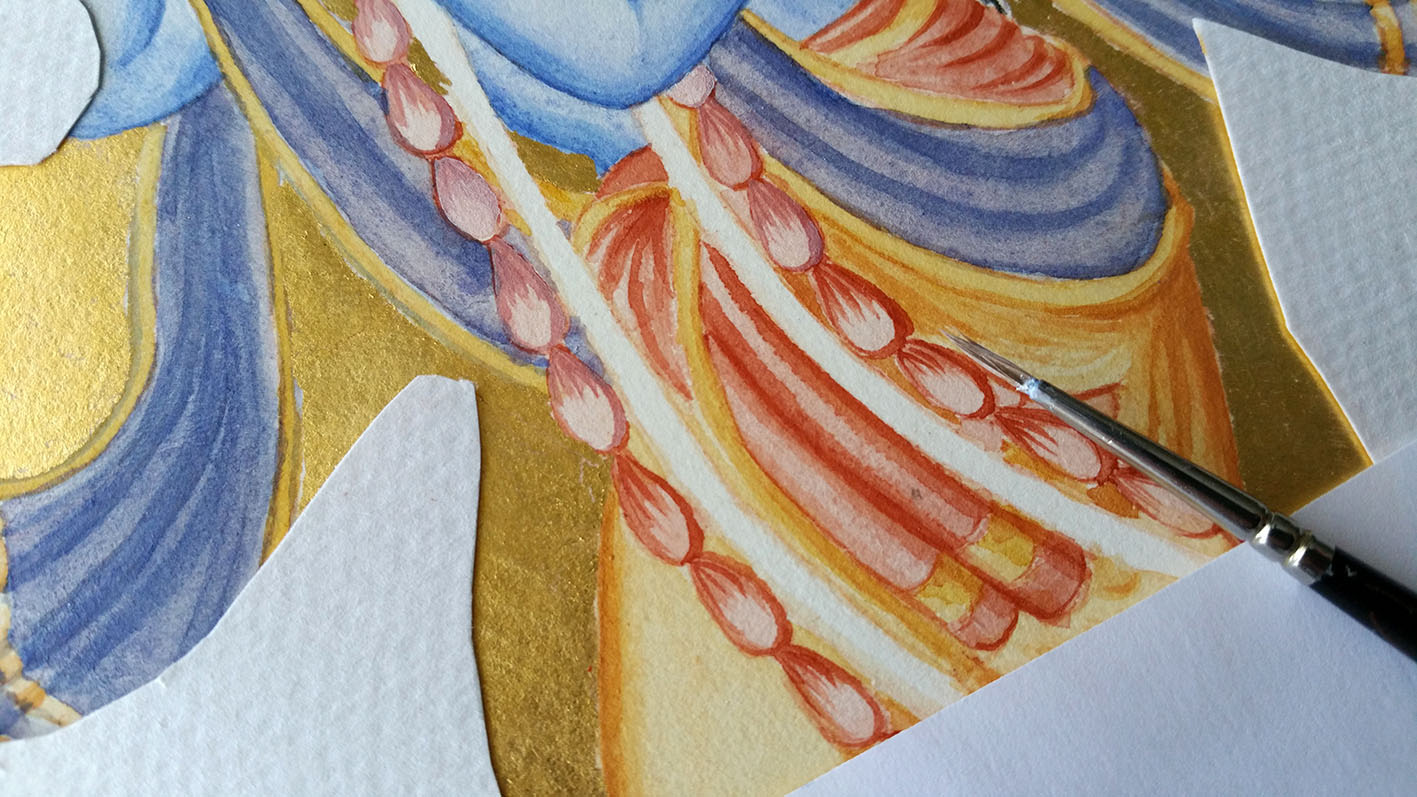
5 underpainting

Underpainting the figure and garments

egg tempera

Applying the paint in thin layers

lapis lazuli

Flesh tones painted in Lapis Lazuli

The colours on images of Lord Krishna are vibrant but to avoid them clashing, I limited the palette to English red ochre, yellow ochre maimeri, lapis lazuli, black and white. The greens were mixed from malachite.

I chose to use Lapis Lazuli as its deep, celestial blue remains the symbol of royalty and honor, gods and power, spirit and vision, wisdom and truth. Its name comes from the Latin lapis, “stone,” and the Persian lazhuward, “blue.”

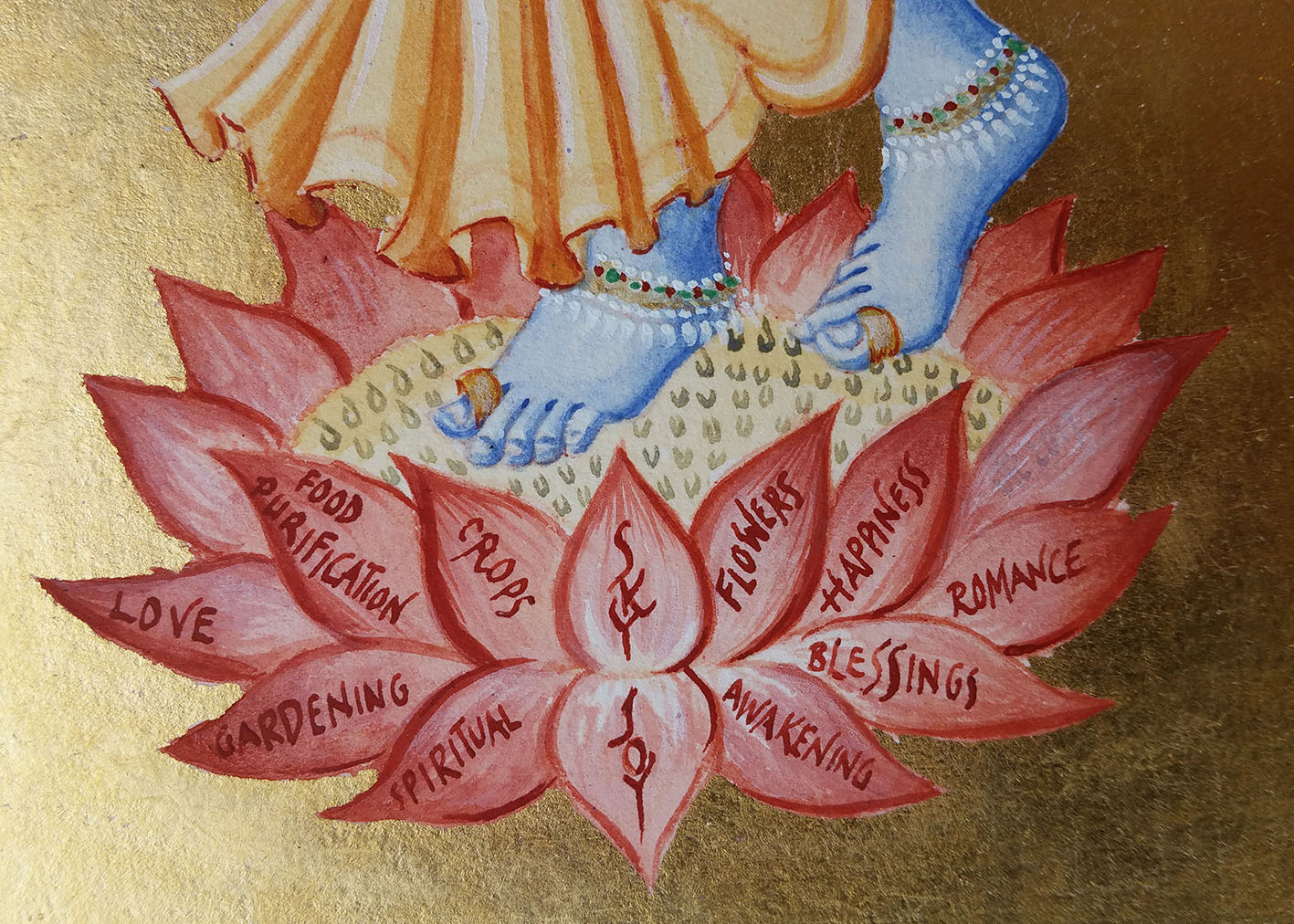
qualities of Lord krishna

Some of the many qualities with which Lord Krishna is associated

Lord Krishna painted using the icon method

Lord Krishna ready for his new home

There must be enough for a book on the subject of Cornelia and Hironmoy’s brief lives together and it is a treasure that we know of this through their son’s research.

I will close with a quote from ‘Fruit Gathering’ by Rabindranath Tagore;

        ‘Send me the love which is cool and pure like your rain that blesses the thirsty earth       and fills the homely earthen jars.

         Send me the love that would soak down into the centre of being, and from there would spread like the unseen sap through the branching tree of life, giving birth to fruits and flowers.’

Thanks for reading,

Ronnie

Cold gesso, no bubbles

apply cold gesso

Class demonstration by Janina on how to apply gesso cold.

One of the many benefits of our time on the icon course was how much we learnt from each other as well as from our tutor Aidan Hart and from the icon board and church furniture maker Dylan Hartley. I have written about our time learning how to apply gesso warm but today I would like to share what our group learned from one of our fellow students, Janina Zang. Janina gave us a demonstration of how to apply the gesso chilled, when it had set like a jelly. She had learned this technique from a Benedictine monk.

preparation of gessoing board.

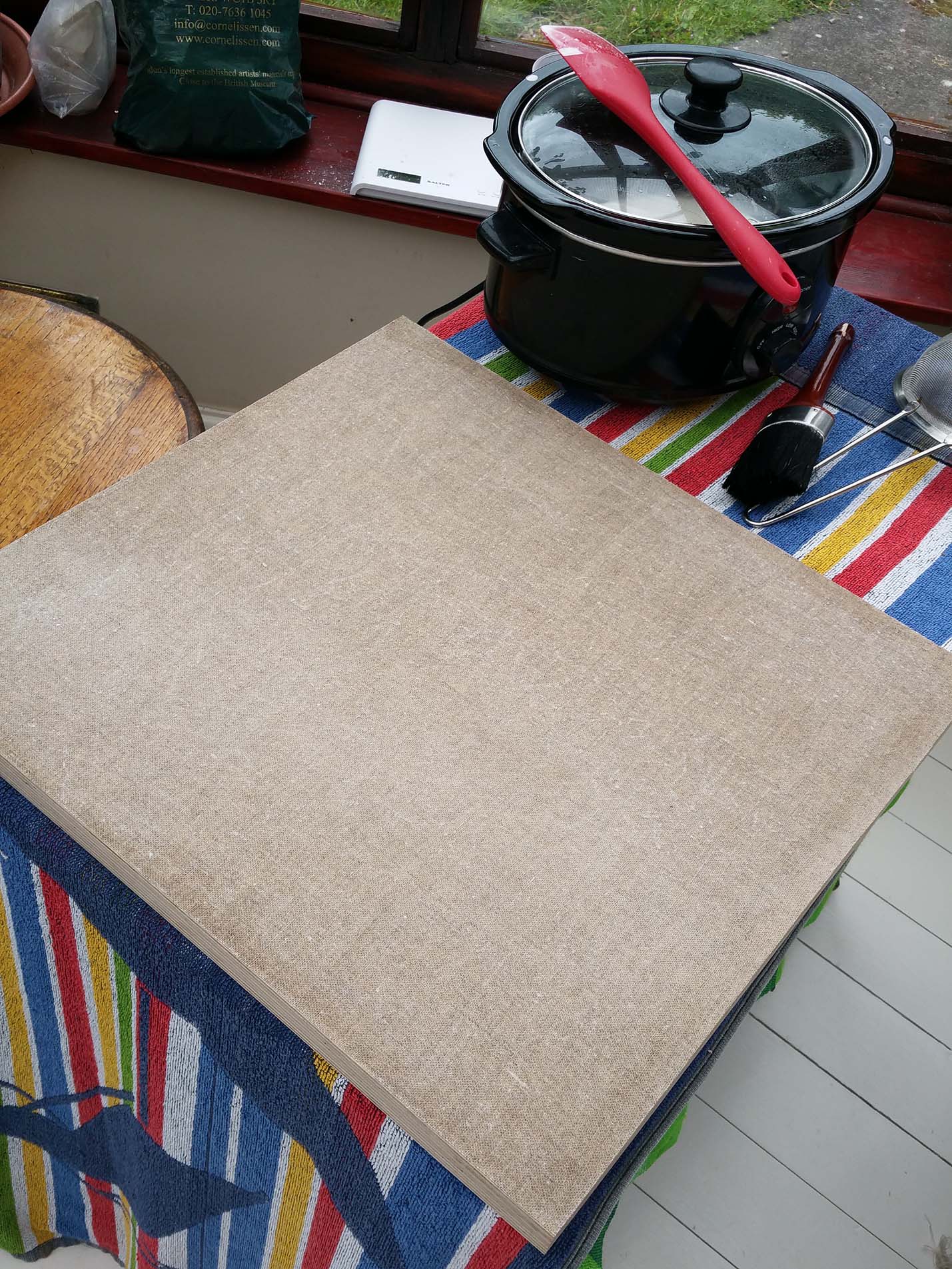
Scrim glued to the ply board.

There are two significant advantages to this method. The cold gesso means that there are hardly any bubbles as you apply it, and if you can’t finish applying all the layers in one day, put a damp tea towel over the boards, go to bed and resume the work the next day.

You still need to prepare the ingredients as for the warm method and have most of the following ready:

ronnie cruwys illustration for gesso

Kit for gessoing is still the same but the spatula is a different shape.

The recipe is exactly the same as given in Aidan’s book. 

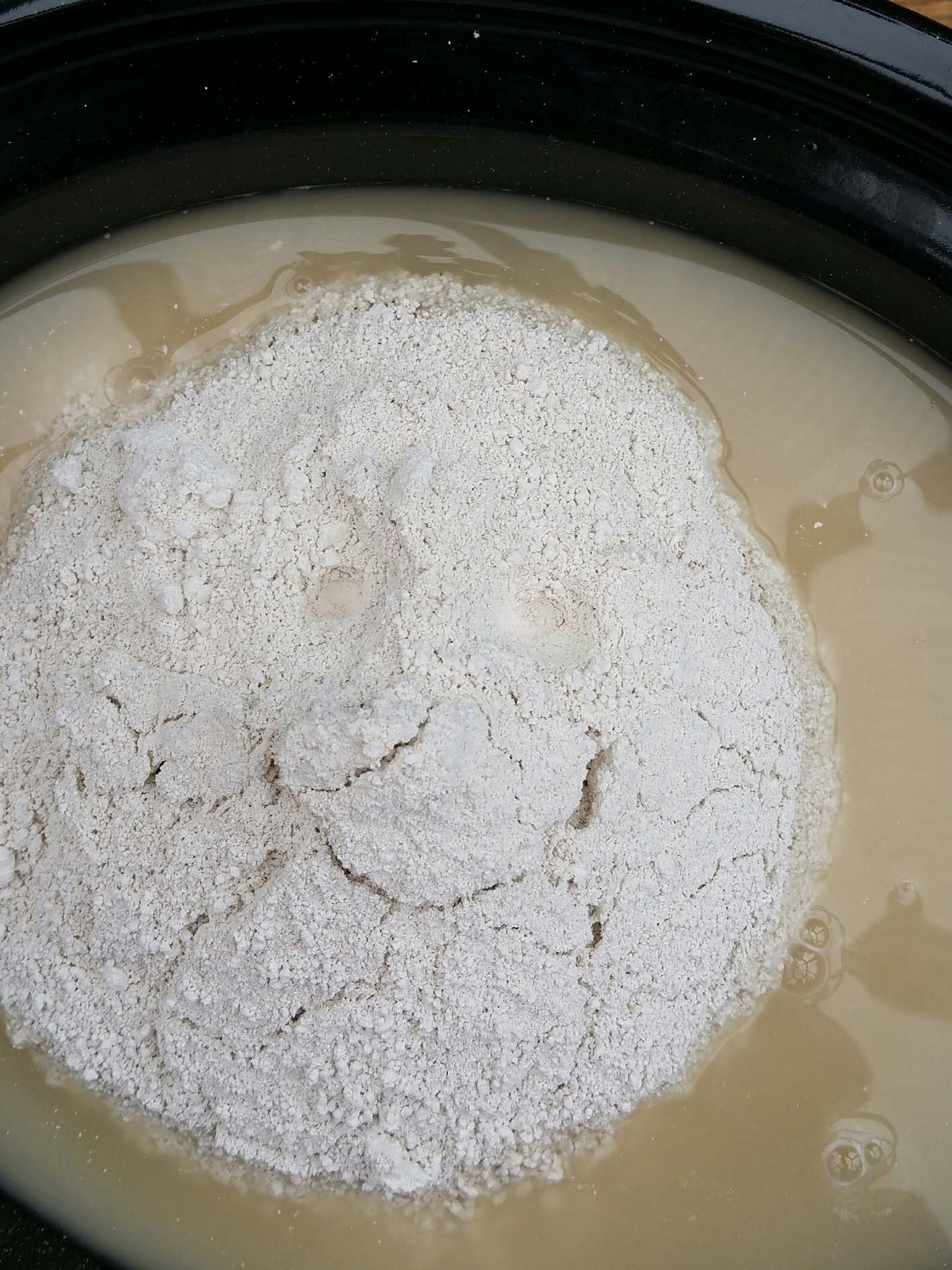
Follow Aidan’s instructions for the gesso mix and apply the glue and the scrim layers. Let the boards dry out for a day then make up the gesso mix in the quanity that you need, remembering to seive it and decant back to the container. The only difference is that from here,  you put it in the fridge and leave it overnight.

rabbit size to make gesso for icons

Cornelissens whiting spooned into the rabbit skin size

This is the best part. The following morning, the gesso is good to go. Just take enough gesso out of the fridge to work on for the next few hours. Allow it to warm up to room temperature for half an hour and you have a full day to get straight down to applying the gesso to the boards. Keep your working gesso in a plastic sandwich box to prevent it drying out – especially on a hot day. Top up from your main supply in the fridge during the day.

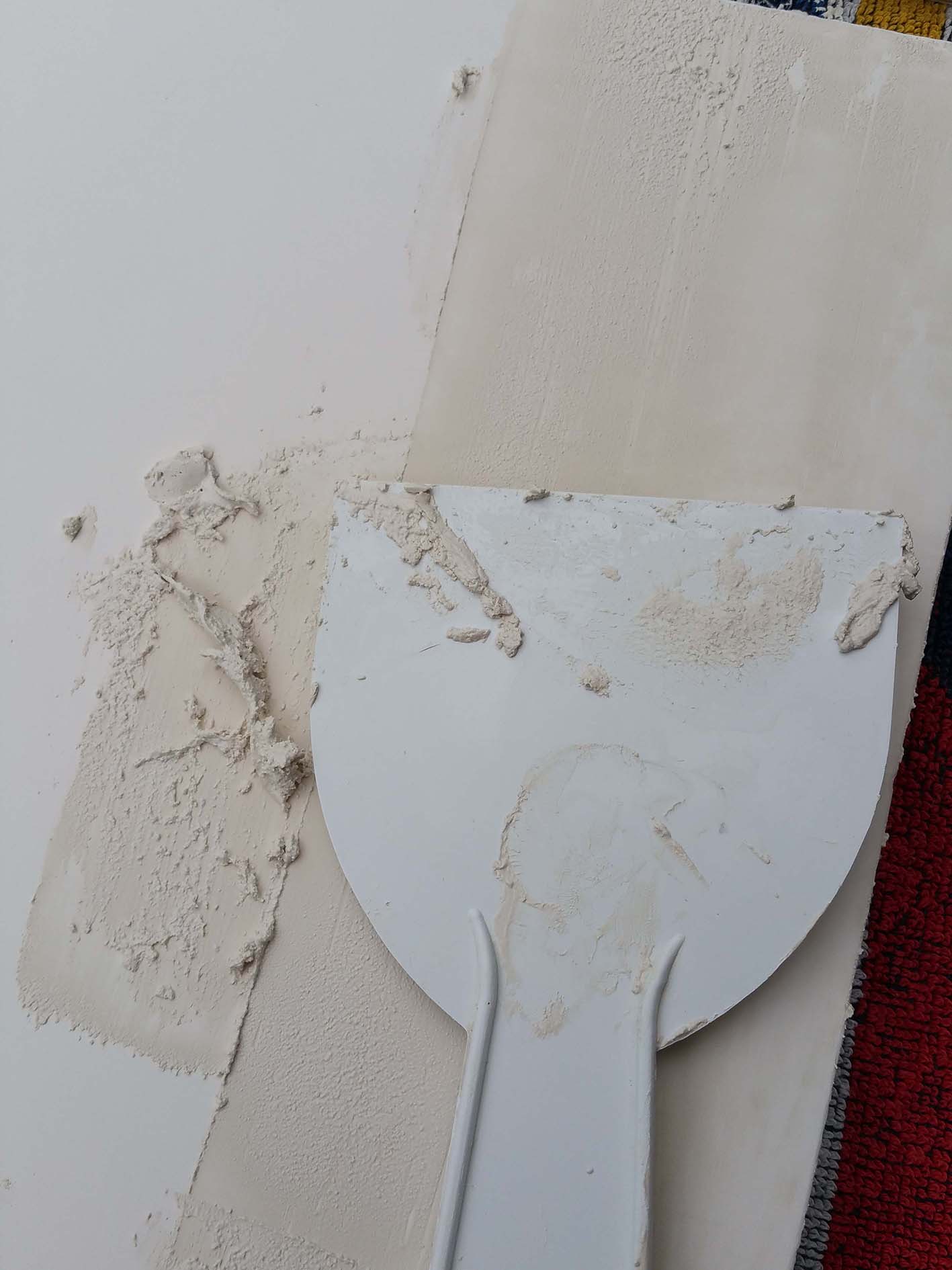
The gesso has a consistency of blancmanche and all the pin sized bubbles disappear as you spread the gesso on the board in thin layers using a wide spatula. Fifteen layers takes the gesso up to a thickness you can sand without reaching through to the scrim.

using a spatula to apply the gesso in thin layers

Use a spatula to apply the gesso in thin layers

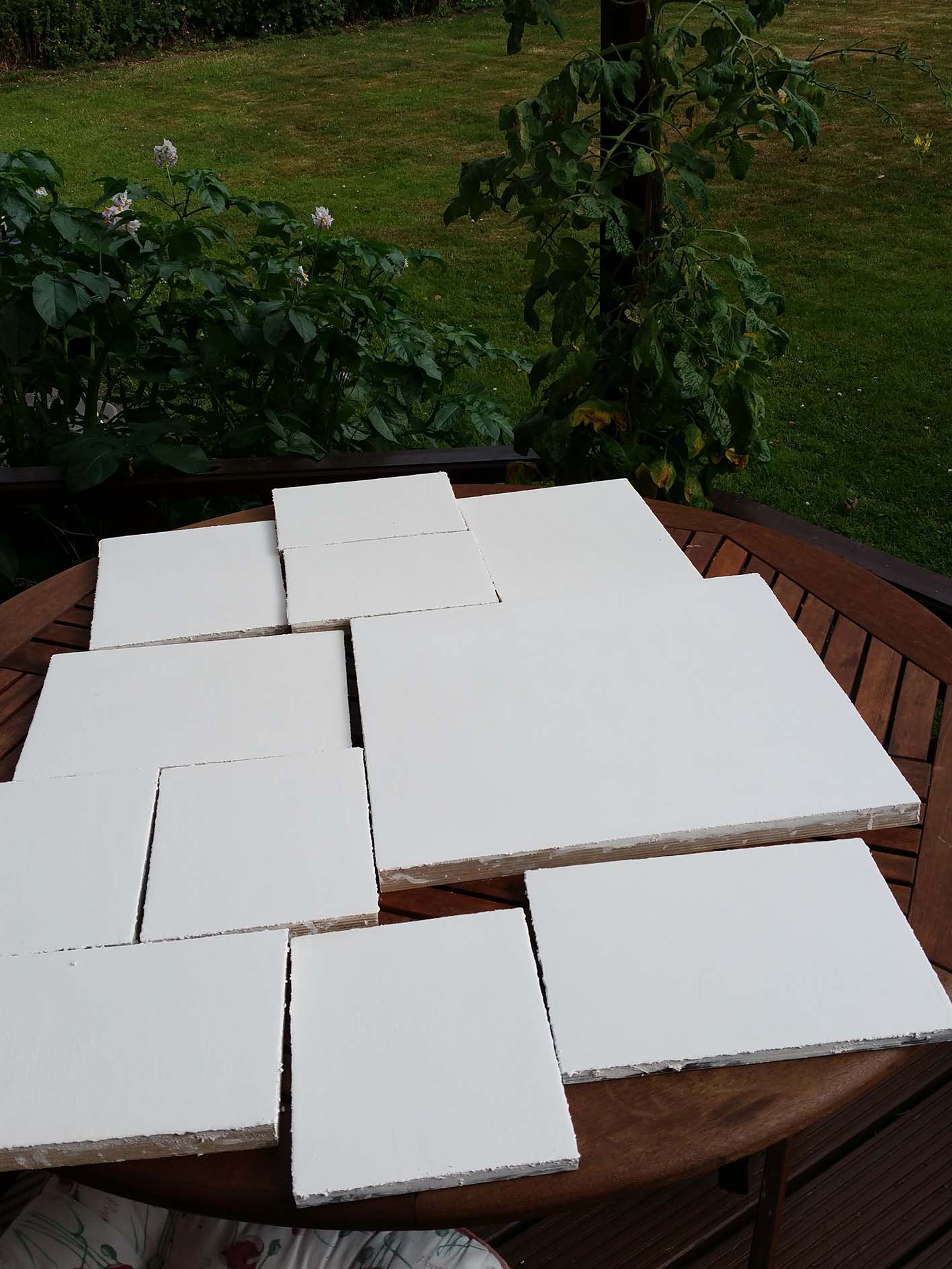
Keep a bucket of water beside you to rinse off the spatula from time to time as you can see it clogs up quickly in warm weather. I had quite a few boards I wanted to gesso as I’m preparing for an exhibition next Spring 2018, at the Blossom Street Gallery in my old home town of York.

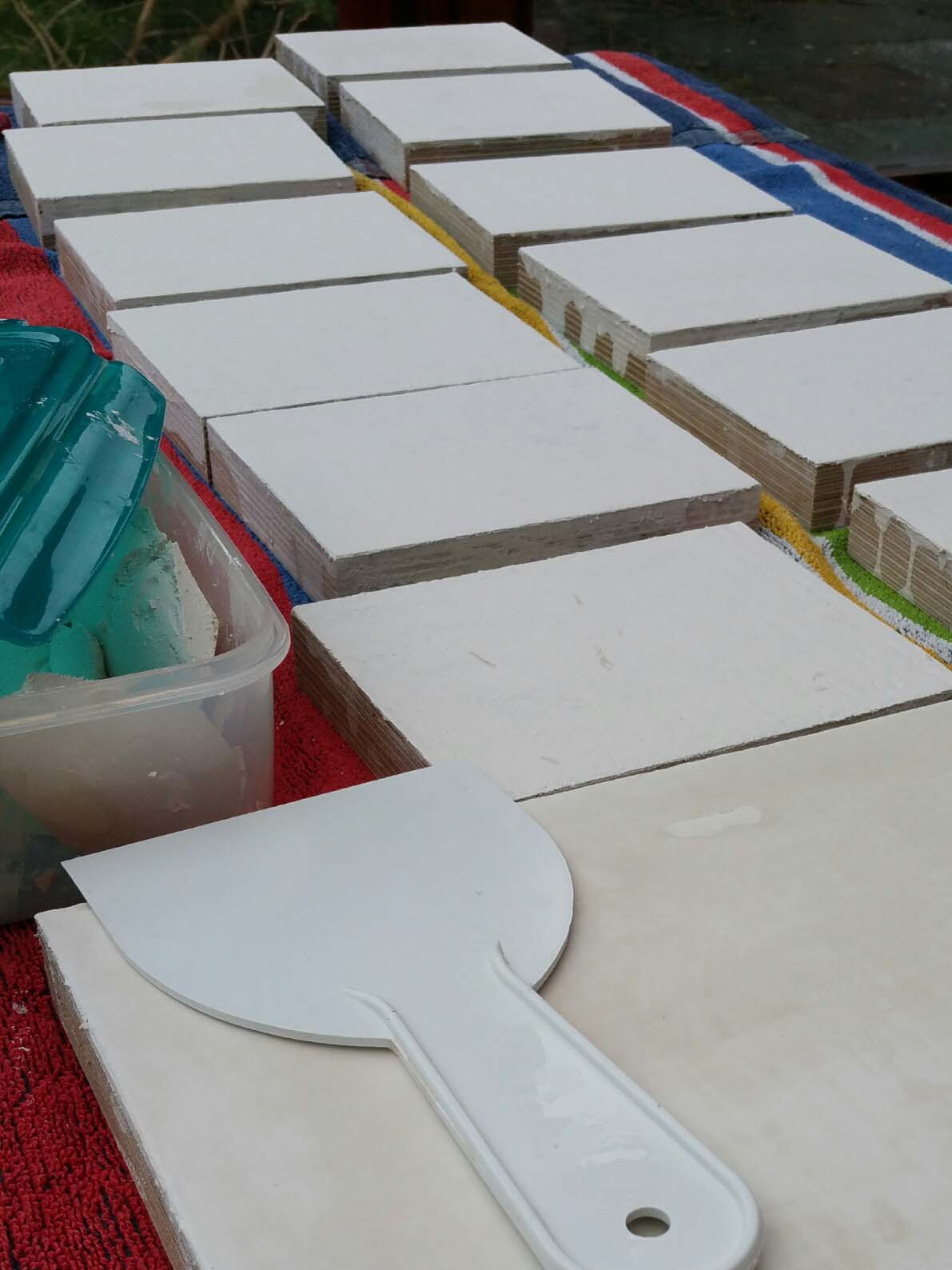
icon boards laid out to gesso

boards laid out on towels to gesso

The large board will be for my main icon, but more on that in another post.

Gesso on iconboards

Gesso drying off outside under shelter

During the gesso process, the sides get splashed and set very hard. The easiest way to clean these up is with a small electric palm sander, like the Makita.

Splashes of gesso on sides of boards

Splashes of gesso on sides of boards

I sit the boards in a towel clamped in a work bench outside and the boards then have a lovely crisp edge.

iconboards sanded and ready

All done!

I’m very happy with how these have turned out – not pin hole bubble in sight!

Big thanks to Janina and the Benedictines for sharing this method!

Thanks to you too for reading.

Ronnie

Calling on the Apostle of Hope

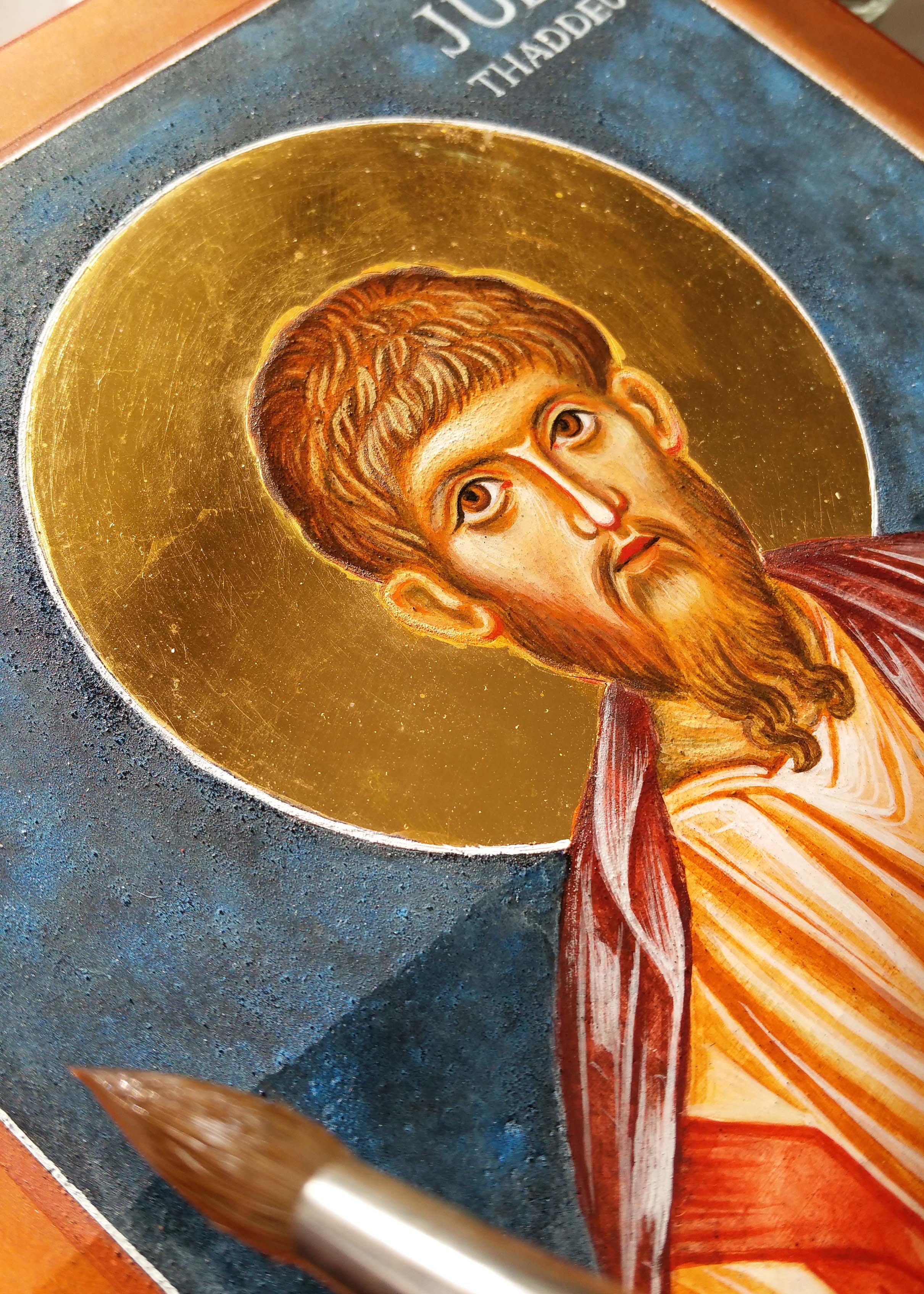
icon of St Jude Thaddeus

Saint Jude Thaddeus

St Jude, or Thaddeus, has for centuries been known as the Patron Saint of The Impossible or ‘Hopeless Cases’. St Jude was a familiar name to us during childhood as Mum would often call on his help when things got difficult for friends or family at home or abroad.

It’s Pentecost as I write here tonight and it seems appropriate to share my work on St Jude as he was one of Jesus’s twelve apostles who received the gift of the Holy Spirit at Pentecost.

2 St Jude Drawing 1.jpg

Pencil drawing of St Jude

The name Thaddeus means ‘aimiable’ or ‘loving’. St Jude strikes me as a gentle saint who is also known as ‘the Apostle of Hope’. There is a great deal of unrest from recent tragic events in London and Manchester and with election week ahead I’m calling on this saint of hope in the midst of anxiety and will trust him to guide each of us to make wise and loving choices in the days ahead.

I will sign off with a few photos of St Jude taking shape as an icon and say thanks again for reading.

Ronnie.

dog tooth burnisher on water gilding

Burnishing the gold on the halo

St Jude's face underpainting

Underpainting the face

st jude underpainting icon

St Jude underpainting hair and beard

Membrane technique

Applying the membrane in flesh tones over the face

egg tempera painting st Jude

Applying a coat of egg stock – dilute wash as a final nourishing layer

apostle of Hope icon of st Jude

Icon complete – St Jude, the Apostle of Hope

P.S. This icon is being professionally photo-scanned and prints and cards will shortly be available to buy from Smith York Printers here

Herald of Spring

Greetings icon friends!

Warmest wishes for Candlemas on Thursday!  Here’s Archangel Gabriel, first icon of 2017.

icon by Cruwys

Archangel Gabriel

This post is short and sweet while I’m gathering my thoughts on varnishing icons…or rather questions. I’d love to hear of people’s preferences – there seem to be so many options yet each with drawbacks.

Bye for now

Ronnie

PS Prints and cards of this icon are now available from Smith York Printers.