Icon Diploma Student

Learning to see with the eye of the heart

Posts tagged ‘Icon Diploma course’

Perfect Proportions: Anglo-Saxon Style

Aethelwold group

Hello icon friends,

Next along in the lettering posts is an example of some gorgeous Anglo-Saxon; the magnificent Benedictional of St Aethelwold. The original manuscript is held by the British Library and considered to be one of their greatest treasures: “A Masterpiece of Anglo-Saxon art”.

f70 r Christ in Majesty TRINITAS British Library

Lettering from St Aethelwold manuscript held by the British Library

The images have all been digitised and are available to see through the British Library’s website here. There is a great deal of embellishment on the images but zoom in past all this and have a close look at the way the garments have been painted on the figures in particular the colours, composition and fabric folds – some wonderful examples for iconographers.

f4r St Peter and 2 apostles crop brit Library

St Peter and two apostles

This entire book was written by the scribe Godeman for St Æthelwold, Bishop of Winchester from 963-984 and is one of the earliest and most significant surviving examples of the Anglo-Saxon Winchester scriptorium.

Born c AD 909, the aptly named Aethelwold “noble ruler”, was key to the transformation of English religious life. He initiated the reform of the Benedictine Rule which culminated with his written document Regularis Concordia.

Godeman, the scribe, was a monk at the Old Minster, Winchester. He may have belonged to the group of monks from the Abbey at Abingdon that Æthelwold placed in Winchester Cathedral as part of the renewal of the Benedictine Rule. The artist for the illuminations has not been identified although some scholars attribute these to Godeman too.

Here are just a few examples of the lettering in this manuscript – the British Library is a fantastic resource and there are many good quality images of this Benedictional available to study online.

Having studied as many examples of each of the letters available, here are my attempts to create a painted Anglo Saxon style alphabet which would suit icons which depict Anglo Saxon Saints, or saints contemporary with this period (listed at the end of this post).


PATER a.jpg

ET FILIVS a.jpg

I have saved the full set of letters which you can download and save to your desktop as a six page pdf document here: Aethelwold Letters 

Thanks for reading and I will leave you with some suggestions for saints which may lend themselves to icons using this script:

Some saints associated directly and indirectly with the manuscript:

St Swithun                            St Aethelwold     St Dunstan            St Cuthbert

St Æthelthryth                     St Benedict           St Vedast               St Stephen

St Aetheldreda                     St Edgar                 St Gregory

St Mary Magdalene             St John the Baptist


SOME SAINTS CONTEMPORARY WITH THIS PERIOD

Gaudentius (Radim Gaudentius) born 970 d 1020 Archbishop of Niezno

Firmian d 1020

Heribert of Cologne (Herbert) b 970 d 1021

Herve d 1021

Berward of Hildesheim b 960 d 1022 Bishop of Hildesheim

Theodoric of Orleans b 980 d 1022 Bishop of Orleans

Agatha Hildegard d 1024

Henry II, Holy Roman Emperor b972  d1024

Romauld 952 d1057

Fulbert of Chartres 970—1028 Bishop of Chartres

Elfleda (Ethelfleda) d.1030

963 Athanasius the Athonite buys the island of Kyra-Panagia from the                     Byzantine noblemen of Constantinople as a dependency of Mount Athos.


969 Olga of Kiev, grandmother of the Grand Prince Vladimir of Kiev

978 Edward the Martyr, King of England, March 18.

988 Dunstan, Abp. of Canterbury, May 19.

980 Translation of the holy relics of Birinus of Dorchester from Winchester to a new shrine, September 4 by St. AEthelwold.


Drawing Heavenly Bodies: Virgin and Child Enthroned with attendant Archangels Raphael and Michael

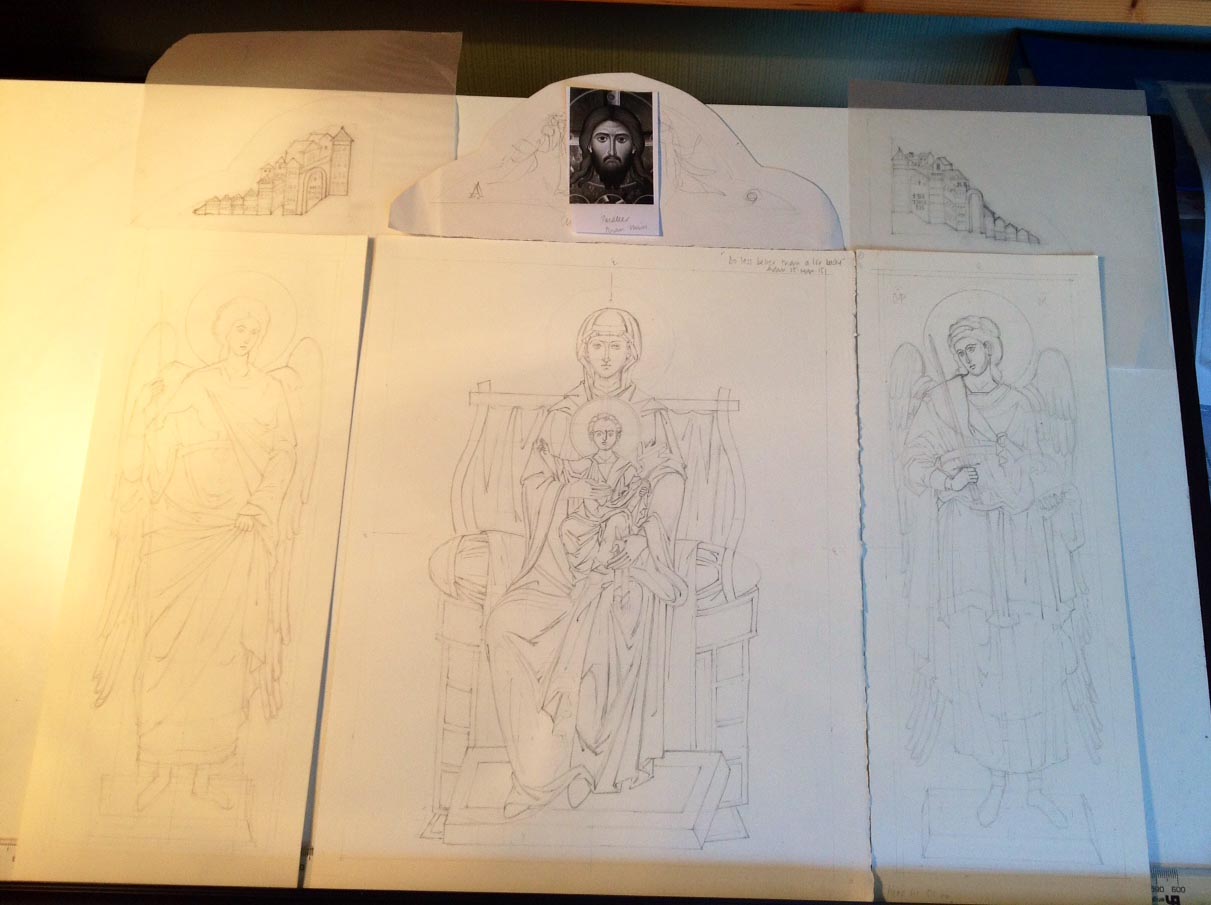
pencil drawing of icon of virgin and child enthroned

Cartoon of the Virgin and Child Enthroned

Hello icon friends,

The summer before I embarked on the icon diploma course, I asked Aidan if there were any practical steps I could take to help my ability as a student icon painter. His answer was immediate: ‘Learn to draw!’ So I signed up to a really good local drawing class with David Brammeld and a year later Drawing the Street was born, not long before I was accepted on the Diploma course.

Drawing is becoming a way of life for me and I am always exploring ways to develop. There are many online classes and one which I have found refreshing and energetic is Sketchbook Skook

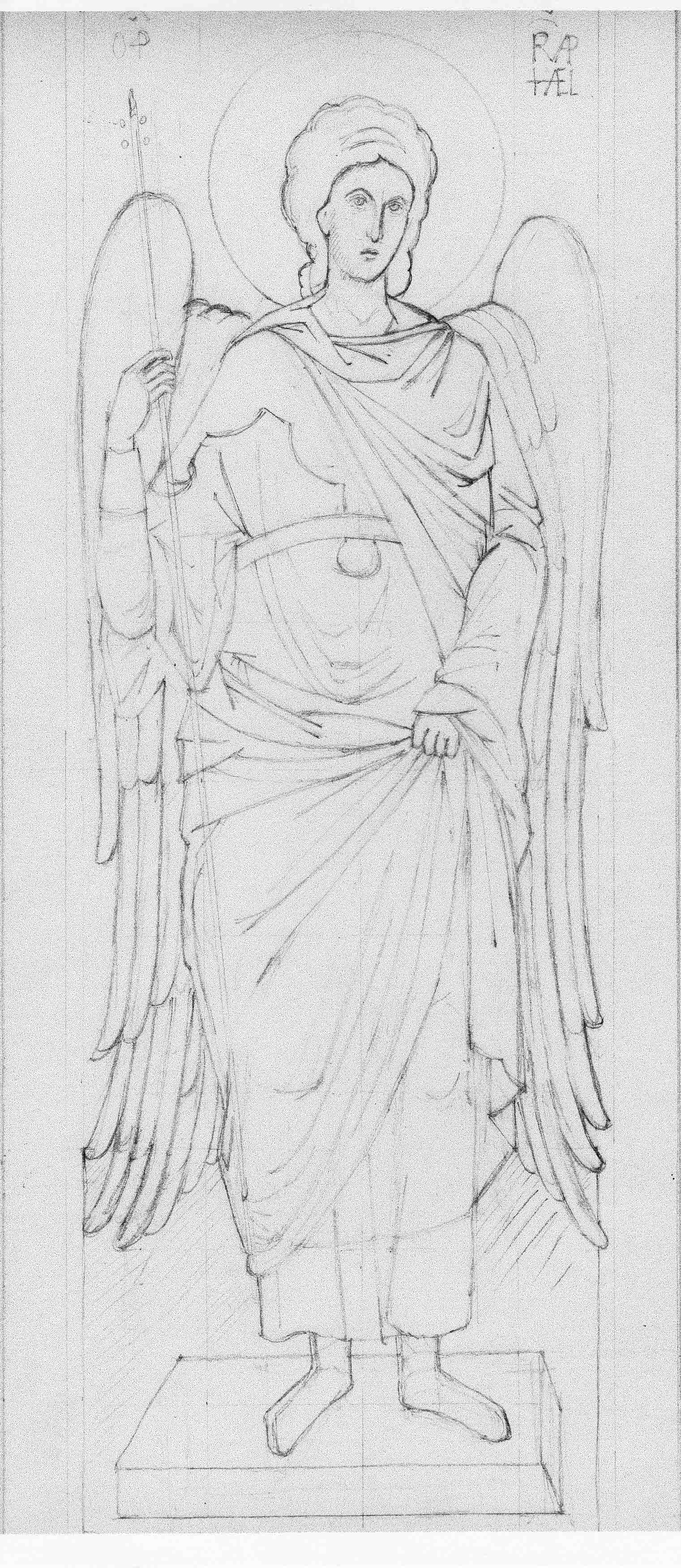
In the meantime, there is so much to learn with icon painting that I thought that I could share my cartoons of the figures for the triptych I’m working on, which might help you get started with your own icon studies.

You should be able to save these drawn images to your computers and print them off on A4.

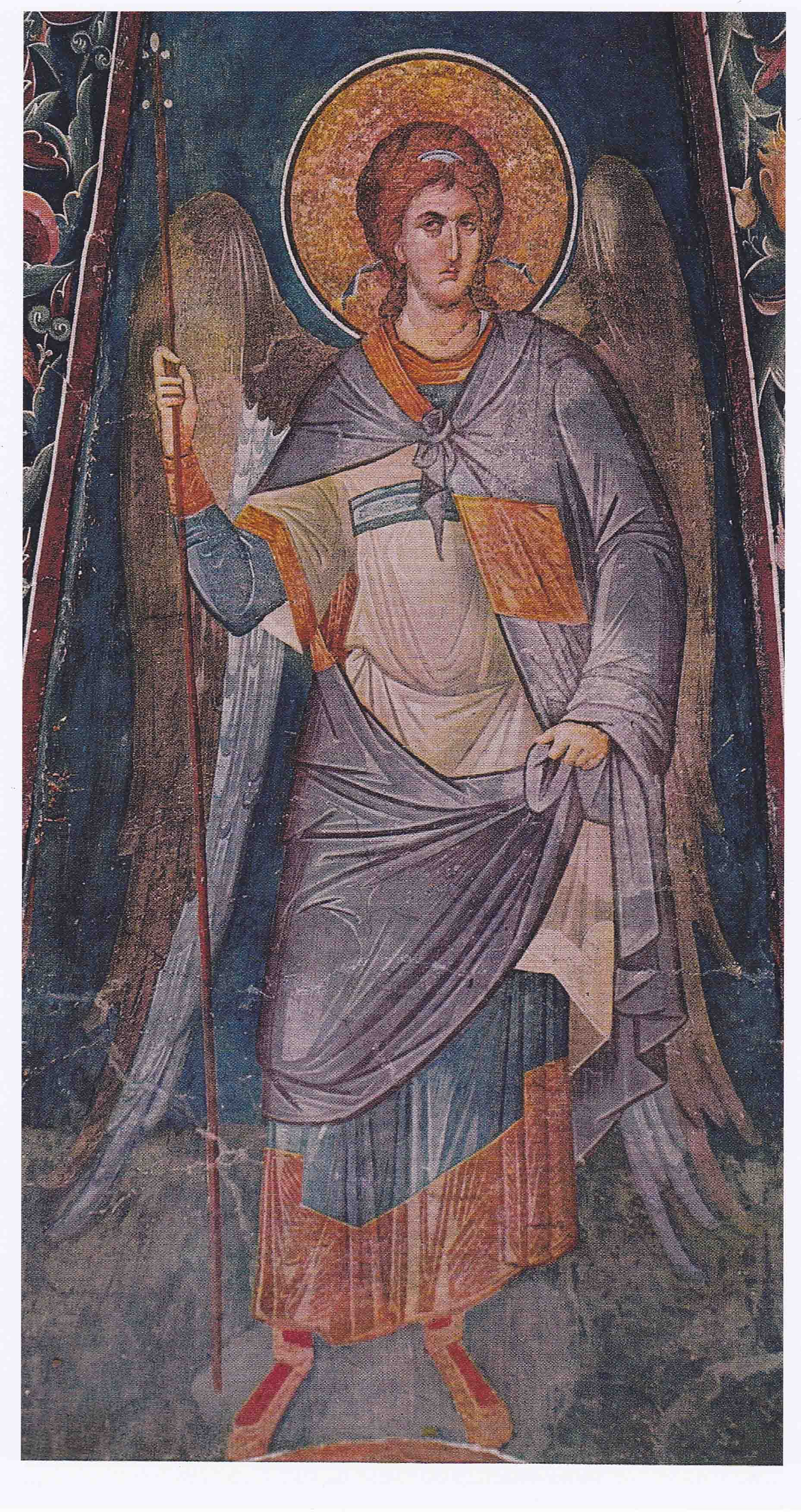
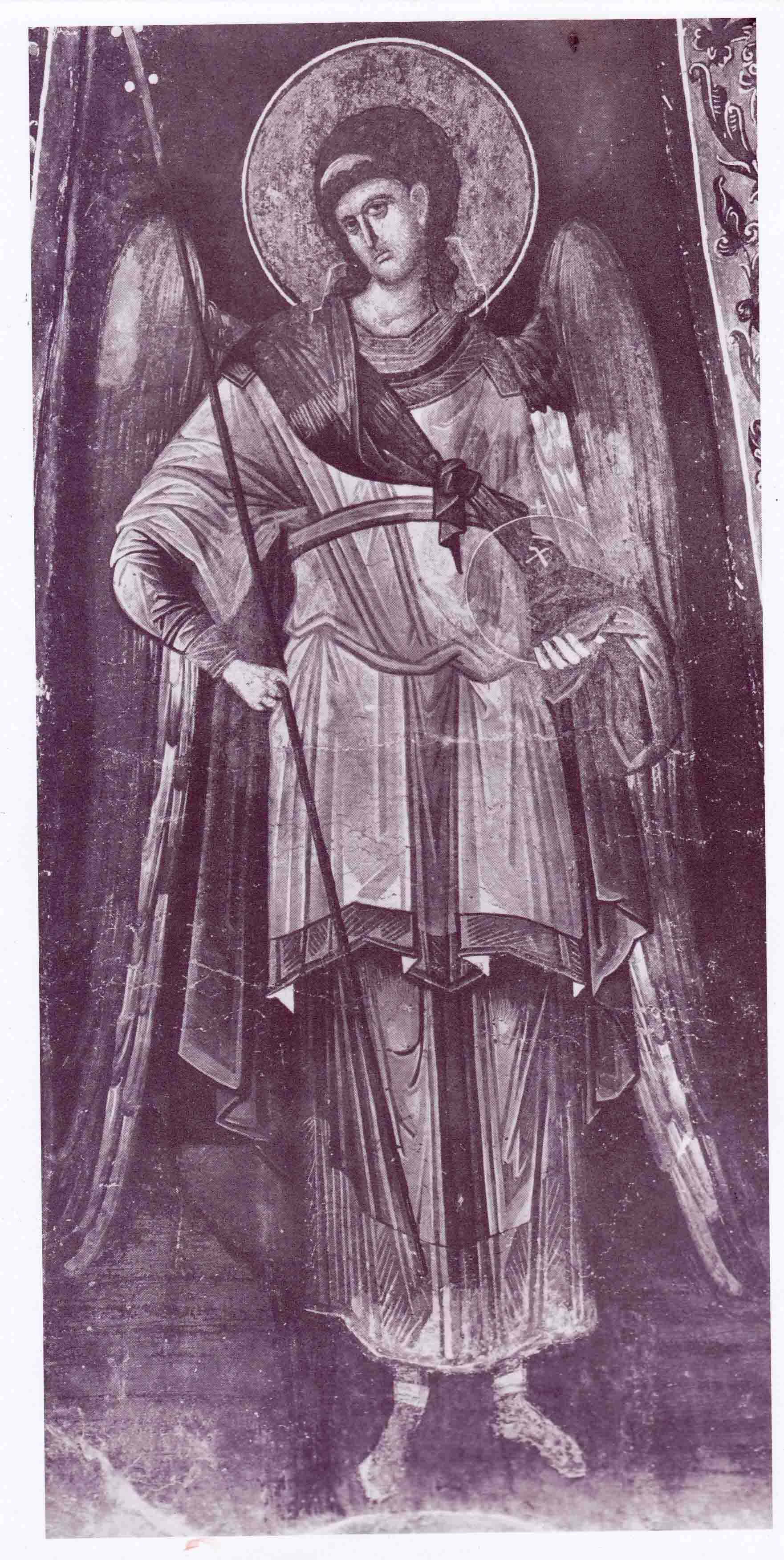
The four images of the Angels of Chora are all borrowed from Aidan’s library. I hope to be able to credit the photographer in an update to this post.

Meanwhile, happy drawing!

Ronnie

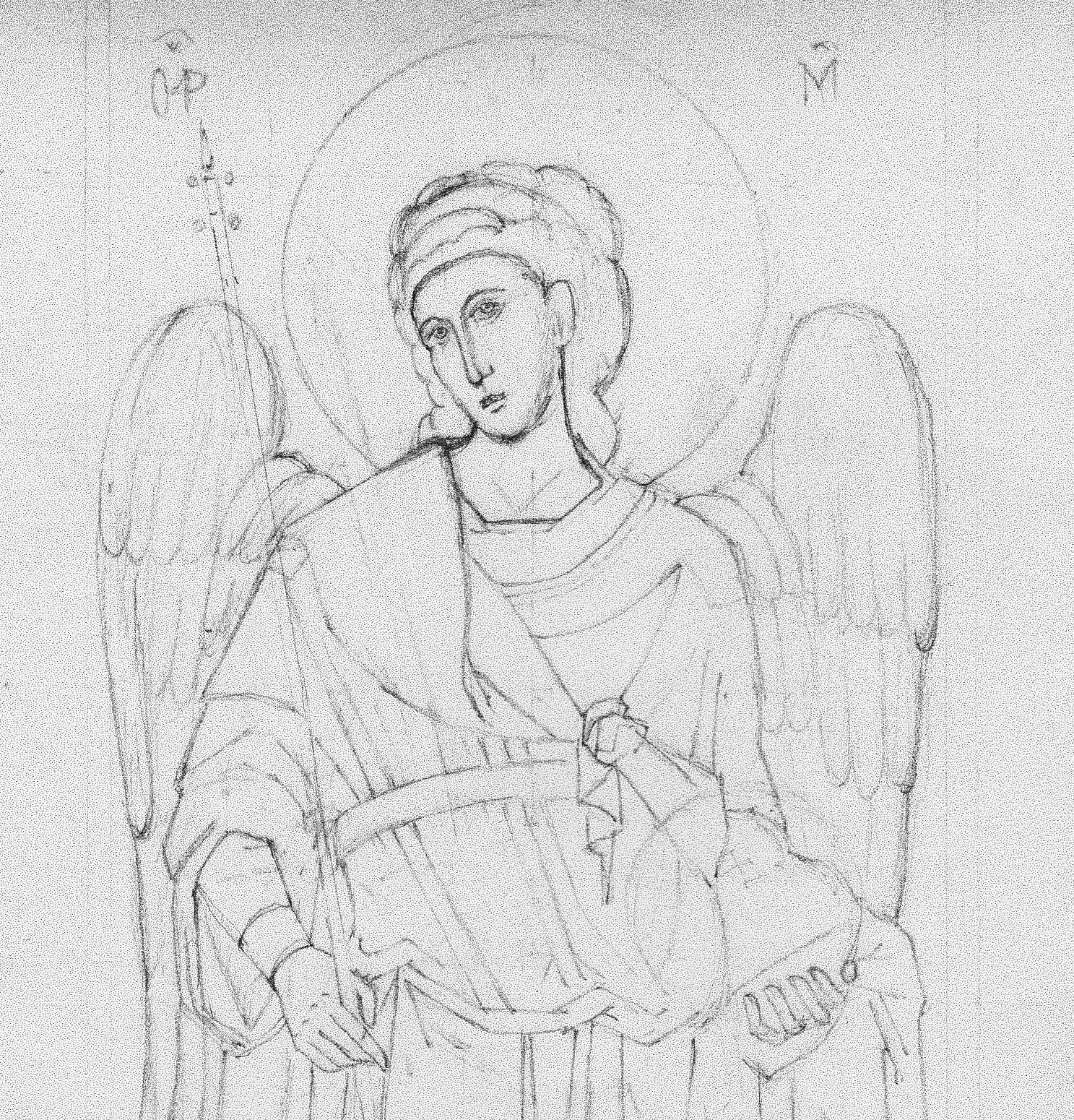
pencil drawing of angel of Chora

Archangel Michael after one of the Angels of Chora

pencil drawing of Archangel Raphael

Archangel Raphael line drawing after one of the angels of Chora

Now for the full size images:

Virgin and Child Enthroned line drawing low res

angel of chora pencil drawing

Full length drawing of Archangel Michael taken from an angel of Chora

pencil drawing of Archangel Raphael

Archangel raphael full length line drawing

Image of Angel of Chora

Angel of Chora image courtesy of Aidan Hart’s image library

image of Angel of Chora

Angel of Chora images all courtesy of Aidan Hart’s image library.

Angel of chora

Angel of Chora images all courtesy of Aidan Hart’s image library.

angle of Chora black and white

Angel of Chora – images all courtesy of Aidan Hart’s image library.

Three days on a Triptych

icon class

Icon Diploma Students taken at Aidan Hart’s May session 2015

Hello icon friends and class mates,

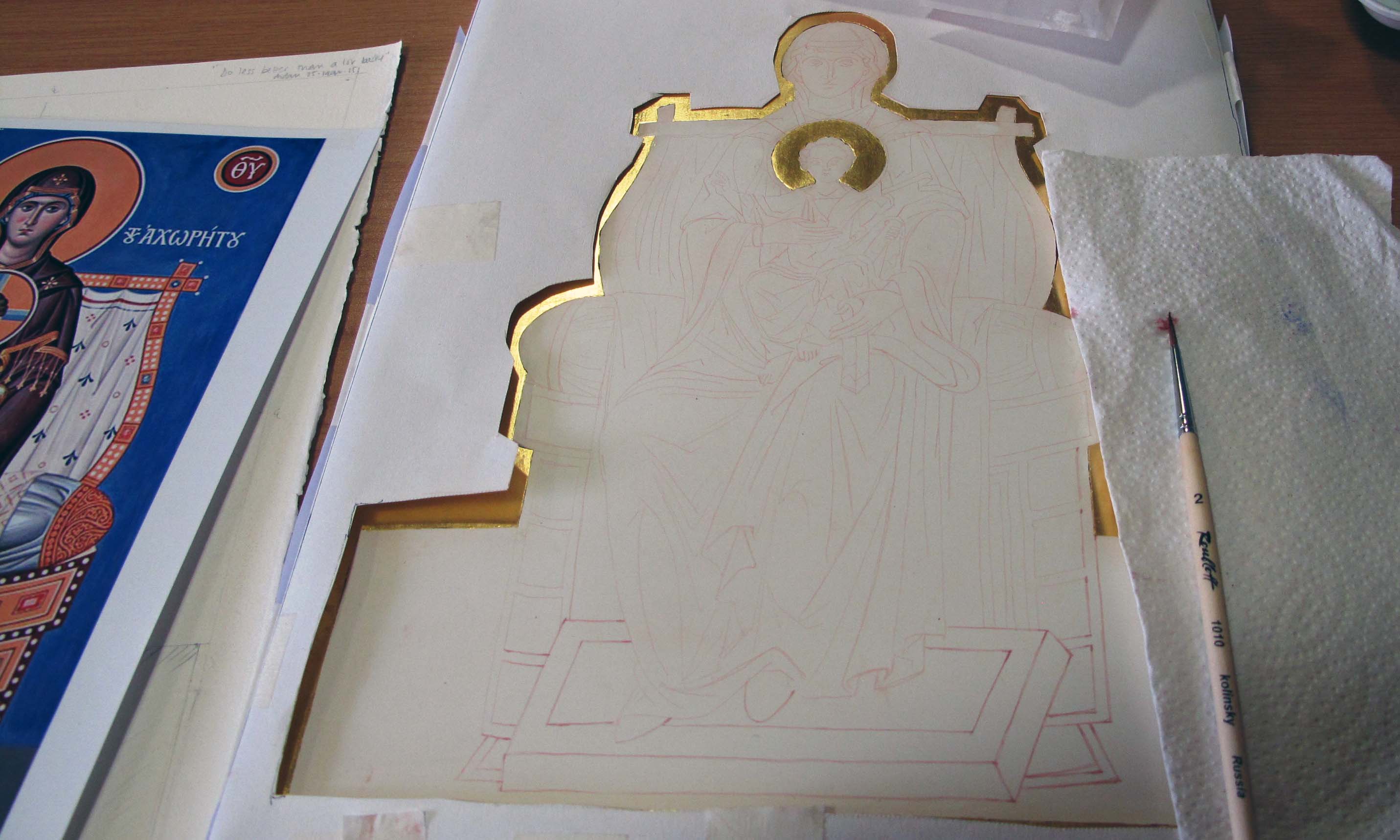
I’m just back from a three day intensive painting our standing/seated figures. I brought my gilded triptych centre panel already prepared with the image transferred so I could start to paint in class.

icon outline drawing

Transferring outline on to gessoed panel

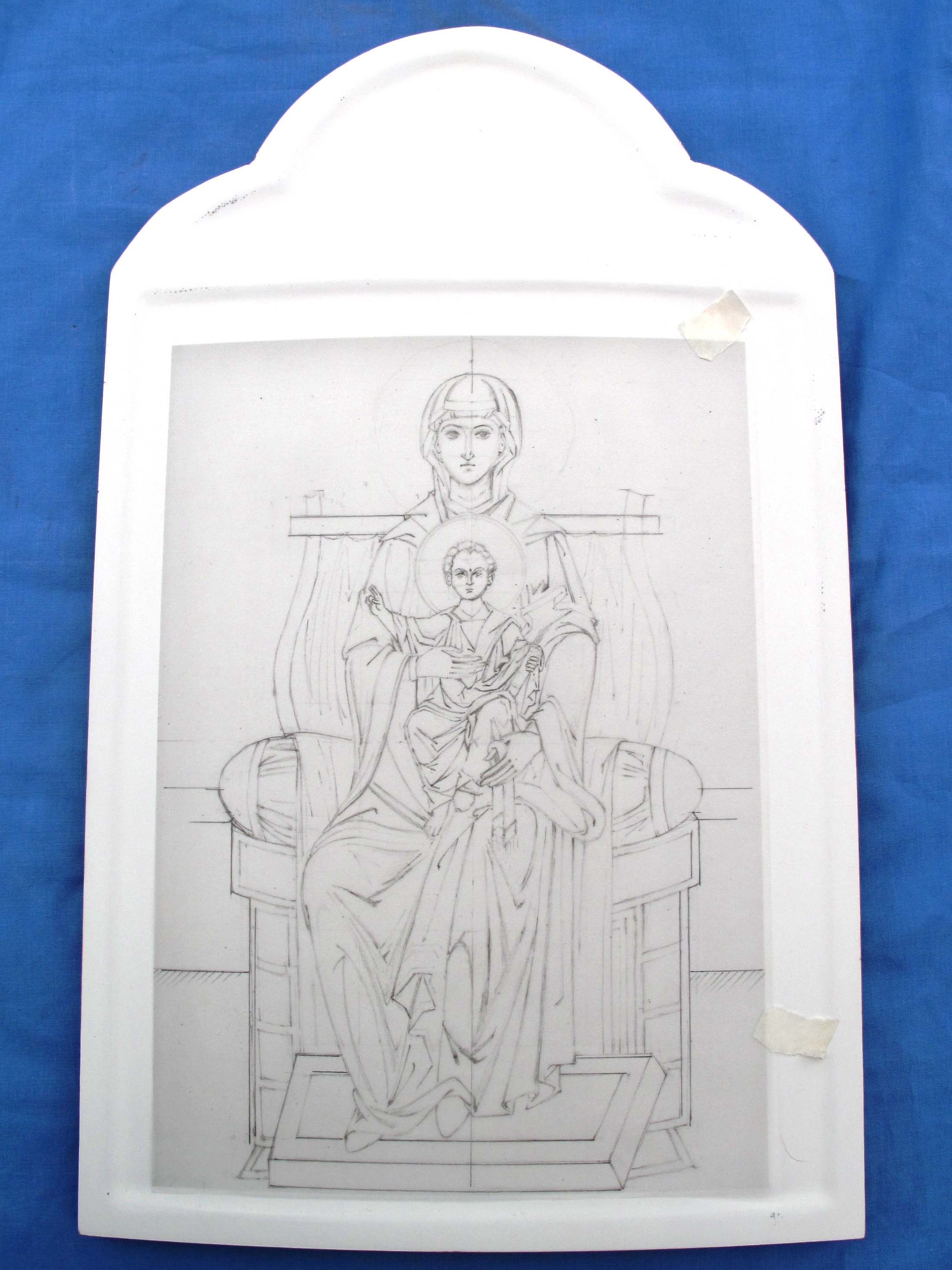
Just to rewind a little, I photocopied my drawing on to tracing paper to locate the outline prior to water gilding. After gilding, I rubbed red ochre pigment into the back of the tracing paper/drawing itself (rather than using an intermediary sheet), and using a fine propelling pencil with a fairly hard lead, transferred the image on to the board.

tracing paper drawing

Drawing of icon on tracing paper

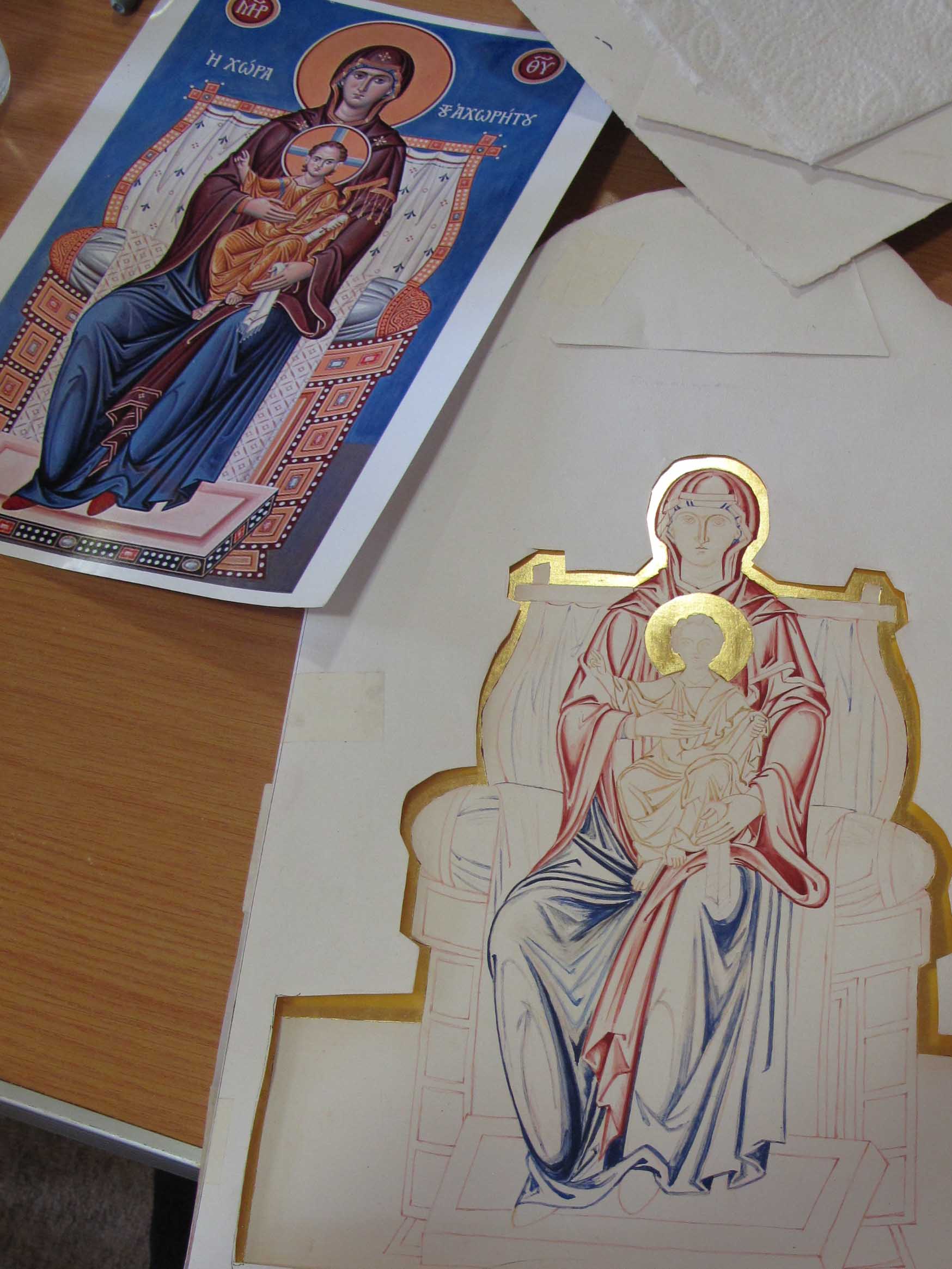
Once all the main lines were transferred on to the board, a weak mix of pigment fixed the lines in place. I then began the underpainting and modelling of the garments.

underpainting icon

First stage of underpainting

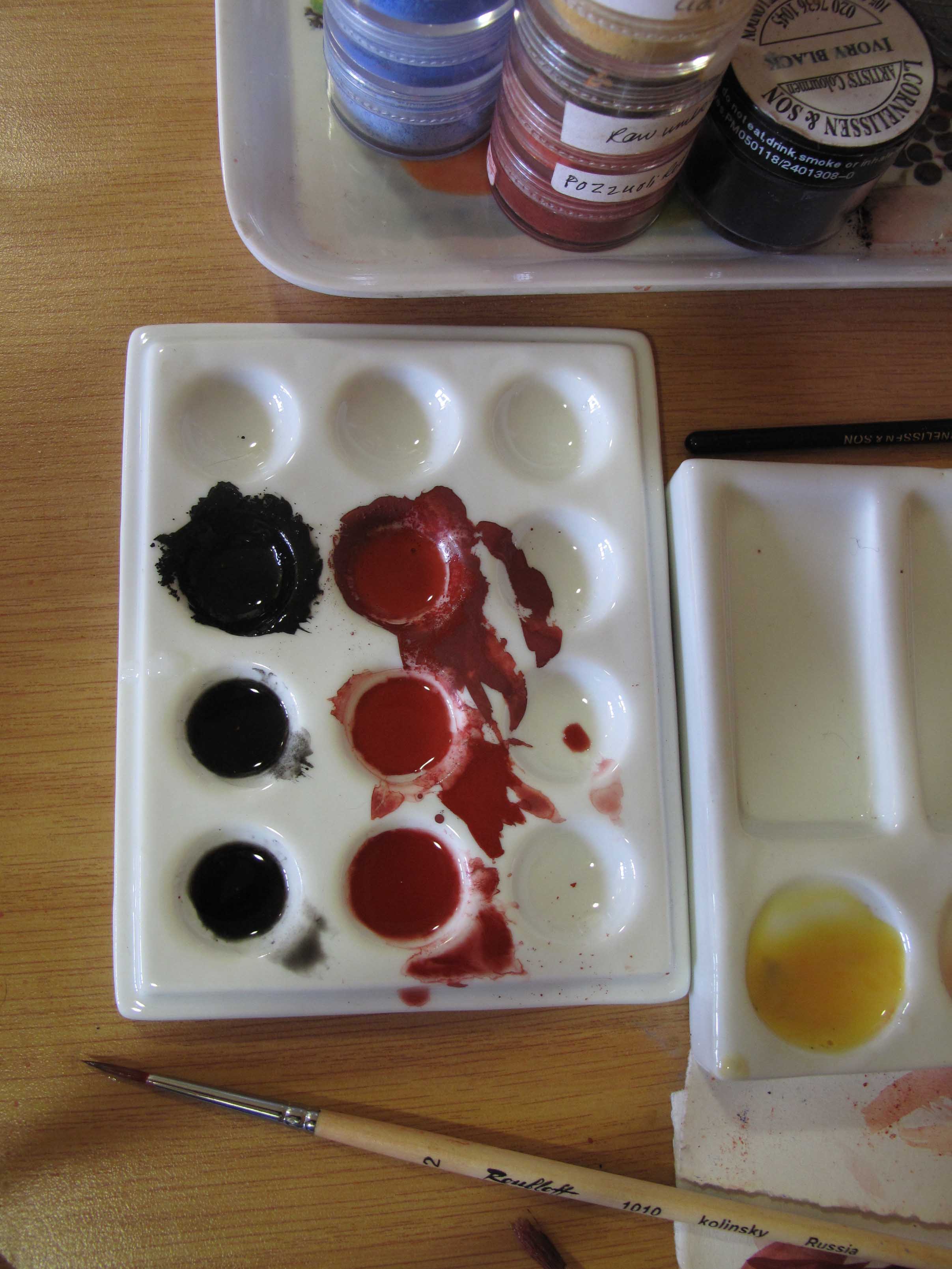
Aidan suggested that I used Red Ochre for the Blessed Virgin’s upper garment as it has some blue in it. I also used Lapiz Lazuli Dark, a beautiful natural blue and Ivory Black to deepen both colours; all pigments are from Cornelissen’s.

ivory black and red ochre

Ivory black and Red Ochre pigments

Both pigments are very strong so I mixed them up separately first, then blended. For the underpainting I used a lovely size 2 Roubloff 1010 kolinsky sable brush which I had recently ordered from Vesta-k. It has a really sharp point and holds the pigment well.

underpainting garments

Building up the underpainting of the garments

I mixed black to the lapiz lazuli and red ochre in varying degrees to give depth to the underpainting. The deeper shadows are painted using a lot of black in the mix.

lapiz lazuli

First layer of membrane applied using a wash of pure Lapiz lazuli over the underpainting.

membranes on icon

Membranes on the garments

Pure red ochre and lapiz membranes washed over the underpainting with a very thin layer of lapiz washed over the red afterwards to unite the garments.

After several layers of membrane, I applied a nourishing layer of 20% egg 80% water and let it dry before going over the shadows and adding highlights. Aidan suggested fine layers of pure white dry-brushed over the membrane to give translucent layers of highlights.

The underpainting of the Christ Child is in English Yellow Ochre with a little Red Ochre added to model the form. The colours are painted quite densely as the garments will be gilded using shell gold assist. I understand from my class mate Lee that for the crispest, most gleaming gold lines, hand-made shell gold is the way to go – thanks Lee! Watch this space for adventures in making shell gold – I rang Wrights of Lymm for a couple of books of gold today!

three days work

Three days work

Thanks for reading.

Ronnie

Triptych begins

Bole and water gilding a triptych

Gilding a Triptych

Hello Icon Friends,

I’ve begun work on a triptych for my sister Anne, in Australia. She made a lighthearted requests some 7 or 8 years ago, saying how much she would love to have one of those icons that ‘open out’. I never forgot her wish and it was wonderful when Aidan confirmed that standing and seated figures were part of the curriculum so my triptych could be included in the course work.

triptych treated with cuprinol

Treating the oak with Cuprinol

Dylan Hartley, in Ironbridge hand-made the quarter-sawn oak panels and gessoed them ready for me to sand. With the great benefit of hindsight, I should have asked him to treat them with Cuprinol in the workshop so they could be covered evenly on all sides – but it was only when I thought about posting the boards to Australia that I realised they would need to be treated due to their strict import regulations. A few days after I had applied the treatment and varnished the oak, the boards warped but the gesso was unharmed – no cracks.

sketch drawings for triptych

Planning the triptych layout: Upper panels include the Holy Face in the Mandilion, with Bethlehem and the New Jerusalem either side.

Anne had told me what she had in mind for this triptych: Arhcangel Raphael (the Shining One who Heals) and Archangel Michael, the Warrior, either side of the Blessed Virgin and Child. Aidan introduced me to the magnificent angels of Chora to adapt to fit the side panels – the original wall paintings fit in tapered panels set within a domed ceiling.

angel of chora

Detail of one of the Angels of Chora

Next stage was to prepare the gessoed panels by sanding in sequence through the grades of sandpaper from 80 grit to 1200 grit to prepare for water gilding. it took the best part of three full days to sand and bole the boards ready for gilding.

sanding the gesso

Sanding off the scratches and bumps in the gesso

sanding gesso

Sanding back too far

With all the irregular surfaces and curves covered in gesso, it was difficult to sand back enough to articulate the shapes without also revealing some of the linen scrim. As soon as I saw the scrim, I avoided the area and only smoothed it with the finer grades of sandpaper. It eventually covered (almost) under 13 layers of bole.

bole on triptych

Bole applied to triptych

It is very fiddly to apply layers of bole around narrow spaces so this time I masked the whole area out with masking fluid with a little added pigment.

masking gesso

Masking out the gesso before applying the bole

Before removing the masking fluid, I scored the edges to avoid lifting the bole.

Removing masking fluid

Removing masking fluid by scoring a clean edge with a sharp blade.

More on gilding in the next post – with a few tips on what not to do!

Thanks for reading,

Ronnie