Icon Diploma Student

Learning to see with the eye of the heart

Posts from the ‘Romanesque art’ category

Back to lettering Bury Style
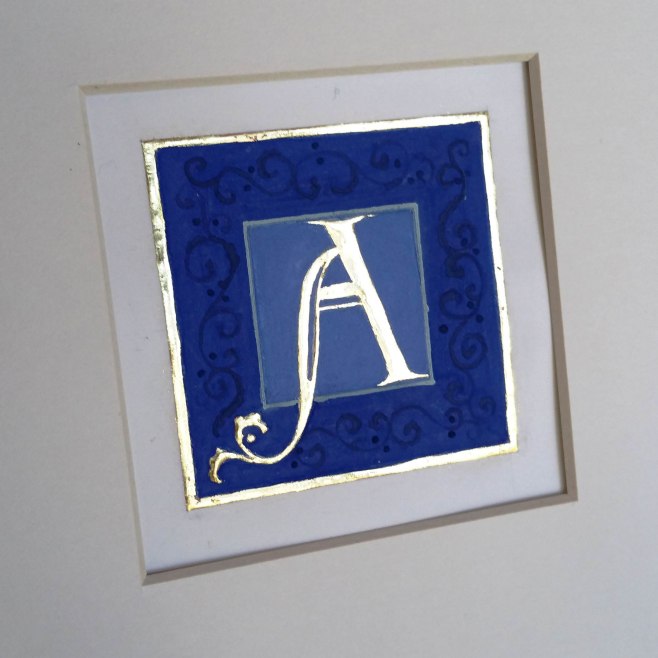
4 Letter A Bury

Gilded Letter A adapted from the Bury Bible

I’d like to pick up where I left off on my previous taster post of the Bury Bible’s Romanesque lettering (you can refer back to it here). I’d like to share some examples which I’ve gathered from this great work which may be suitable for naming saints of this period, for example:

Some saints with direct or indirect associations with this manuscript or who lived during the early 12th Century:

Edmund the Martyr (also known as St Edmund or Edmund of East Anglia, died 20 November 869

St Anselm feast day 21 April

St Cellach (Ceilach Keilach) b1080 Ireland d 1129 Archbishop Armagh

St Elisabeth Rose, Benedictine nun, b 1130 Courtenay France

St Stephen Harding, b 1059, d 1134 co-founder of Cistercian order

St William of York, England, b 1154, Archbishop of York

St Wulfric, b 1080, Bristol, England

St Thomas Becket of Canterbury, b1118, Cheapside, London, martyr

St Hildegarde of Bingen b 1098, Germany

St Lawrence O’Toole, b1125, Kildare, Ireland, Archbishop Dublin

St Gilbert of Sempringham, b 1083

St Bartholomew of Farne b1193, Whitby Northumbria

I’m hoping that the painted letters which I’m sharing here will be clear enough to save to your desktop for your own use. They need a bit more refining but they are a reasonable start. If you do get round to using them – I would love to see your work!
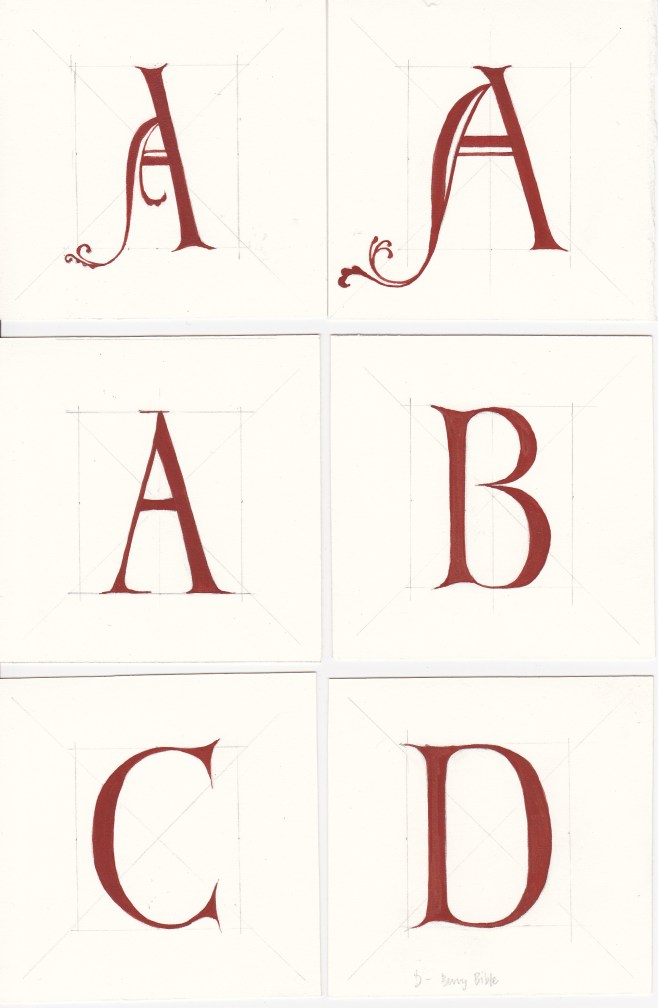
lettering based on bury bible

Letters A to D ‘Bury Style’

lettering in red ochre

Letters E to J ‘Bury Style’

KLMNOP

letters K to P ‘Bury Style’


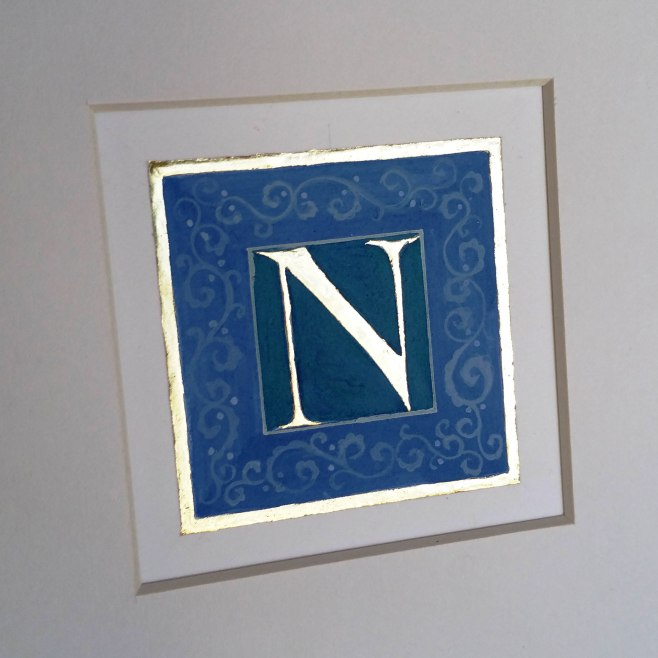
4 Letter N Bury

Crisp balanced lines of the Bury letter N
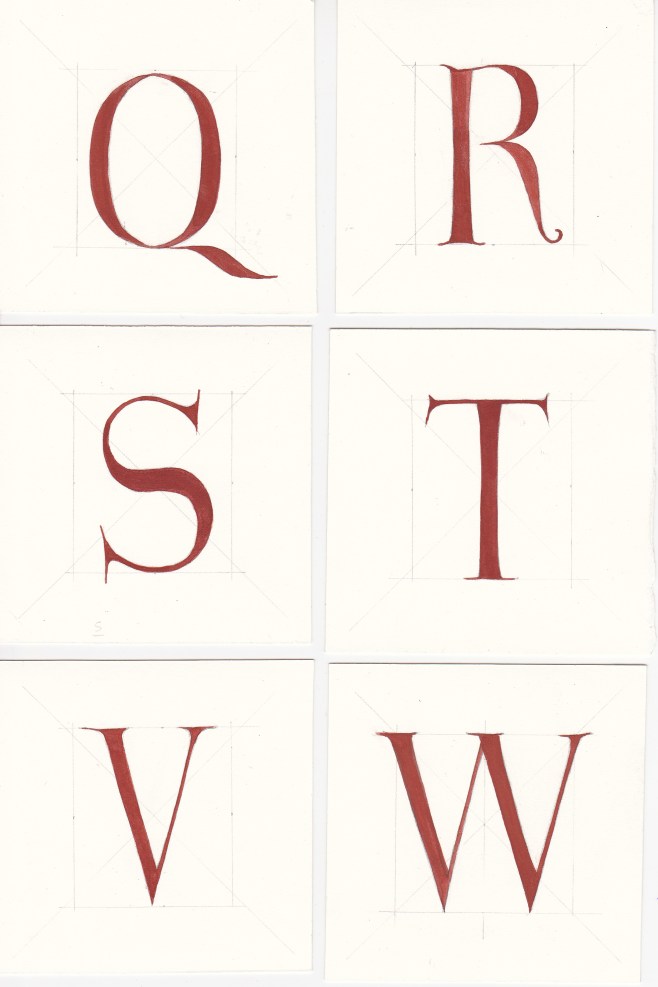
QRSTVW.jpg

Letters Q to W ‘Bury Style’

UXYYZM

Letters U to Z (plus an extra fancy M) ‘Bury Style’

Hope these are useful some day and thanks for reading!

Ronnie

‘I Saw Him!’

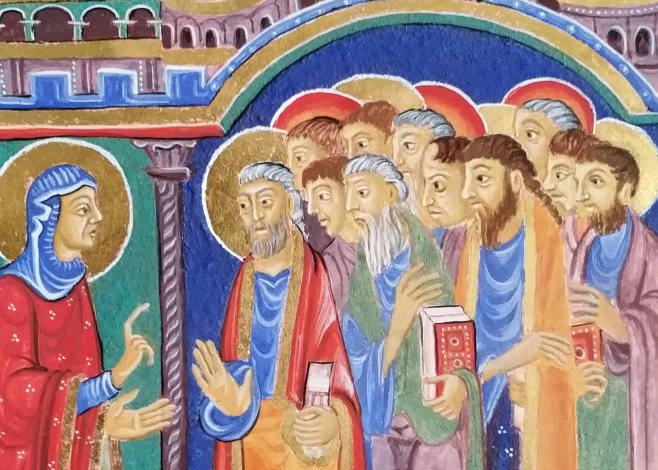
mary Magdalene tells the disciples Christ has risen

Mary Magdalene is first with the good news ‘I have seen the Lord!’

Good morning and Happy Easter!

Romanesque manuscripts are a rich resource for iconographers. I have often wondered how a manuscript image would work painted on to a gessoed board instead of vellum. I had a small maple board (approx 6″x 8″) already prepared so I set aside the homework on my nativity icon to work on this small experimental piece during Lent.

I chose this image of Mary Magdalene announcing her news to the discples. It’s from the St Alban’s Psalter, one of several known to have been created at or for St Albans Abbey in the 12th century. I love their expressions and the long thin draperies contrasted with oversized hands and feet.

Icon board first stage of work for St Albans Psalter

Outline of figures added and oil gilding applied.

I transferred the outlines from my line drawing in red ochre then applied several layers of acrylic gold size (with some red ochre added to provide a contrast against the gesso) to adhere the transfer gold.

I then applied the base colours, including the richly coloured Caput Mortum for the background.

Ground terre verte azurite on icon board

Building up the layers of garment colours

7 a Magdalene and disciples st Albans

Gritty pigment

Some of my pigments are quite gritty. I like this varied texture on backgrounds but it’s hopeless to work with on tiny faces and details so I ground them up with a slab and muller and a spoon of water until they were very smooth.

The blue I used was a gift from my son who has recently been to Japan. While he was there he went to the new shop ‘Pigment‘ especially to buy me some! Here’s a sample of Azurite which I ground up and by levigating the mix I ground out three beautiful blues.

grinding up pigment from Tokyo PIGMENT

Kyojyo Gosu 6 Azurite from ‘Pigment’ in Tokyo

As the terre verte was too gritty to underpaint the small features on the faces, I used black and yellow to make green instead.

Underpainting faces

Underpainting faces using Maimeri yellow and a touch of ivory black

applying membrane to face painting

Adding the membrane to faces using maimeri yellow and white, a dash of red added later

6 face highlights

Building up highlights on the faces and adding the hair

The faces still seemed too pale so I added a few washes of French Ochre Havanna (also called Warm Ochre). Looking at the faces and hair this close up I can see there is still some work needed.

7 final faces

Deepening the shadows, adding vermillion to the eyes and white highlights

I added several layers of malachite over the terre verte to give this rich green.

8 St ALbans Psalter Magdalene announces news

The almost finished article.

To see the original manuscript, please visit the St Albans’s Psalter here and this icon is now available to buy from my Etsy shop here.

Wishing you all a blessed and happy Easter and as Mary Magdalene first said: ‘He is Risen!’

Thanks for reading

Ronnie

P.S. Prints and cards are now available of this icon from Smith York Printer